


Scabious Black Knight
Scabiosa atropurpurea 'Black Knight'
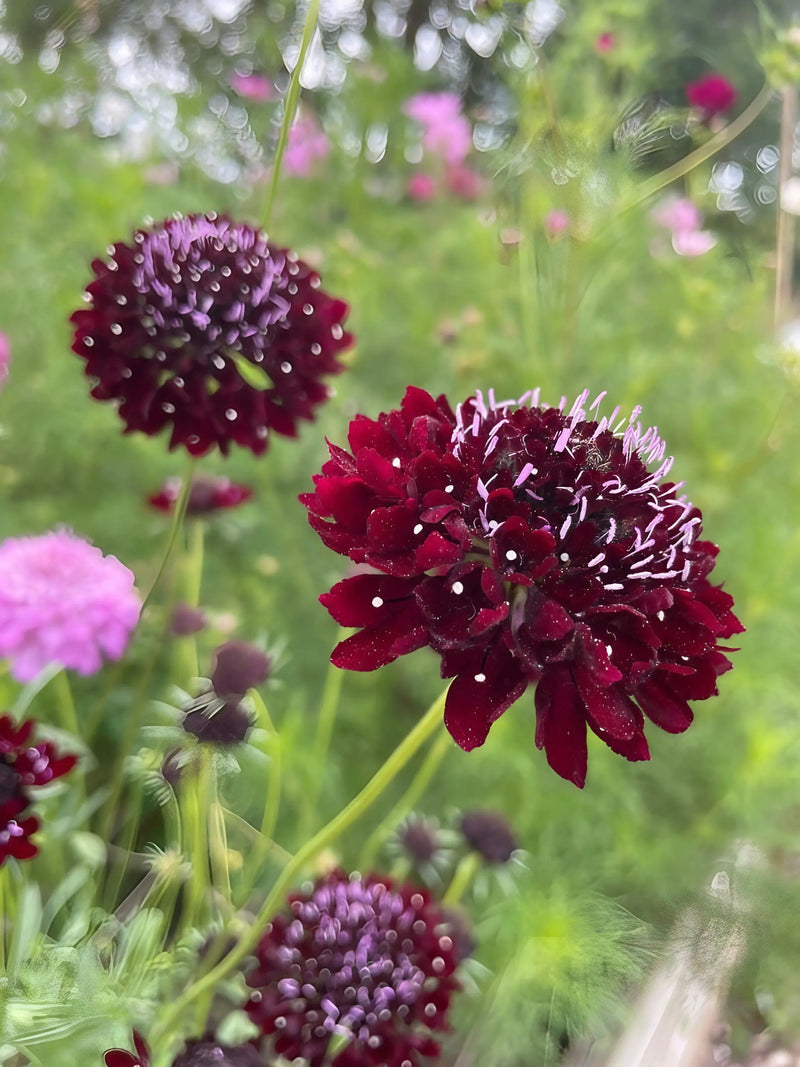
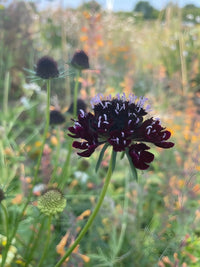
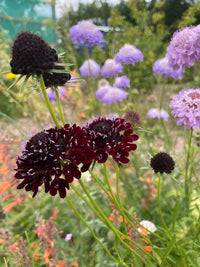
Deep maroon-purple velvet pincushion flowers so dark they're mistaken for black, with white pin-like stamens. Honey-scented, butterfly-magnet, professional florist favourite.
About this variety
Scabiosa atropurpurea 'Black Knight' Pincushion Flower 'Black Knight' / Black Velvet Scabious
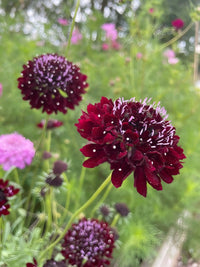
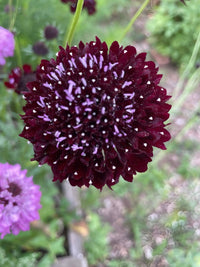
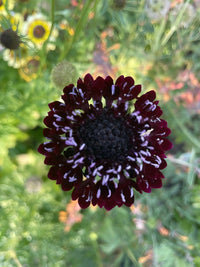
The closest a flower comes to true black — dome-shaped pincushion blooms in a deep maroon-purple velvet so dark they are habitually mistaken for black, beautifully speckled with tiny white stamens that look like pins in a cushion. Honey-scented, butterfly-magnet, and tall on wiry 90cm stems — Scabious 'Black Knight' is the cottage cutting garden's moody sophisticate and one of the most photographed dark flowers in modern floristry.
This is the variety pursued by gardeners chasing the elusive "black flower" — and 'Black Knight' delivers as close to true black as any plant in the catalogue. The dome-shaped pincushion flowers are a deep maroon-purple velvet so saturated that in dappled summer light, in the shade of a vase arrangement, or in warm interior lighting, they genuinely read as black. The petals carry their characteristic light-absorbing velvet quality, beautifully contrasted with tiny white stamens that look like little pins in a cushion (the "pincushion" common name). Honey-scented — releases a subtle sweet fragrance on warm days that attracts bees and butterflies in droves. Standing tall on long wiry 90cm stems. Hardy annual flowering June through October. RHS Plants for Pollinators. A favourite of professional florists for the moody sophisticated touch the dark flowers add to summer bouquets.
A note on growing
Robust and easy to grow given maximum sunlight and excellent drainage. Sow indoors March–April for early blooms, or September to overwinter for stronger earlier-flowering plants the following year. Surface-sow onto moist compost and cover with a very light dusting of vermiculite — seeds require light to germinate. Maintain 18–20°C; germination 10–14 days. Alternatively direct sow outdoors in May once soil has warmed.
Plant out in late May in full sun in neutral to alkaline (chalky) soil. If you have heavy clay, add grit to the planting hole — Scabious will rot if their roots sit in winter-wet soil. Critical: support the 90cm stems early in the season with twiggy sticks or netting at 20–30cm height to prevent flopping in summer storms — staking after the plant has reached full height is too late. Deadhead regularly to prevent the plant setting seed; this signals the plant to keep producing new "pincushions" until the first frosts of November. As a true cut-and-come-again variety, the more you harvest, the more the plant produces.
Where it shines
In sophisticated cottage borders where the moody dark colour adds proper depth and serves as a visual anchor — dark flowers against the typical summer palette of pinks, whites, lavenders and warm oranges "ground" the surrounding colours and prevent them competing with each other. As cut flowers for professional-standard moody bouquets. In modern designer cottage gardens that lean dark and architectural. With white companions (Ammi majus, Cosmos 'Purity') for high-contrast monochrome drama; with warm companions (Rudbeckia, Achillea), the dark maroon echoes and deepens the warm palette.
Plant alongside
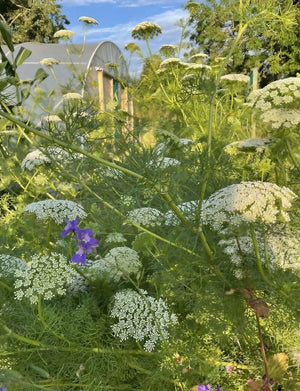
For the classic florist combination, pair 'Black Knight' with Cosmos 'Purity' for the monochrome moody-and-clean professional-bouquet partnership, plus Ammi majus for textural lace against the heavy velvet domes — the trio is a staple of modern wedding floristry. With Scabious 'Imperial Mix' for tonal Scabious layering. With Hollyhock 'Nigra' and Poppy 'Black Peony' for an all-dark cottage Gothic scheme.
Plant alongside
Scabious Black Knight pairs beautifully with these cottage garden classics


RHS Plants for Pollinators
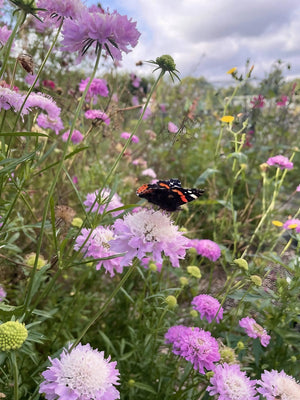
This plant has been assessed by the Royal Horticultural Society and recommended as especially beneficial to bees, butterflies and other pollinators. Growing plants like this directly supports UK pollinator populations — something close to our hearts at Salle Moor Hall Farm, where we see the difference a cottage garden full of the right plants can make.
Learn more at RHS.org.uk →