

Echinacea Bravado
Echinacea purpurea 'Bravado' — large-flowered purple coneflower
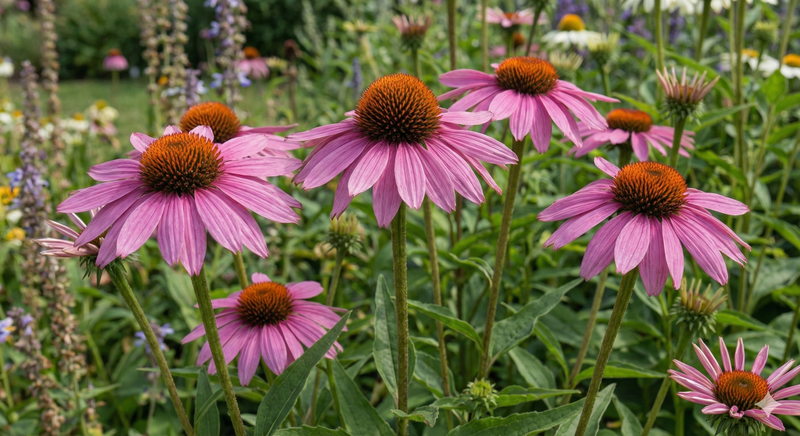
Massive 10–12cm rosy-purple coneflower daisies with bold coppery-orange cones — the bred-for-impact Echinacea with upright petals and serious presence.
About this variety
Echinacea purpurea 'Bravado' Bravado Purple Coneflower
While the wild species Echinacea can sometimes carry its petals in a slightly drooping reflexed form, 'Bravado' was bred specifically for size and uprightness — producing massive 10–12cm rosy-purple daisy flowers that hold themselves flat in a wide open shape, each centred on a magnificent coppery-orange cone that glows in evening light.
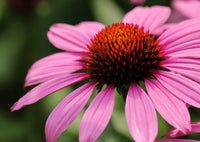
This is the bred-for-impact coneflower — selected over generations for larger flowers, more upright petals and stronger stems than wild Echinacea purpurea. Each bloom is a substantial 10–12cm rosy-purple daisy with petals held flat (rather than sweeping backwards as the species form does), creating wide open daisy faces that read at considerable distance and provide proper visual impact in any border. The coppery-orange central cone is dramatically prominent — equal partner to the petals in the overall flower display. Hardy perennial, dying back to ground in winter and re-emerging late in spring. RHS Plants for Pollinators recognised — a wildlife superstar particularly valued by Red Admirals, Painted Ladies, and a broad range of bees and bumblebees.
A note on growing
Echinacea is an investment in patience. Grown from seed, it focuses on building its deep taproot in the first year (producing only a few modest flowers), then erupts into a large, multi-stemmed clump in Year 2 and beyond. Year 1: establishment. Year 2: spectacular display. Year 3+: a substantial established clump that improves every year.
Sow indoors from February to April. Surface-sow onto moist seed compost and cover with only a very fine dusting of vermiculite — Echinacea seeds need light to germinate. Maintain a constant 20°C. If germination is slow after 3 weeks, move the tray to the fridge for 2 weeks (cold stratification) before returning to warmth — this trick breaks residual dormancy and often triggers the next wave. Plant out into full sun in moderately fertile, well-drained soil. Once established, Echinacea develops a deep taproot that makes it exceptionally drought-tolerant.
Important cutting note: do not cut more than one-third of stems from any plant at once. Echinacea can produce multiple flowers per stem if the first is cut while side buds develop — extending the cutting season significantly. Vase life is 10–14 days on strong, sturdy stems. Leave the final flush of cones standing through winter — they provide structural interest and the seeds feed goldfinches through the coldest months.
⚠️ Mark the position in autumn: Echinacea emerges late in spring (often not until late May), and the bare ground can be mistaken for empty space. A small label or marker prevents accidentally digging into your established clump.
Where it shines
In "New Perennial" or "Prairie Style" borders, where 'Bravado' is essential structural planting — large, flat, daisy-form flowers in deep prairie pink, providing 4–5 months of continuous bloom from mid-summer through autumn. In wildlife and pollinator-focused borders, where the open daisy form is a major draw for butterflies and bees. In cutting gardens for substantial cut flowers with 10–14 day vase life. In late-summer plantings when many other perennials are winding down. The seed cones provide outstanding winter structure and bird food, making 'Bravado' a genuinely year-round plant.
Plant alongside
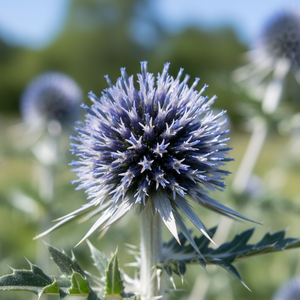
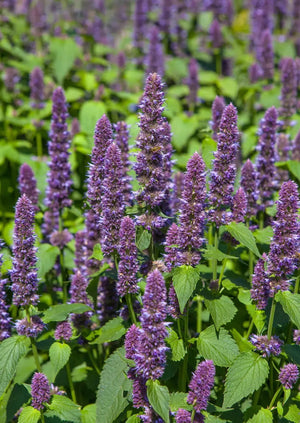
The classic prairie planting combination: pair 'Bravado' with Echinops ritro (steel-blue globe thistles — perfect shape contrast: flat pink discs against perfect blue spheres), Rudbeckia 'Marmalade' (warm gold next to rosy pink), Agastache 'Liquorice Blue' (blue-purple spikes in the same height range), and ornamental grasses behind for movement and texture. Together they provide continuous flowers June through November and exceptional pollinator support throughout.
Plant alongside
Echinacea Bravado pairs beautifully with these cottage garden classics

RHS Plants for Pollinators
This plant has been assessed by the Royal Horticultural Society and recommended as especially beneficial to bees, butterflies and other pollinators. Growing plants like this directly supports UK pollinator populations — something close to our hearts at Salle Moor Hall Farm, where we see the difference a cottage garden full of the right plants can make.
Learn more at RHS.org.uk →