

Phacelia
Phacelia tanacetifolia -- Blue Tansy; Fiddleneck; Lacy Phacelia
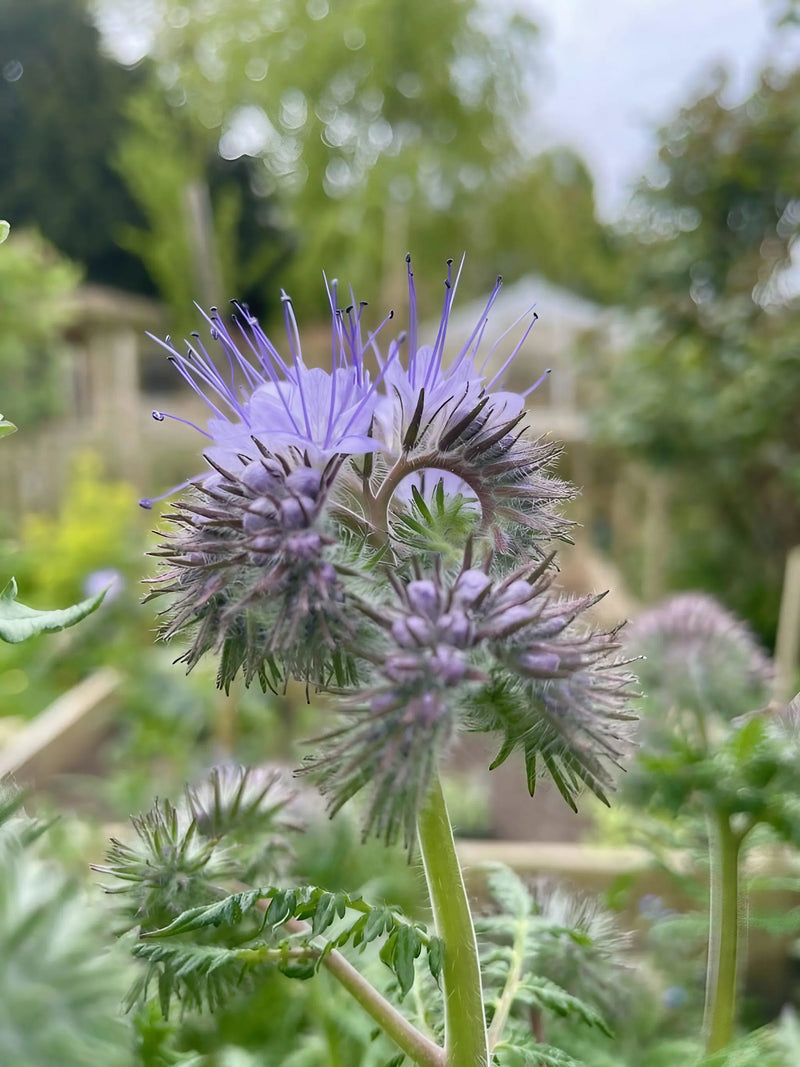
Lavender-blue coiled "fiddleneck" flower spikes above ferny foliage — one of the top five UK bee plants AND a superb soil-improving green manure. Fast-growing hardy annual.
About this variety
Phacelia tanacetifolia Phacelia / Fiddleneck / Scorpion Weed
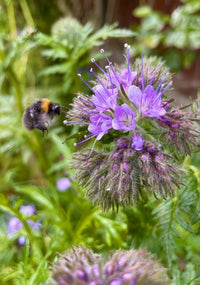
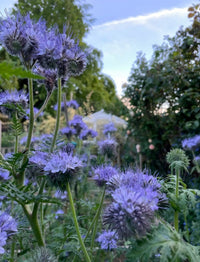
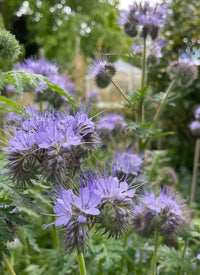
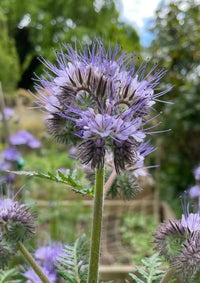
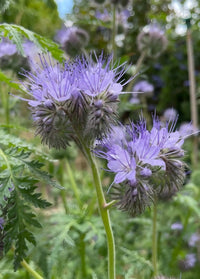
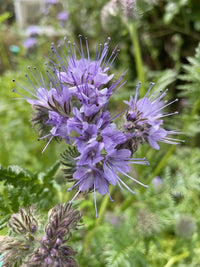
Lavender-blue to violet coiled flower spikes — the characteristic "fiddleneck" or "scorpion weed" structure where the inflorescence emerges curled and gradually uncurls as it matures — above finely-divided fern-like green foliage. Phacelia tanacetifolia is one of the very best bee plants you can grow in the UK garden AND one of the finest soil-improving green manures available from seed.
Phacelia occupies a unique position in the catalogue as the one plant that earns its place equally in two completely different gardening contexts: as an ornamental fast-growing bee plant for the cottage garden, AND as a practical soil-improving green manure for the vegetable patch. No other seed in the range serves both purposes with such distinction.
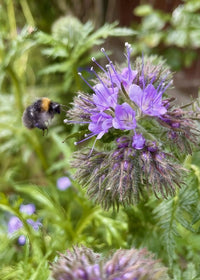
As a bee plant: Phacelia tanacetifolia has been the subject of specific bee ecology research in the UK, and the findings consistently place it in the top five nectar-producing plants for bees. Two qualities explain this exceptional bee value. First, the flowers produce nectar continuously throughout the day (unlike some plants that produce nectar in discrete pulses), providing a reliable feeding resource from early morning to late evening. Second, the tubular structure of the individual florets is accessible to a wide range of bee species — not restricted to long-tongued bumblebees as deeper-tubed flowers are, but accessible to short-tongued bees and hoverflies as well. This accessibility makes Phacelia a particularly democratic nectar resource in the garden bee community.
As a green manure: Phacelia used as a green manure (sown on bare soil, allowed to grow to near-flowering stage, then dug into the soil while still soft and green) provides multiple soil benefits — the dense root system improves soil structure and breaks up clay, the covering foliage protects the surface from the leaching effects of autumn and winter rain, and the dug-in biomass adds organic matter as it decomposes.
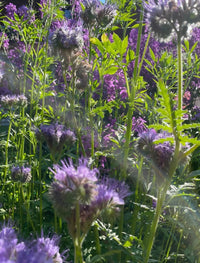
Hardy annual, fast-growing (flowers in just 6–7 weeks from sowing), 60–90cm tall. The visual appeal is considerable and somewhat underappreciated — the coiled lavender-blue flower spikes are genuinely beautiful en masse.
A note on growing
Phacelia seeds need darkness to germinate — unlike many of the plants in the range, they must be covered with soil, not left on the surface. Scatter seeds onto raked soil and rake in to 1cm depth. Water well after sowing. Germination 7–14 days at soil temperatures above 8–10°C.
Full sun or light shade. Any soil type. Succession sow every 4–6 weeks March–September for continuous bee foraging. Each individual Phacelia plant flowers for approximately 4–6 weeks before setting seed and declining — succession sowings maintain a continuous lavender-blue flowering display and continuous nectar provision throughout the growing season. Even a small patch of 1–2 square metres sown in succession provides significant bee forage value.
For green manure use: sow thickly in August–September on empty vegetable beds. Allow to grow for 6–7 weeks, then dig the soft green biomass into the soil before flowering begins (to maximise the organic matter contribution and minimise self-seeding).
⚠️ Skin irritation note: the stems and foliage of Phacelia are covered in fine stiff hairs that can cause mild skin irritation, itching, or rash in sensitive individuals. The hairy surface provides the plant with some defence against herbivores but is an occasional irritant to human skin. Wear gardening gloves when handling, particularly when working with large quantities as in green-manure digging.
Where it shines
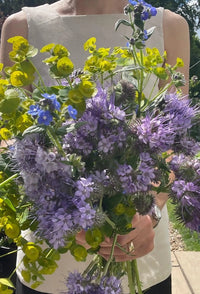
As one of the most useful practical plants in the cottage garden range — Phacelia bridges the worlds of ornamental gardening, bee conservation, and organic vegetable growing in a way few other plants do. In wildlife gardens as a top-tier bee plant. In the kitchen garden as a green manure for soil improvement, particularly on empty winter beds. In cottage borders for fast-growing lavender-blue colour from succession sowings. As a "starter plant" for new gardens needing quick coverage and quick bee value. The dried fiddleneck flower structures are also unusual and interesting in dried arrangements.
Plant alongside
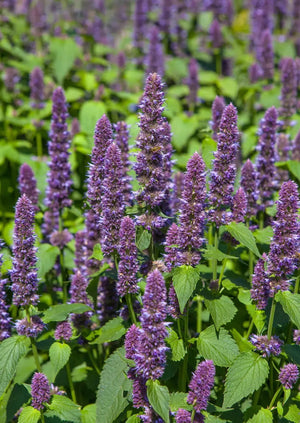
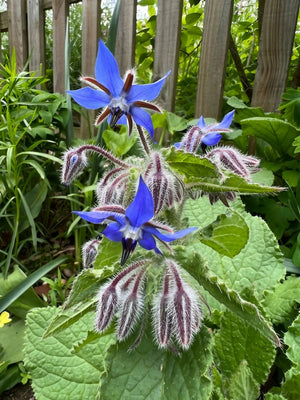
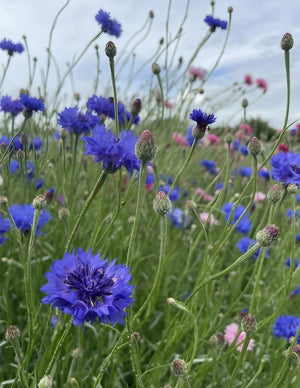
For maximum bee value, plant Phacelia alongside Borage (if stocked) and Agastache 'Liquorice Blue' for a complete bee-magnet trio that flowers continuously from spring through autumn. In the kitchen garden, combine Phacelia (as green manure) with Crimson Clover (if stocked) for soil-improving cover crop diversity. In cottage borders, pair with Cornflower 'Blue Ball' and Cosmos 'Sensation Mixed' for layered cottage colour at matching height.
Plant alongside
Phacelia pairs beautifully with these cottage garden classics

RHS Plants for Pollinators
This plant has been assessed by the Royal Horticultural Society and recommended as especially beneficial to bees, butterflies and other pollinators. Growing plants like this directly supports UK pollinator populations — something close to our hearts at Salle Moor Hall Farm, where we see the difference a cottage garden full of the right plants can make.
Learn more at RHS.org.uk →