

Nepeta Mussinii - Catmint
Nepeta mussinii -- Catmint; Grey Catmint
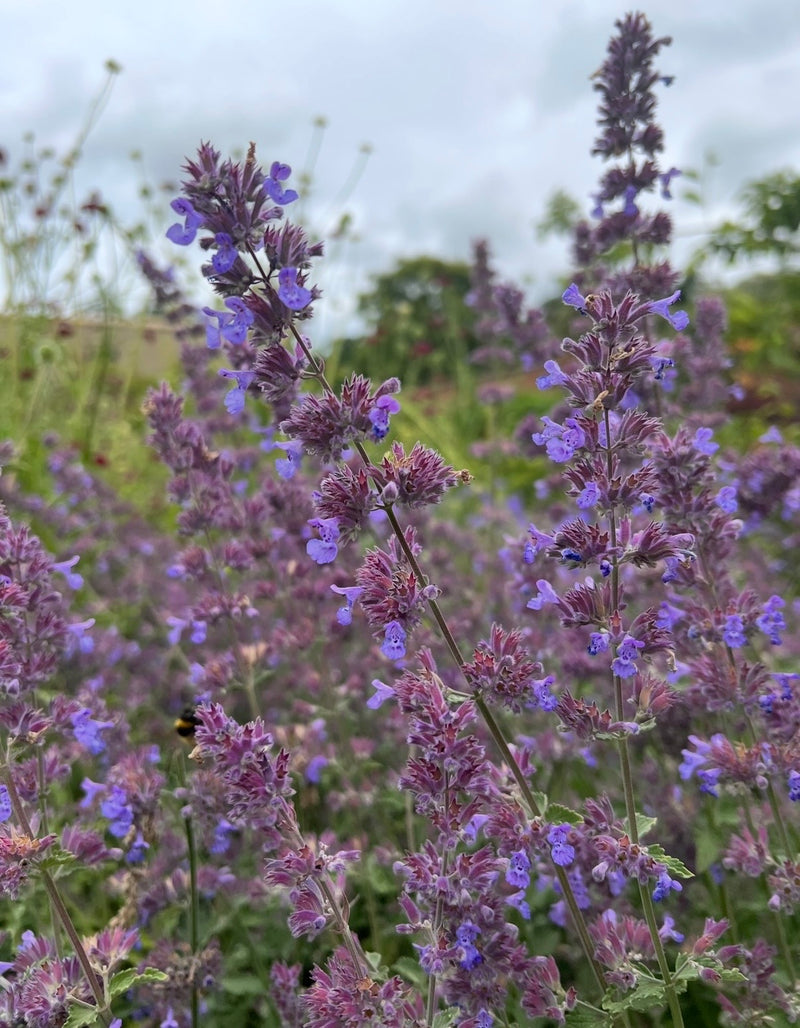
Endless soft lavender-blue flower spikes above tumbling silver-grey aromatic foliage — the "Easy Lavender" that establishes faster from seed and supports bees May to September.
About this variety
Nepeta mussinii Catmint 'Mussinii'
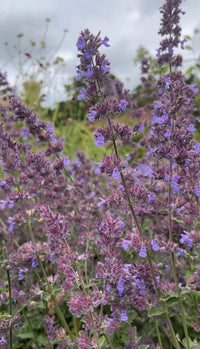
Endless soft lavender-blue flower spikes above a low tumbling mound of silver-grey aromatic foliage — Nepeta mussinii is the "Easy Lavender", faster to establish, more soil-tolerant and significantly easier from seed than true Lavender, while providing the same classic English cottage garden look and supporting bees continuously from May through September.
If you love the classic English cottage garden look of Lavender but find Lavender slow, fussy and expensive from seed, Nepeta mussinii is your answer. This hardy perennial produces a low tumbling mound (30–45cm tall, 60–75cm spread) of silver-grey aromatic foliage that releases a clean herbal scent when brushed, topped with endless soft lavender-blue flower spikes from May through September. The colour, the form, the silvery foliage, the pollinator value — all genuinely Lavender-like, but on a plant that establishes in a single season from seed and tolerates a much wider range of soils than true Lavender. Bees absolutely adore it — an established Nepeta clump in flower will hum continuously through summer afternoons. Hardy perennial. RHS Plants for Pollinators recognised.
A note about cats: Nepeta mussinii contains nepetalactone — the compound in Nepeta cataria (common catnip) that produces the characteristic euphoric response in cats. Catmint contains nepetalactone at lower concentrations than wild catnip, so cats are attracted but generally less intensely. Individual cats vary enormously: some will roll ecstatically in the plants and flatten them, others show little interest.
A note on growing
Surface-sow indoors February–May. Cover lightly or not at all — Nepeta seeds need some light to germinate. Maintain 15–20°C; germination 14–21 days. Plant out in full sun in any well-drained soil at 30–45cm spacing. Nepeta is unfussy about soil — sandy, chalky, gravelly or average loam all work — but resents waterlogged conditions. Drought-tolerant once established (typically by end of first season).
The critical maintenance practice: cut back by two-thirds after the first flush of flowers in late June or early July. This single shearing back triggers a second lavender-blue wave of bloom in August–September, dramatically extending the season. Without it, the plant declines to a tatty woody mound by August. Cut back to the crown completely in March each year.
Cat protection during establishment: wire cloches over young plants during the first growing season provide effective protection until the plants are large and well-rooted enough to withstand cat attention. Established plants typically recover quickly from even enthusiastic flattening.
Where it shines
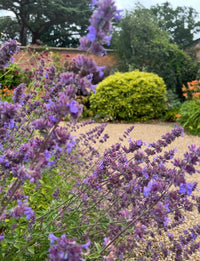
Along path edges and the front of cottage borders, where the tumbling mound softens hard lines and the silvery foliage provides year-round textural interest. As a "rose underplanting" — Nepeta is the classical companion to roses, hiding their leggy bare stems with a haze of silver and lavender-blue, and the scent is said to deter aphids from neighbouring roses. In gravel gardens and Mediterranean-style plantings, where the drought-tolerance and silver foliage suit the conditions. In wildlife gardens for exceptional continuous bee forage from May to September.
Plant alongside
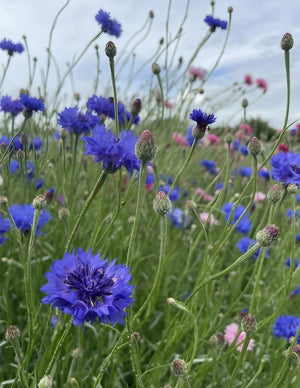
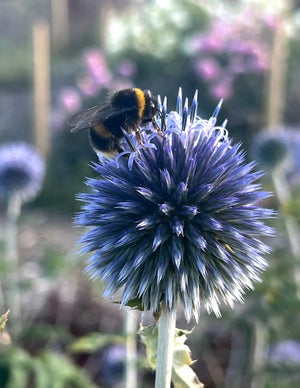
For the classic "rose underplanting" combination, plant Nepeta around the base of any rose. For an all-blue cottage scheme, combine with Cornflower 'Blue Ball' (taller upright form contrast) and Echinops ritro 'Veitch's Blue' (architectural sphere contrast). For silver-foliage harmony, plant alongside Lychnis coronaria (if stocked) for matching silver leaves and contrasting magenta flowers.
Plant alongside
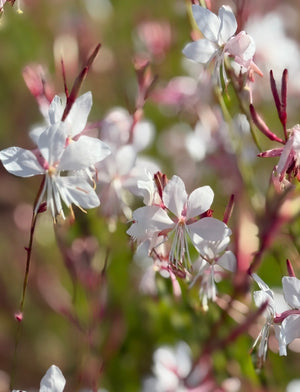
Nepeta Mussinii - Catmint pairs beautifully with these cottage garden classics

RHS Plants for Pollinators
This plant has been assessed by the Royal Horticultural Society and recommended as especially beneficial to bees, butterflies and other pollinators. Growing plants like this directly supports UK pollinator populations — something close to our hearts at Salle Moor Hall Farm, where we see the difference a cottage garden full of the right plants can make.
Learn more at RHS.org.uk →