

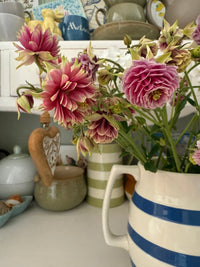
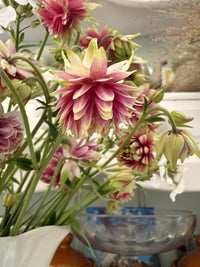
Aquilegia Nora Barlow
Aquilegia vulgaris var. stellata 'Nora Barlow'
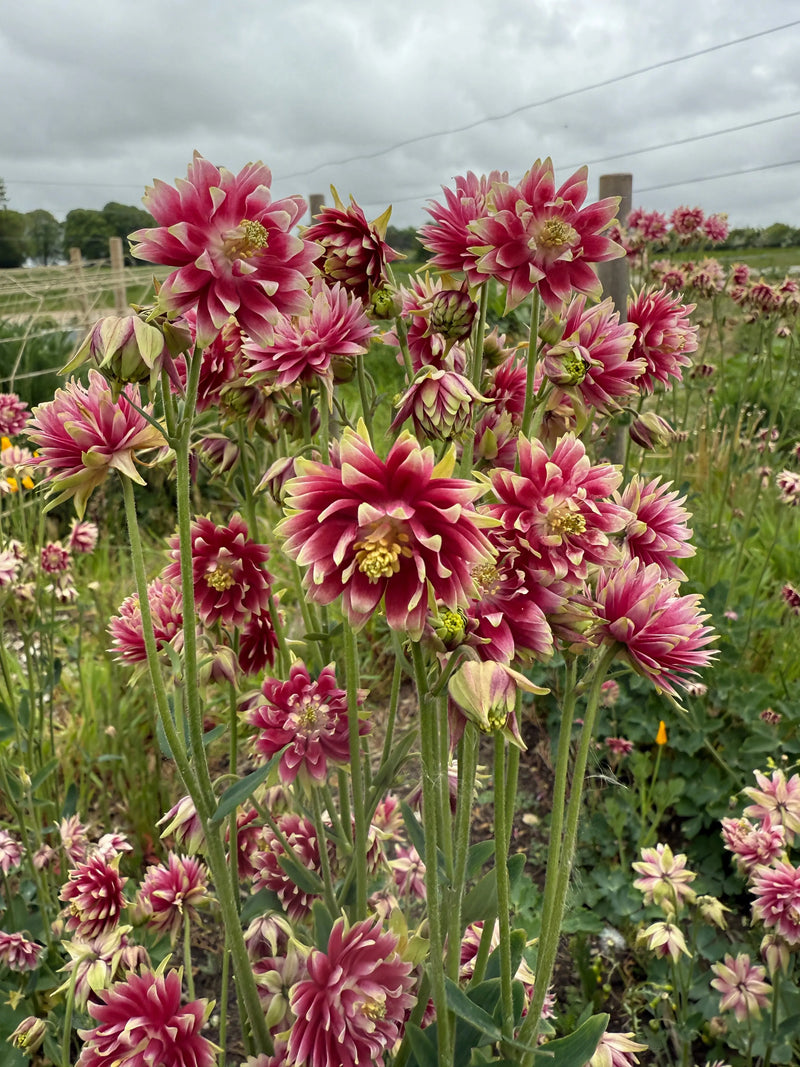
Double, spurless pom-pom flowers in raspberry-pink, white and soft green — the most beloved of all Granny's Bonnets, named after Charles Darwin's granddaughter.
About this variety
Aquilegia vulgaris var. stellata 'Nora Barlow' Double Granny's Bonnet 'Nora Barlow'
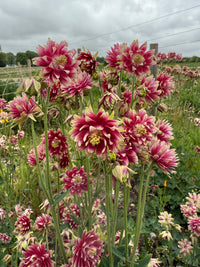
Fully double, spurless pom-pom blooms in the most enchanting colour combination — raspberry-pink petals delicately tipped with white and soft green, ageing through pale pink to nearly pure white as the season progresses. A true icon of the cottage garden.
Named after Emma Nora Barlow, Charles Darwin's granddaughter, who grew this remarkable variety in her Cambridgeshire garden, 'Nora Barlow' is the most famous of all the Barlow series and one of the most beloved cottage garden perennials available from seed. The fully-double flowers emerge upward-facing on graceful branched stems from May to June, creating a sophisticated, romantic display that cuts beautifully for the vase. What makes it particularly special is the natural colour fade — blooms start as deep raspberry-pink, gradually age through pale pink tinged with green, and end as nearly pure white, meaning a single plant displays a stunning gradient of tones simultaneously. Hardy perennial (H7, surviving below -20°C). RHS Plants for Pollinators recognised — an important late-spring nectar source for emerging bumblebee queens.
A note on growing
Aquilegia seeds are photoblastic — they need light to germinate. Sow from January to June or in September. Surface-sow onto moist seed compost and do not cover; press gently for soil contact. Maintain 15–21°C. Germination is slow and erratic, taking 14–30 days and sometimes up to 90 days. A week in the fridge before sowing (cold stratification) can improve germination. Plant out in partial shade or sun in moist but well-drained soil enriched with leaf mould. Individual clumps are short-lived (3–4 years) but 'Nora Barlow' self-seeds prolifically and politely — ensuring a permanent, wandering colony. Cross-pollinates freely with other aquilegias.
Where it shines
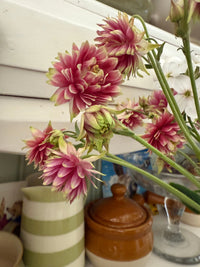
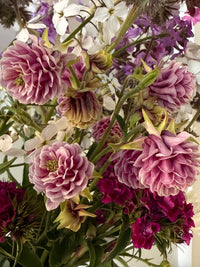
In the dappled shade of woodland edges, beneath deciduous shrubs and trees, and in any cottage border that wants a piece of horticultural heritage. As a cut flower, the long-lasting double blooms hold beautifully in the vase. The colour-changing quality means a single vase of 'Nora Barlow' shows multiple shades from raspberry to pale pink to almost-white at any given moment.
Plant alongside
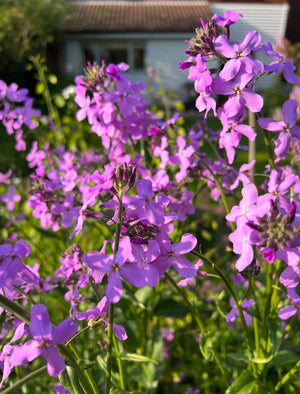
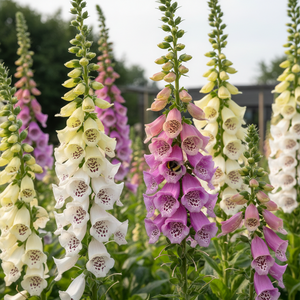
For a romantic shaded cottage scheme, pair with the towering indigo spires of Sweet Rocket 'Purple' for vertical contrast, and Foxglove 'Excelsior Mixed' for height. For an all-aquilegia woodland planting, combine with the classical 'Columbine Blue' and the dramatic 'William Guinness'.
Plant alongside
Aquilegia Nora Barlow pairs beautifully with these cottage garden classics

RHS Plants for Pollinators
This plant has been assessed by the Royal Horticultural Society and recommended as especially beneficial to bees, butterflies and other pollinators. Growing plants like this directly supports UK pollinator populations — something close to our hearts at Salle Moor Hall Farm, where we see the difference a cottage garden full of the right plants can make.
Learn more at RHS.org.uk →
RHS Award of Garden Merit
The RHS Award of Garden Merit is given to plants of outstanding excellence for ordinary garden use. To earn this award a plant must be of good constitution, available to the gardening public, and perform reliably across a range of UK growing conditions. It is one of the most trusted plant recommendations in British gardening and a genuine mark of quality.
Learn more at RHS.org.uk →