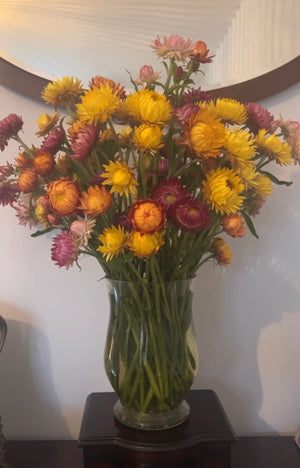

Strawflower Helipterum Roseum Mixed
Rhodanthe roseum (syn. Helipterum roseum, Acroclinium roseum)
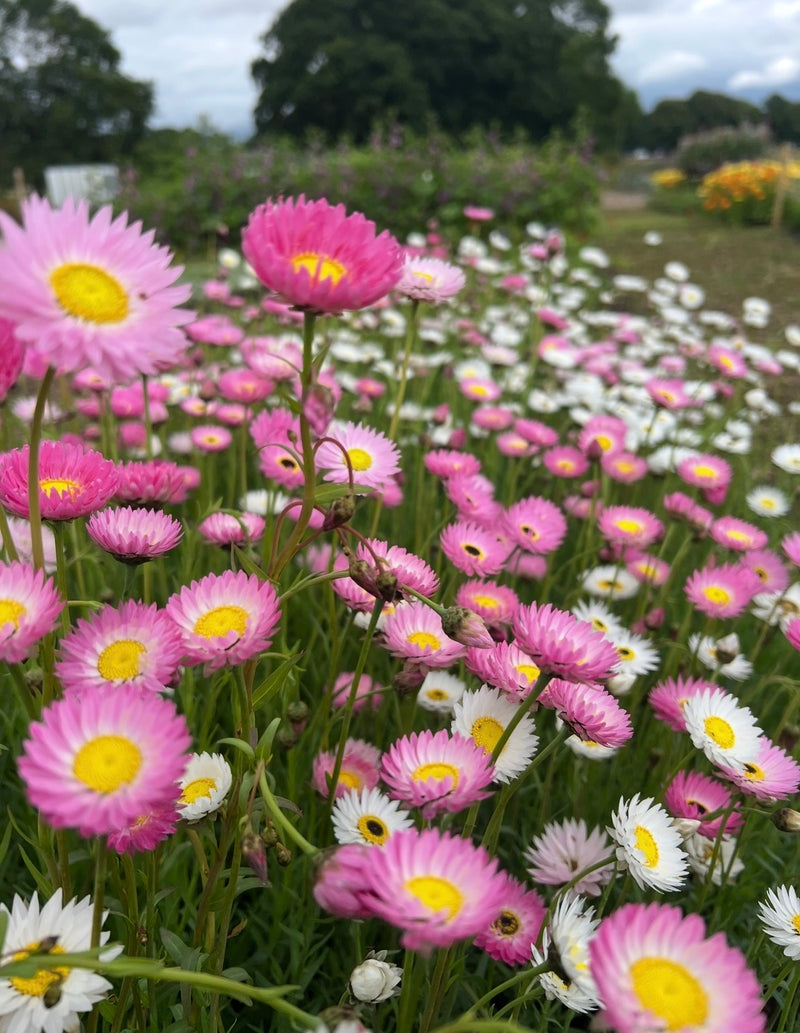
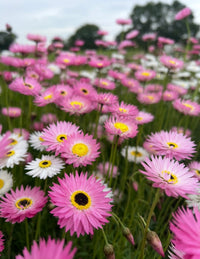
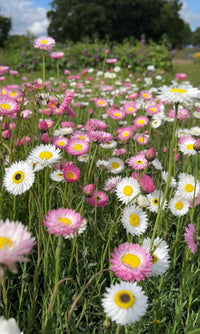
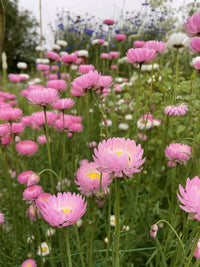
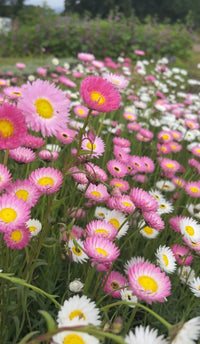
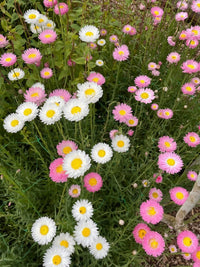
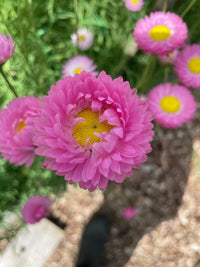
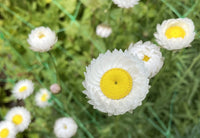
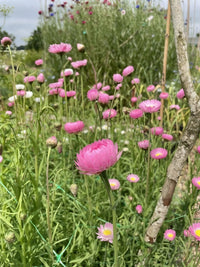
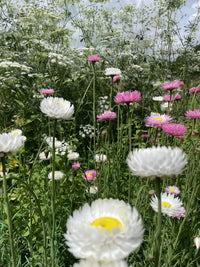
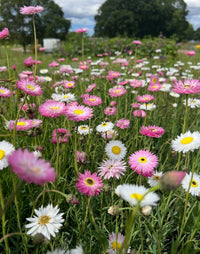
Refined small daisy-like blooms in soft blush-pink, rose-pink and white with golden centres — the delicate Victorian paper daisy filler for everlasting arrangements.
About this variety
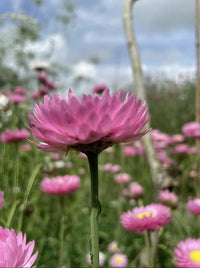
The other strawflower, and the delicate one. Small daisies of three or four centimetres in blush pink, rose and white, each with a gold or dark eye, on slender stems at 40 to 50cm above narrow grey-green leaves. The bracts are tissue-thin, almost translucent, and hold their colour for years once dried.
Its job is filling. Where helichrysum is bold and saturated and does the focal work in a dried arrangement, this is small and soft and Victorian, and it fills the space between the big heads with something considerably lighter. Grown together, the difference in scale does most of the design work for you.
It appears in catalogues under three names, so do not be confused. Helipterum roseum is the traditional one, Acroclinium roseum the older, Rhodanthe roseum the current. Same plant.
Cut when two to four of the outer bract layers have opened, before the flower is fully out, with 20 to 25cm of stem, and hang in small loose bunches somewhere warm and dark. Handle the dried stems carefully, because it is more fragile than helichrysum. It is half-hardy and cannot go out until the frosts are done.
Plant alongside
Strawflower Helipterum Roseum Mixed pairs beautifully with these cottage garden classics