

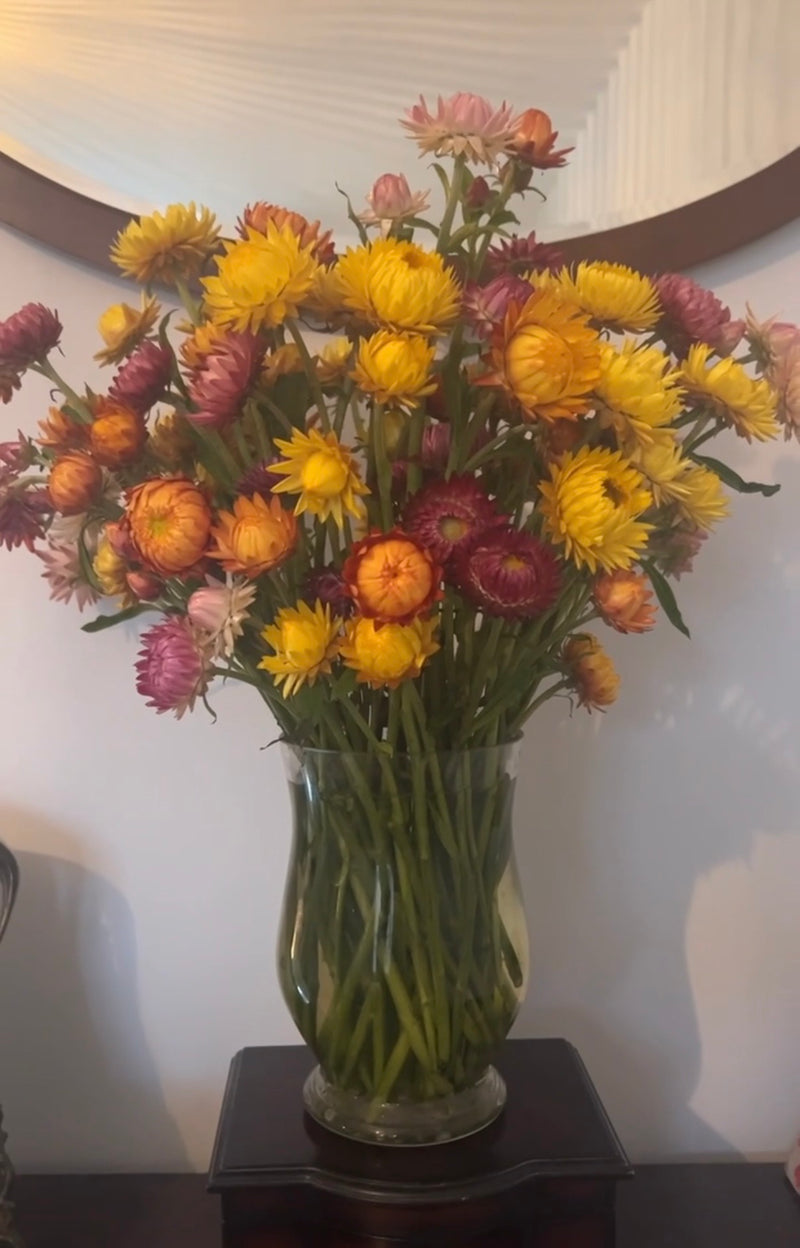

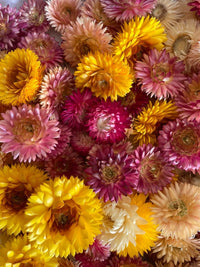
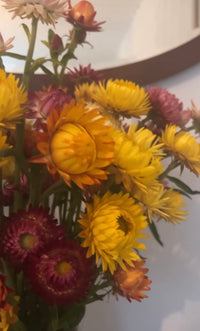
Strawflower Helichrysum Swiss Giant Mix
Xerochrysum bracteatum (syn. Helichrysum bracteatum) 'Swiss Giant Mix'
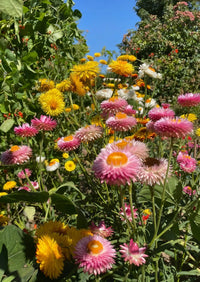
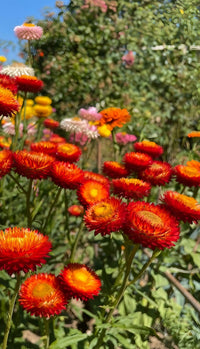
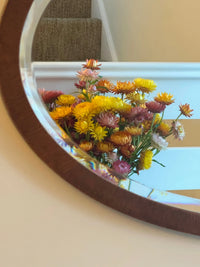
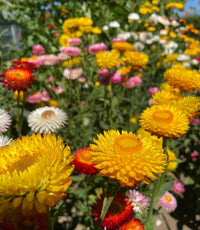
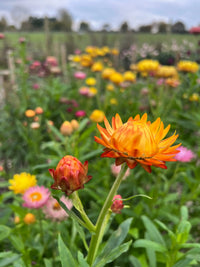
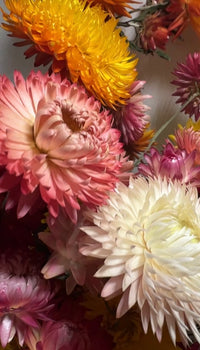
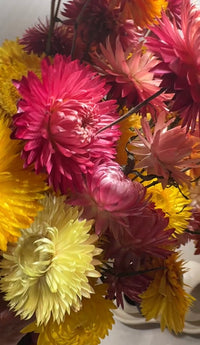
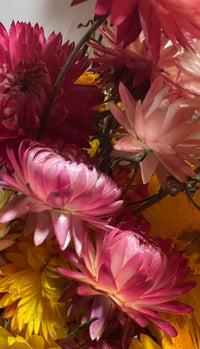
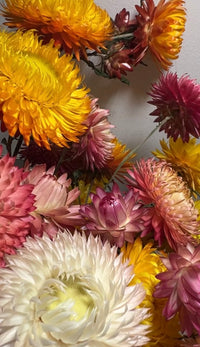
Massive fully-double bracts in vibrant sunset shades of red, orange, yellow, pink and white on 90–100cm stems — the gold-standard everlasting flower that retains colour for years.
About this variety
If you grow one flower for drying, make it this. Fully double heads up to six centimetres across in scarlet, tangerine, gold, hot pink and white, on sturdy stems at 90cm to a metre.
What you are touching is not petal. The coloured parts are bracts, modified leaves, and they feel crisp and papery while the plant is still growing in the ground. That is why they keep their shape and colour for years rather than months. There is a quirk that catches people out, too: helichrysum is hygroscopic and responds to humidity, opening in dry air and closing in damp, so a dried bunch in a steamy kitchen will shut itself and open again when the room dries. That is the plant still doing what it evolved to do to protect its seed from rain.
Pick when the buds are half open. They carry on opening as they dry, and a fully open flower often turns inside out or browns. Hang them somewhere warm, dark and dry. Get the support in early, while the plants are young, because a metre of brittle stem cannot be staked after the fact. Full sun, lean soil and slightly dry conditions give the strongest colour.
Plant alongside
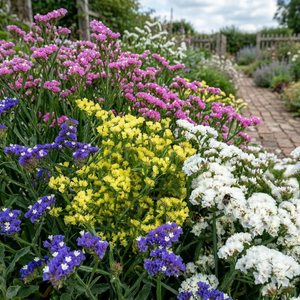
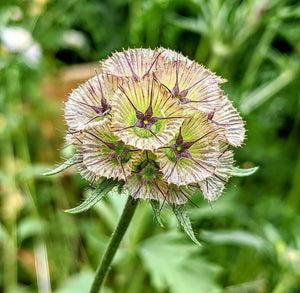
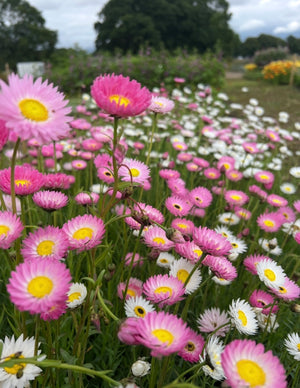
Strawflower Helichrysum Swiss Giant Mix pairs beautifully with these cottage garden classics
RHS Plants for Pollinators
This plant has been assessed by the Royal Horticultural Society and recommended as especially beneficial to bees, butterflies and other pollinators. Growing plants like this directly supports UK pollinator populations — something close to our hearts at Salle Moor Hall Farm, where we see the difference a cottage garden full of the right plants can make.
Learn more at RHS.org.uk →