

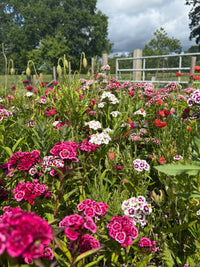
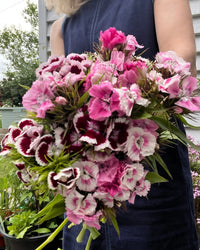
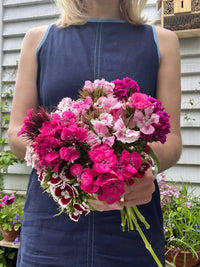
Sweet William Auricula Eyed Mixed
Dianthus barbatus 'Auricula Eyed Mixed' — Hardy Biennial
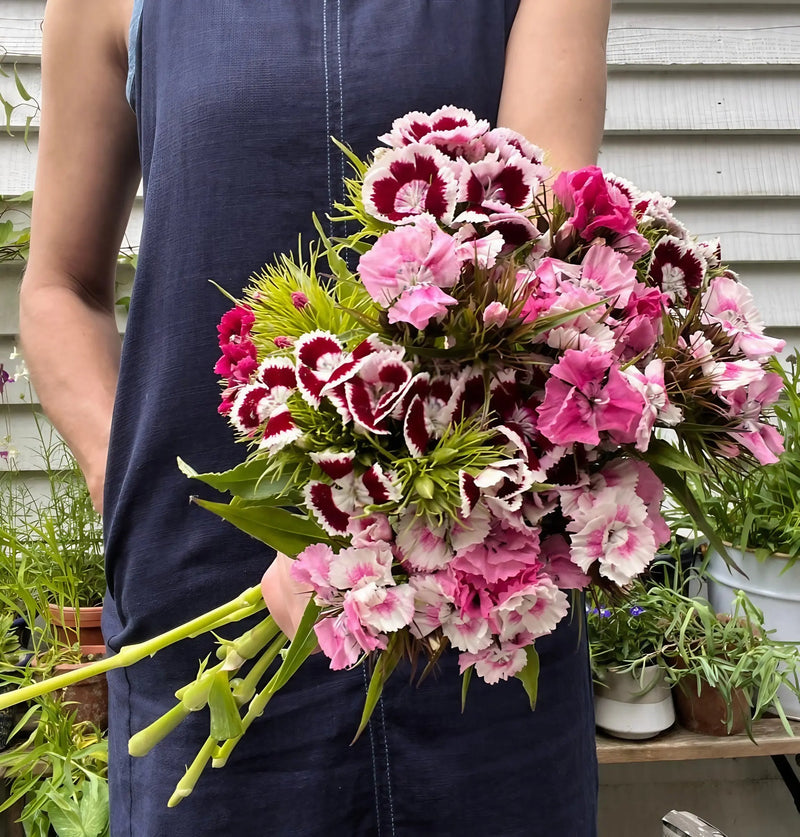
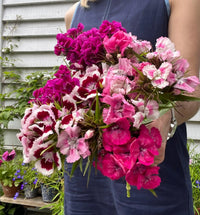
Dense clusters of crimson, purple and pink bicolour florets with characteristic pale "auricula eyes" — the cottage biennial classic with intense clove fragrance and 10-14 day vase life.
About this variety
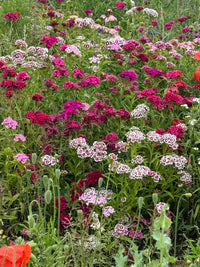
Dense flat-topped clusters of small florets in crimson, purple and pink, each one marked with a contrasting pale eye at the centre, after the elaborate eye markings of a Victorian auricula. On sturdy stems at 45 to 60cm.
The scent is the reason they have been grown in Britain since the 1500s. It is a rich clove perfume, and one small bunch will scent a room. In the vase they hold ten days to a fortnight, which is exceptional. They also fill an awkward gap: the spring biennials are finishing, wallflowers and forget-me-nots, and the summer annuals have not started, and this is what covers late May and June.
It is a biennial, so nothing happens the first year. Leaves and a strong green rosette, then the display the following spring, then it sets seed and dies. Sow a short row every year and there is always a crop coming. It self-seeds freely once established, so a colony keeps itself going. The petals are edible, with a mild clove flavour.
Plant alongside
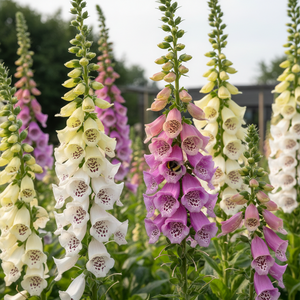
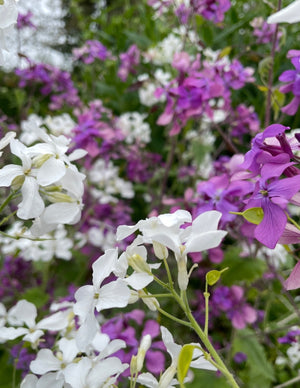
Sweet William Auricula Eyed Mixed pairs beautifully with these cottage garden classics

RHS Plants for Pollinators
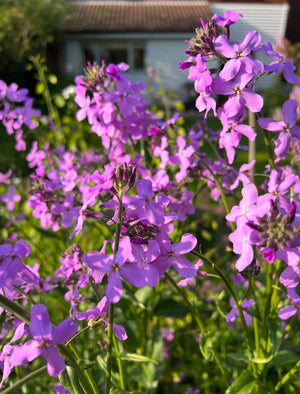
This plant has been assessed by the Royal Horticultural Society and recommended as especially beneficial to bees, butterflies and other pollinators. Growing plants like this directly supports UK pollinator populations — something close to our hearts at Salle Moor Hall Farm, where we see the difference a cottage garden full of the right plants can make.
Learn more at RHS.org.uk →