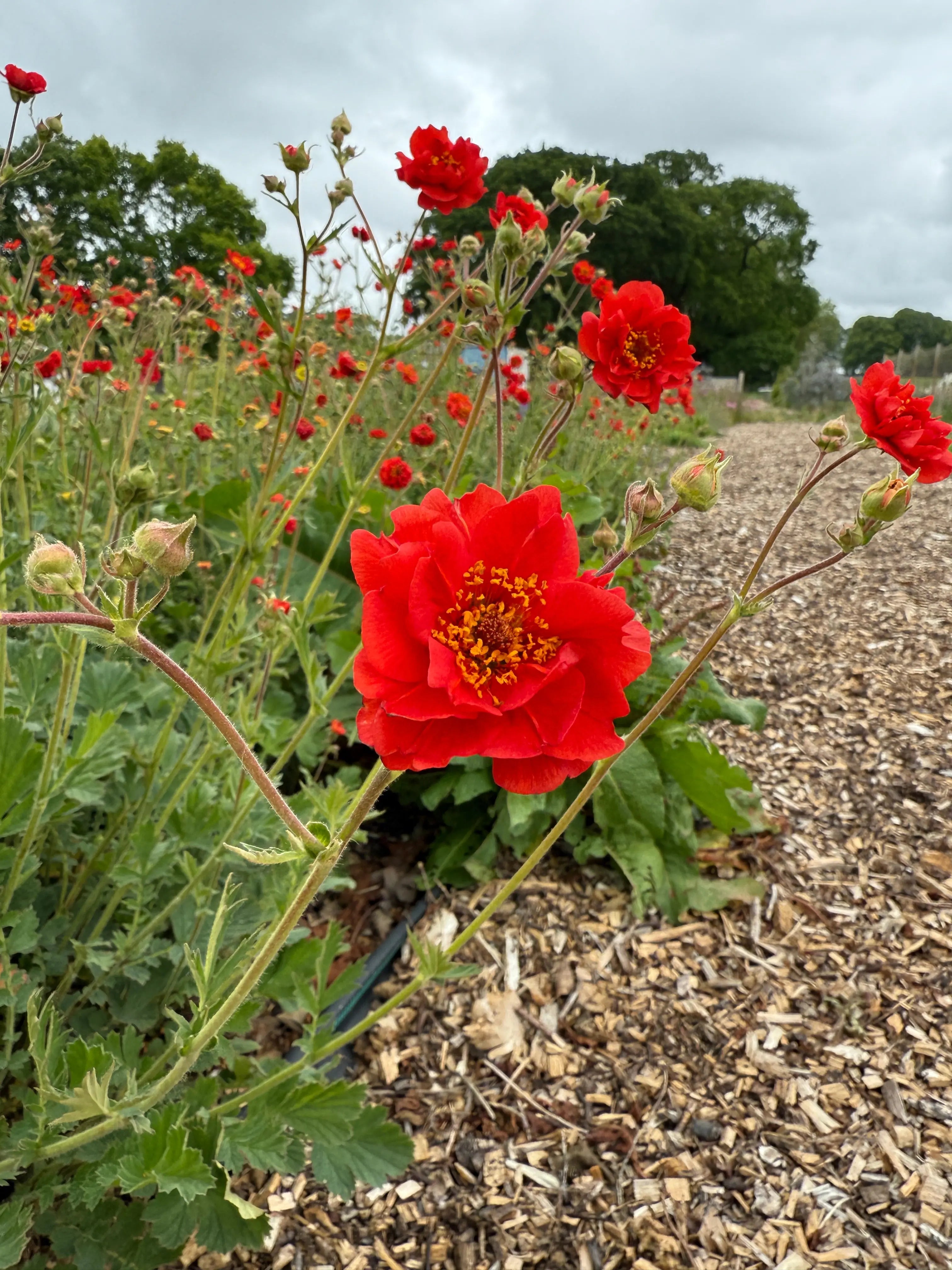
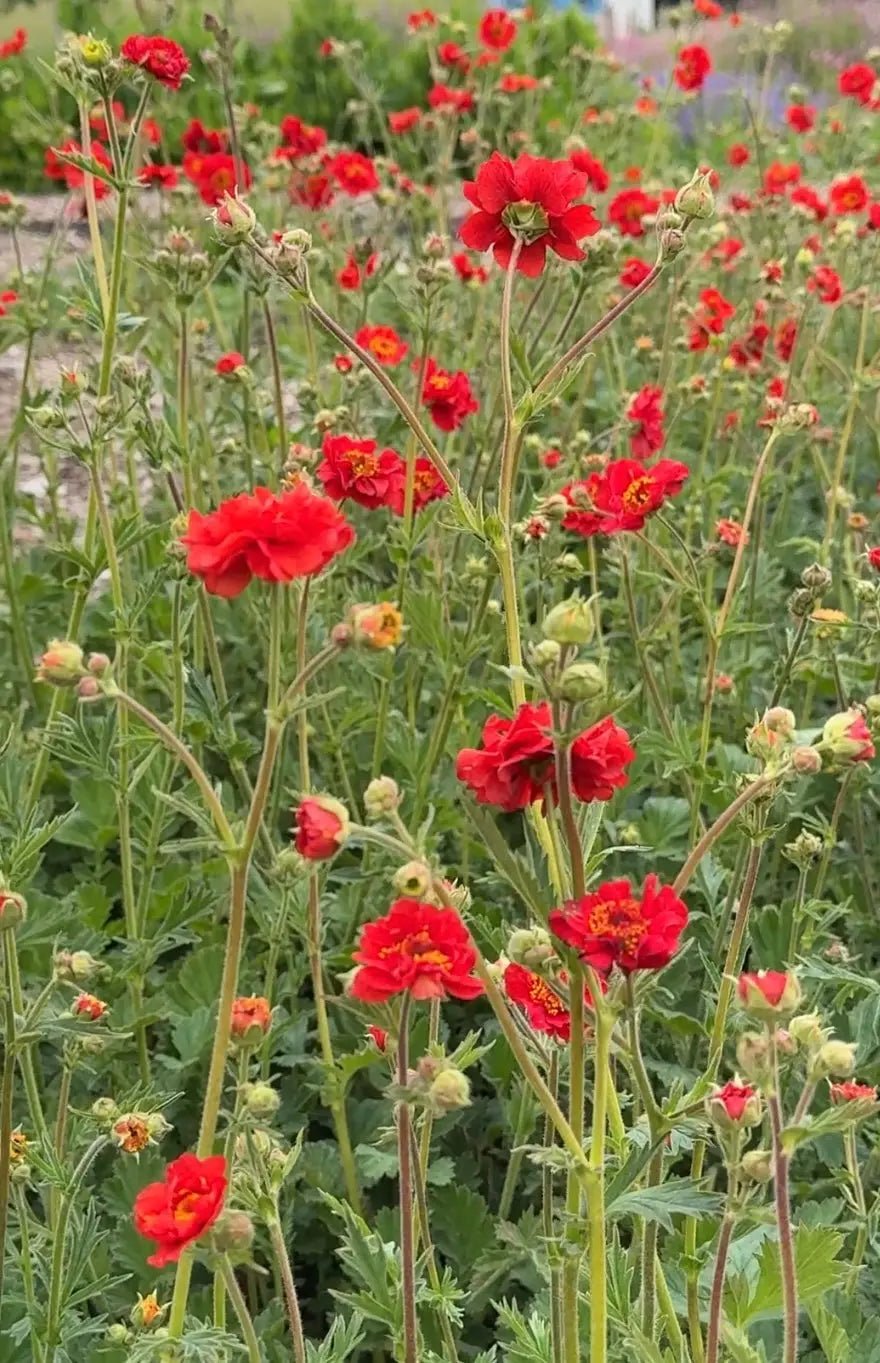
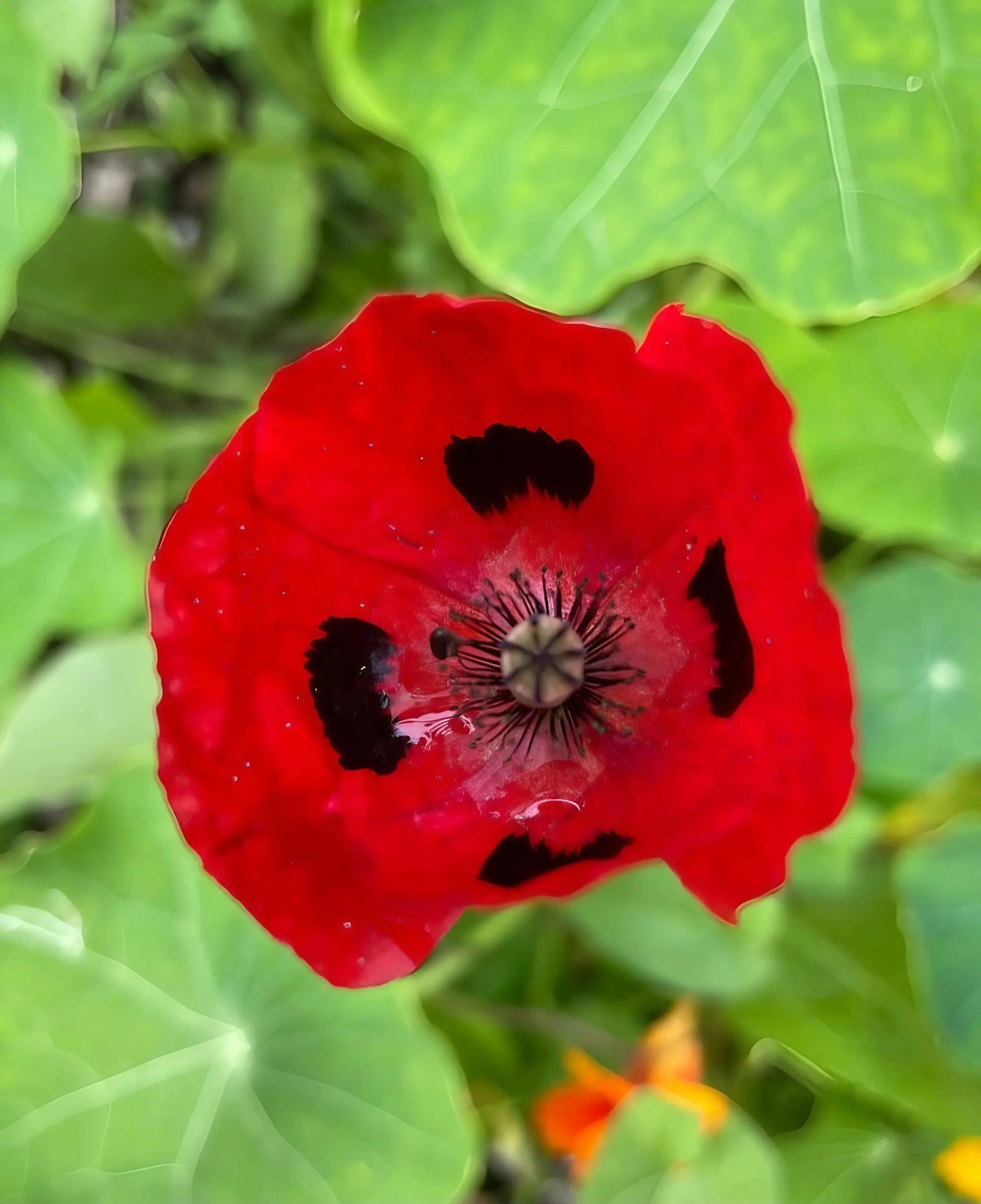
Red Flowers
Antique reds and dusty crimsons for cottage drama


New


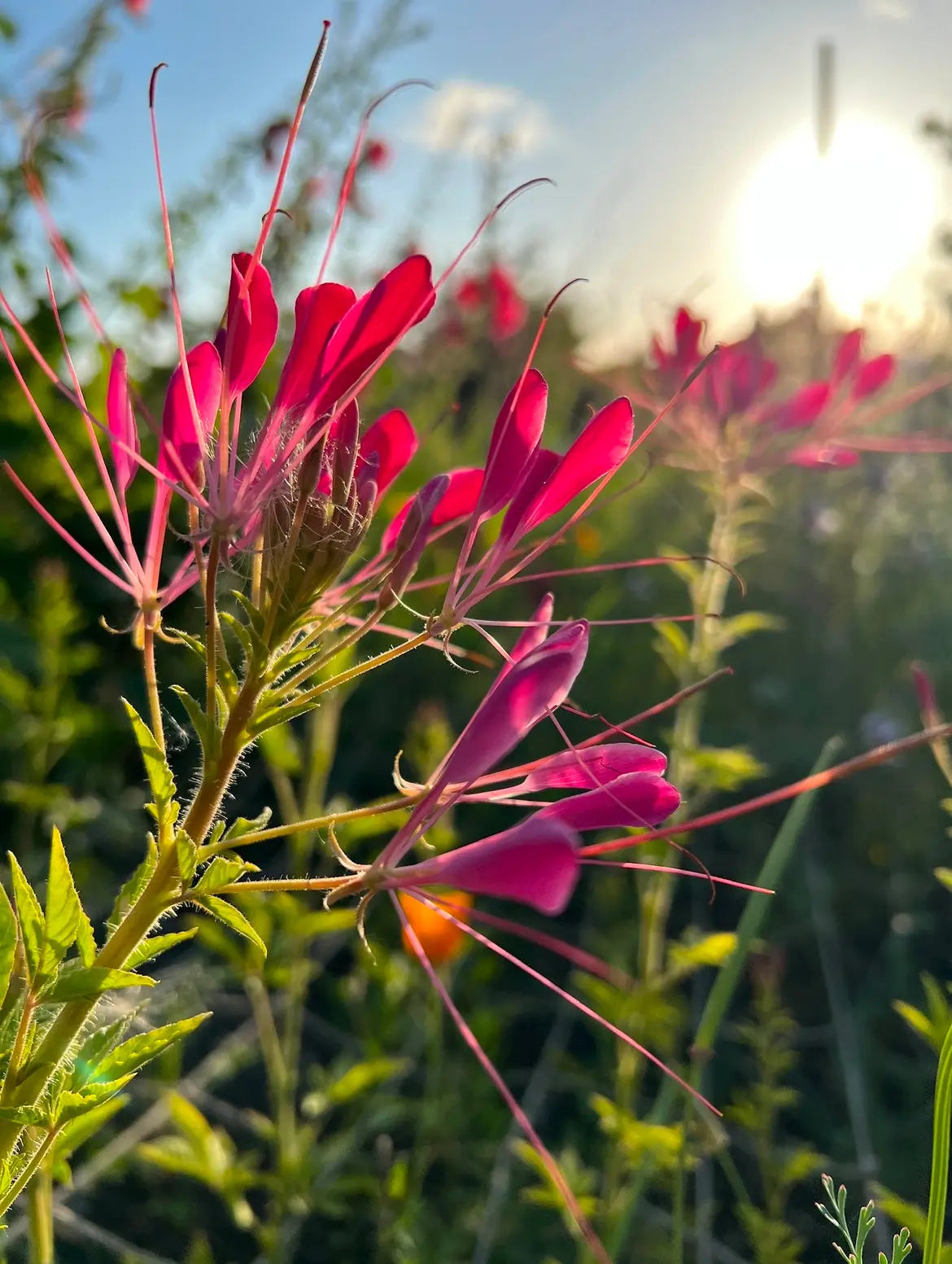
Cleome Cherry Queen
Cleome hassleriana 'Cherry Queen' Spider Flower 'Cherry Queen' Tall 1


New
NewGrowing red flowers — your questions answered
How do I use red without overpowering the garden?
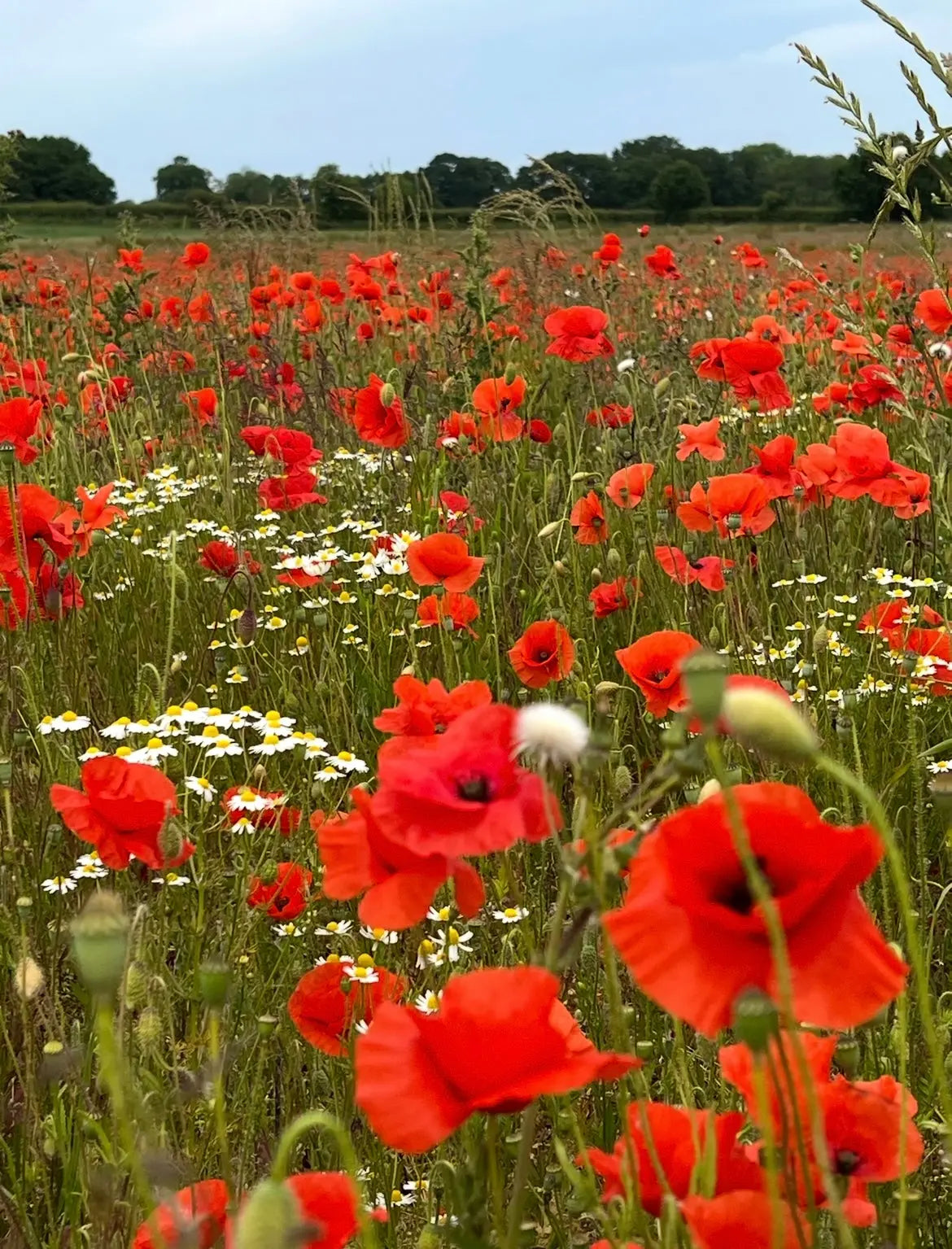
Red is the most attention-grabbing colour in the spectrum — a little goes a long way. Use it in punctuation rather than as the dominant colour: a single drift of red poppies or scarlet salvia is far more striking than a whole border of red. Balance reds with quieter neighbours — silver foliage, soft pinks, and creamy whites all calm a red.
Which reds work in a cottage garden?
The cottage garden favours dusty, antique reds over modern scarlets. Achillea Rubra (red yarrow), Antirrhinum Velvet, dahlia Bishop of Llandaff, Sweet Pea King Edward VII, and the deep crimson of Cosmos Rubenza or Cornflower Black Ball all carry that vintage richness. Bright pillar-box reds belong elsewhere; cottage red is closer to wine, claret, and rust.
What pairs well with red?
Soft pink and silver are the safest companions for red, creating a romantic palette. White provides clean contrast. Deep purple harmonises into Victorian elegance. Yellow-red and orange-red pairings are bold but work in hot late-summer schemes. Avoid placing pure red next to magenta-pink or bright orange — they fight each other for attention.
Do red flowers attract specific pollinators?
Yes — unlike most flower colours, red is often a butterfly-and-hummingbird signal rather than a bee signal (bees see red poorly). In the UK we have no hummingbirds, but red flowers still attract painted ladies, peacock butterflies, and red admirals reliably. They're worth planting purely for the butterfly visits.

