

Rudbeckia Autumn Forest
Rudbeckia hirta 'Autumn Forest'
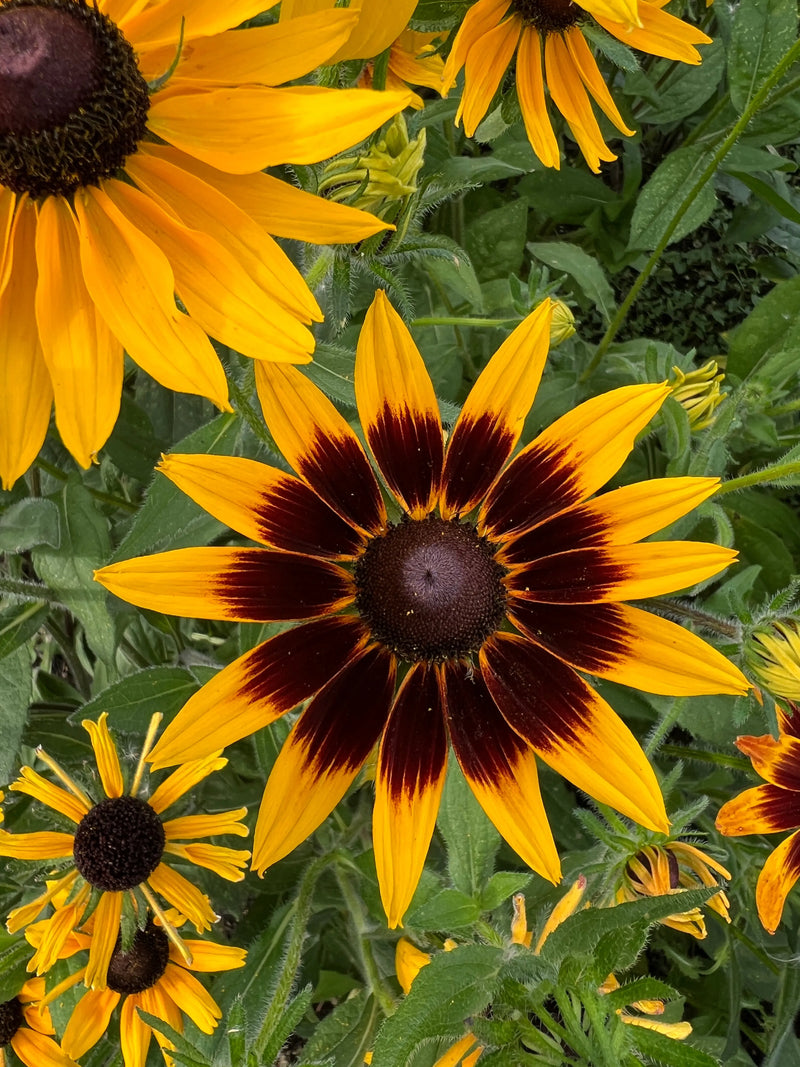
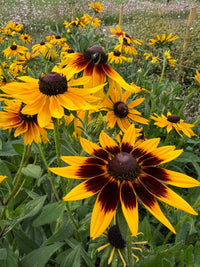
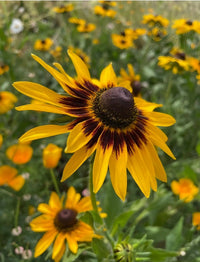
Daisy-form flowers in autumnal mahogany, russet, chestnut and bronze with dark cone centres — the RHS AGM retro-autumnal Black-Eyed Susan for warm late-summer borders.
About this variety
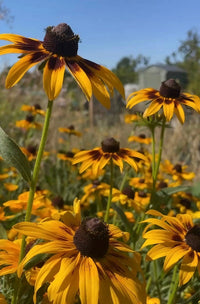
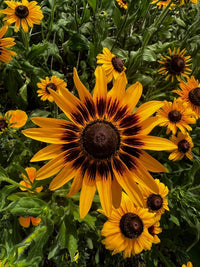
Not the usual bright yellow black-eyed Susan. This one runs through mahogany, russet, chestnut and bronze-brown, with plenty of bicolours where a warm petal is edged or washed with something darker, all anchored by the black cone. It holds both an RHS Award of Garden Merit and Plants for Pollinators recognition.
The colours are the argument. There is very little available from a British-grown annual between July and October that reads as genuinely autumnal rather than as summer fading, and this does. In a vase it makes an autumn arrangement look deliberate.
It wants rich, moisture-retentive, well-fed ground, which is the opposite of what cosmos and nasturtiums want. Dig compost into the planting position; people who treat it like a lean-soil annual get a thin, disappointing plant. Sow it on the surface, since the seed needs light, and be patient because the seedlings start slowly. Plant out in June. Slugs go for the young plants hard for the first fortnight, until the leaves toughen and go rough, after which they largely leave it alone. Deadhead and it runs to November.
Plant alongside
Rudbeckia Autumn Forest pairs beautifully with these cottage garden classics
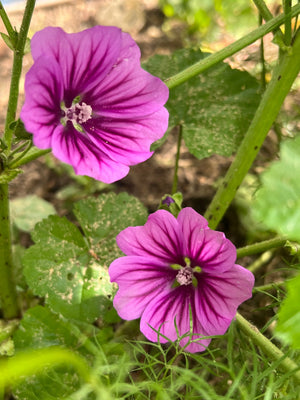
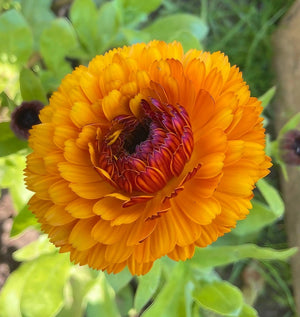
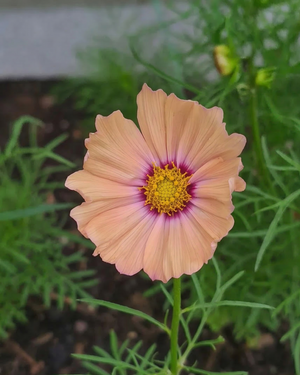
RHS Plants for Pollinators
This plant has been assessed by the Royal Horticultural Society and recommended as especially beneficial to bees, butterflies and other pollinators. Growing plants like this directly supports UK pollinator populations — something close to our hearts at Salle Moor Hall Farm, where we see the difference a cottage garden full of the right plants can make.
Learn more at RHS.org.uk →
RHS Award of Garden Merit
The RHS Award of Garden Merit is given to plants of outstanding excellence for ordinary garden use. To earn this award a plant must be of good constitution, available to the gardening public, and perform reliably across a range of UK growing conditions. It is one of the most trusted plant recommendations in British gardening and a genuine mark of quality.
Learn more at RHS.org.uk →