
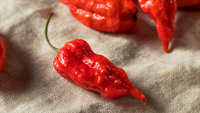
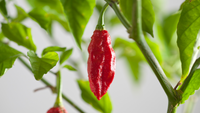
Bhut Jolokia Red
The legendary ghost chilli - the first pepper ever to break a million Scoville
The world-famous Ghost Pepper - the first chilli ever verified over a million Scoville and Guinness world's hottest in 2007. A slow-building, fruity-smoky, utterly ferocious superhot from Northeast India.
Handle with care — this is a superhot chilli
This variety is exceptionally hot. The capsaicin in superhot chillies can cause real discomfort and even burns to skin and eyes, so a few simple precautions make all the difference when handling the fresh or dried fruit:
- Wear disposable gloves whenever you cut, deseed, or handle the fruit
- Keep your hands well away from your eyes, nose, and face while working
- Never touch contact lenses with hands that have handled the fruit
- Work in a well-ventilated space — the fumes from cooking or drying can irritate the lungs and eyes
- Wash hands, knives, and boards thoroughly with soapy water afterwards
- Keep fresh and dried fruit well out of reach of children and pets
The plants themselves are perfectly safe to grow and handle — these precautions apply to the ripe fruit and its seeds.
About this variety
The ghost pepper, and the chilli that started the whole superhot era. In 2007 Guinness certified it as the hottest on earth and it became the first pepper scientifically verified above a million Scoville units. It held the record until 2011. Hotter things have been bred since, but this is the one that changed what people thought a chilli could do.
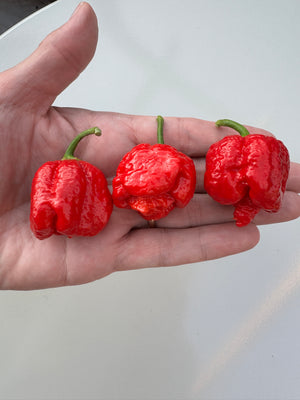
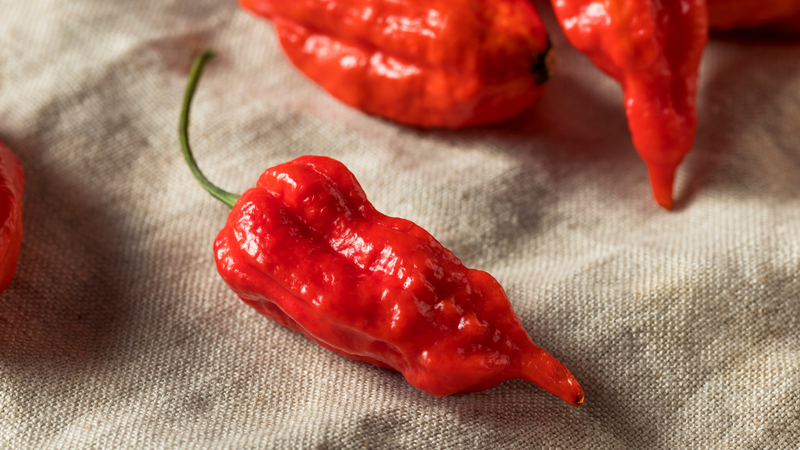
It comes from the hills of Assam, Nagaland and Manipur, where it is the king chilli. Bhut means ghost in Assamese, which is said to describe the way the heat arrives: slow, almost gentle, behind a fruity and faintly smoky flavour, and then climbing steadily into a sustained burn that catches out experienced chilli eaters. That delay is what makes it dangerous. The pods are slim and tapered, 6 to 8cm, with a dented papery skin that dries fast and grinds well.
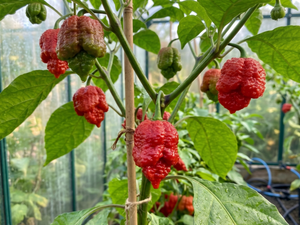
It needs a greenhouse or polytunnel here. It is a long-season Capsicum chinense, slow to germinate and hungry for warmth, reaching about a metre and cropping heavily under glass. Finishing the last pods indoors under a light will save the tail of the crop. Wear gloves and eye protection when picking and processing the fruit.
Plant alongside
Bhut Jolokia Red pairs beautifully with these kitchen garden companions