

Aquilegia Barlow Mixed
Aquilegia vulgaris var. stellata Barlow Mixed
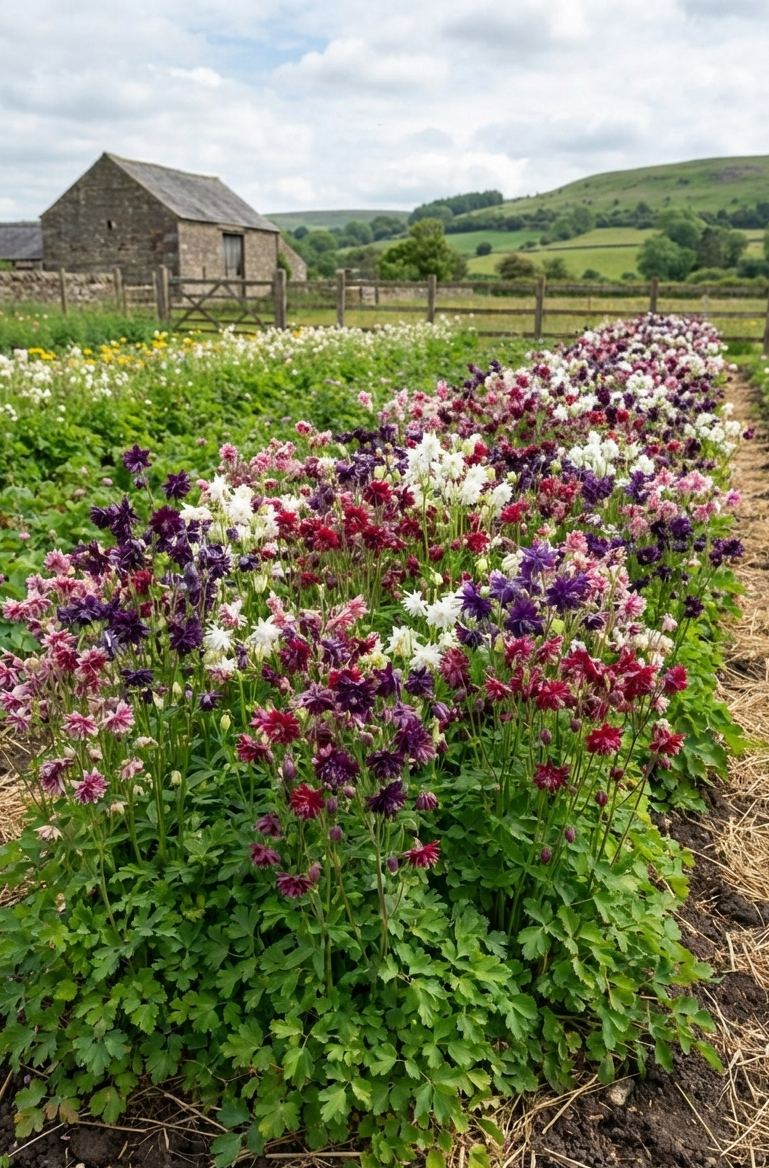
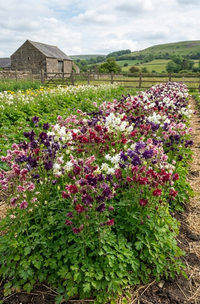
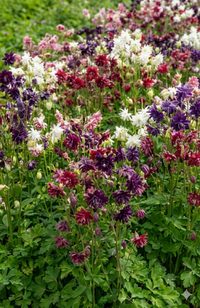
Fully double, spurless pom-pom blooms in the full Barlow palette — deep blues, raspberries, lilacs and whites on tall 70–90cm stems. The cutting-garden Granny's Bonnet.
About this variety
Fully double spurless pompoms on tall stems at 70 to 90cm, in the whole Barlow range at once: deep blue, near-black, raspberry, lilac, white and bicolours. The Barlows were the first aquilegias to lose the spurs entirely, which turns the flower from a granny's bonnet into something closer to a small dahlia.
They were bred for cutting and it shows. The stems are taller and stronger than most ornamental aquilegias, the flowers are larger at 4 to 5cm, and a cut stem holds seven to ten days. In a shaded border or at a woodland edge they carry May and June, and they are hardy well below anything a Norfolk winter will produce.
Two things to expect. The foliage goes tatty and mildewed by late July, every year, without fail; cut the whole plant to the ground and it makes a fresh rosette for autumn. And aquilegias cross with everything, promiscuously, so self-sown seedlings will not be the Barlows you planted. Some gardeners find that the best thing about them. If you want the mix to stay the mix, deadhead before the seed drops.
Plant alongside
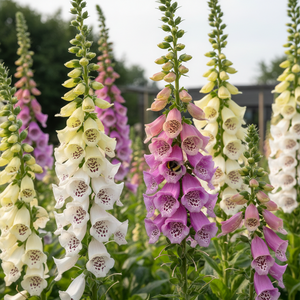
Aquilegia Barlow Mixed pairs beautifully with these cottage garden classics

RHS Plants for Pollinators
This plant has been assessed by the Royal Horticultural Society and recommended as especially beneficial to bees, butterflies and other pollinators. Growing plants like this directly supports UK pollinator populations — something close to our hearts at Salle Moor Hall Farm, where we see the difference a cottage garden full of the right plants can make.
Learn more at RHS.org.uk →