




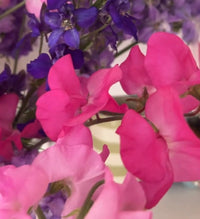
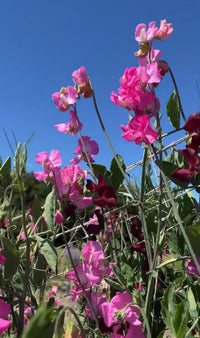
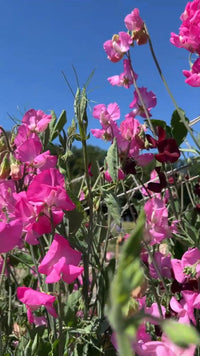
Sweet Pea Parfume Millennium
Lathyrus odoratus 'Parfume Millennium' — Spencer type; RHS AGM
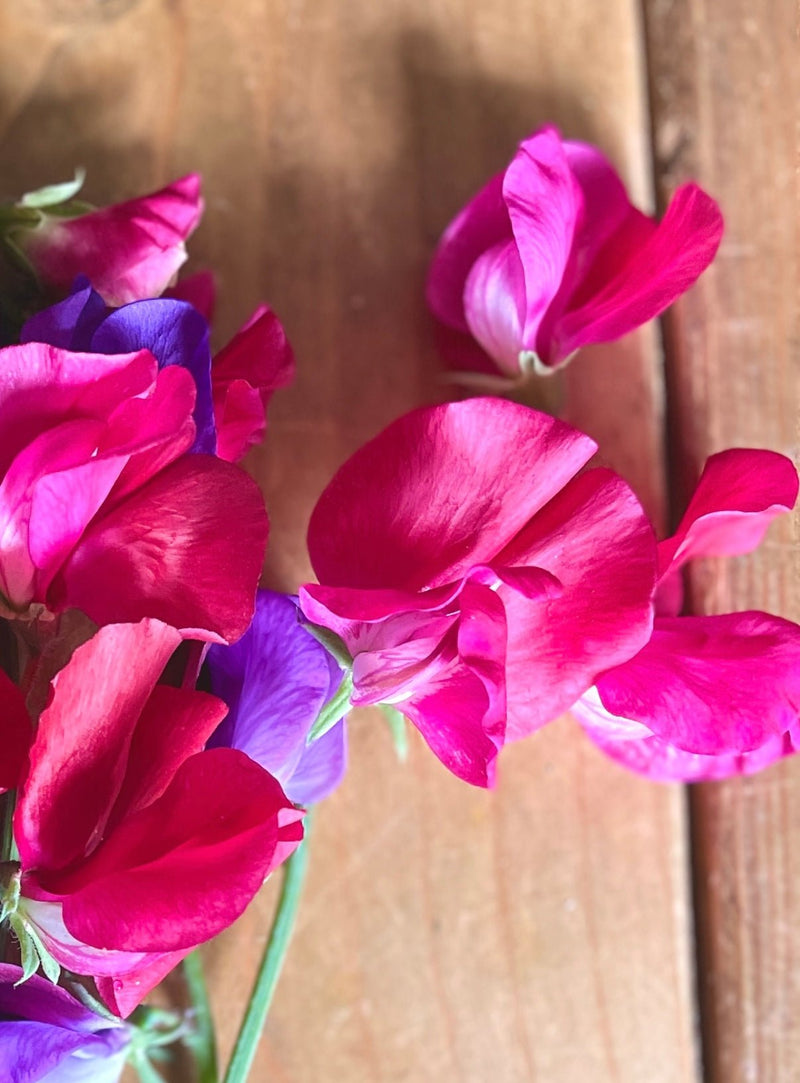
Frilly ruby-silk crimson flowers with sun-stable colour that doesn't scorch in heat — the RHS AGM crimson Spencer Sweet Pea for serious cutting and exhibition.
About this variety
Lathyrus odoratus 'Parfume Millennium' Spencer Sweet Pea 'Millennium' (RHS AGM)
Frilly show-stopping blooms that shimmer like ruby silk in the light — Sweet Pea 'Parfume Millennium' is the sun-stable crimson Spencer Sweet Pea, holding the RHS Award of Garden Merit for its dramatic appearance, exceptional vigour, lovely fragrance, and the uncommon quality of holding deep velvet crimson-red colour through hot summer days without scorching or fading. Exhibition standard.
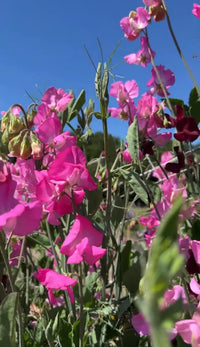
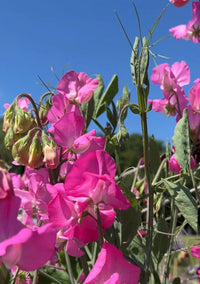
Crimson Sweet Peas can sometimes be prone to "burning" in hot weather — 'Millennium' has been specifically selected for colour stability. The deep intense velvet crimson-red blooms remain crisp and vibrant from their first opening until they fade, regardless of summer heat. This is a vigorous climber reaching heights of up to 2.4m, holding the prestigious RHS Award of Garden Merit — confirmation of reliable high-performance Sweet Pea breeding perfectly suited to the British climate. Highly regarded for its dramatic appearance and lovely fragrance, making it a premier choice for professional-quality cut flowers or creating a bold scented wall of colour in the garden. Exhibition standard — due to vigour and consistent bloom quality (often producing four flowers per stem), Millennium is a frequent winner on the exhibition bench and a staple for florists. Hardy annual (H3). Spencer-type breeding for large ruffled cutting-quality flowers.
A note on growing
Standard Sweet Pea cultivation, with special note on temperature: when sowing indoors, keep cool (around 15°C) to prevent germination failure from heat. Sweet Peas germinate best at cool temperatures and high heat causes germination failure. Otherwise standard: autumn sow October–November for strongest plants, or spring sow January–March; soak seeds 2–4 hours; plant out April–May in full sun in rich fertile soil; provide sturdy support immediately; pick daily.
⚠️ Toxicity warning: seeds toxic if eaten. Keep away from children.
Where it shines
In sophisticated cottage cutting gardens — 'Millennium' is the crimson Sweet Pea of choice for serious cutting and exhibition use. On the show bench for competition entries. In florist-quality cutting where the sun-stable colour matters for arrangements being delivered in summer heat. As a dramatic dark anchor for any climbing cottage scheme.
Plant alongside
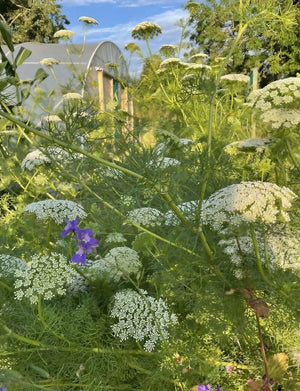
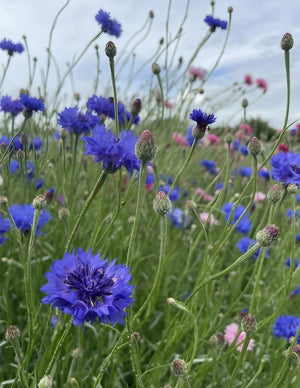
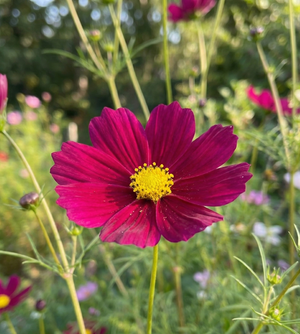
For modern meadow-style cottage cutting, combine 'Millennium' with Ammi majus — the delicate frothy white lace provides an ethereal background that helps break up the heavy solid red of the 'Millennium' blooms, creating a modern meadow display. For the regal pair: red and blue are a classic garden combination. Plant the deep velvet-crimson of 'Millennium' behind a drift of Cornflower 'Blue Ball' for a vibrant high-energy border that's a magnet for bees. With Cosmos 'Sensation Dazzler' for matching crimson cottage drama at greater height.
Plant alongside
Sweet Pea Parfume Millennium pairs beautifully with these cottage garden classics

RHS Award of Garden Merit
The RHS Award of Garden Merit is given to plants of outstanding excellence for ordinary garden use. To earn this award a plant must be of good constitution, available to the gardening public, and perform reliably across a range of UK growing conditions. It is one of the most trusted plant recommendations in British gardening and a genuine mark of quality.
Learn more at RHS.org.uk →