


Cornflower Black Ball
Centaurea cyanus 'Black Ball' — darkest cornflower; fully double Ball type
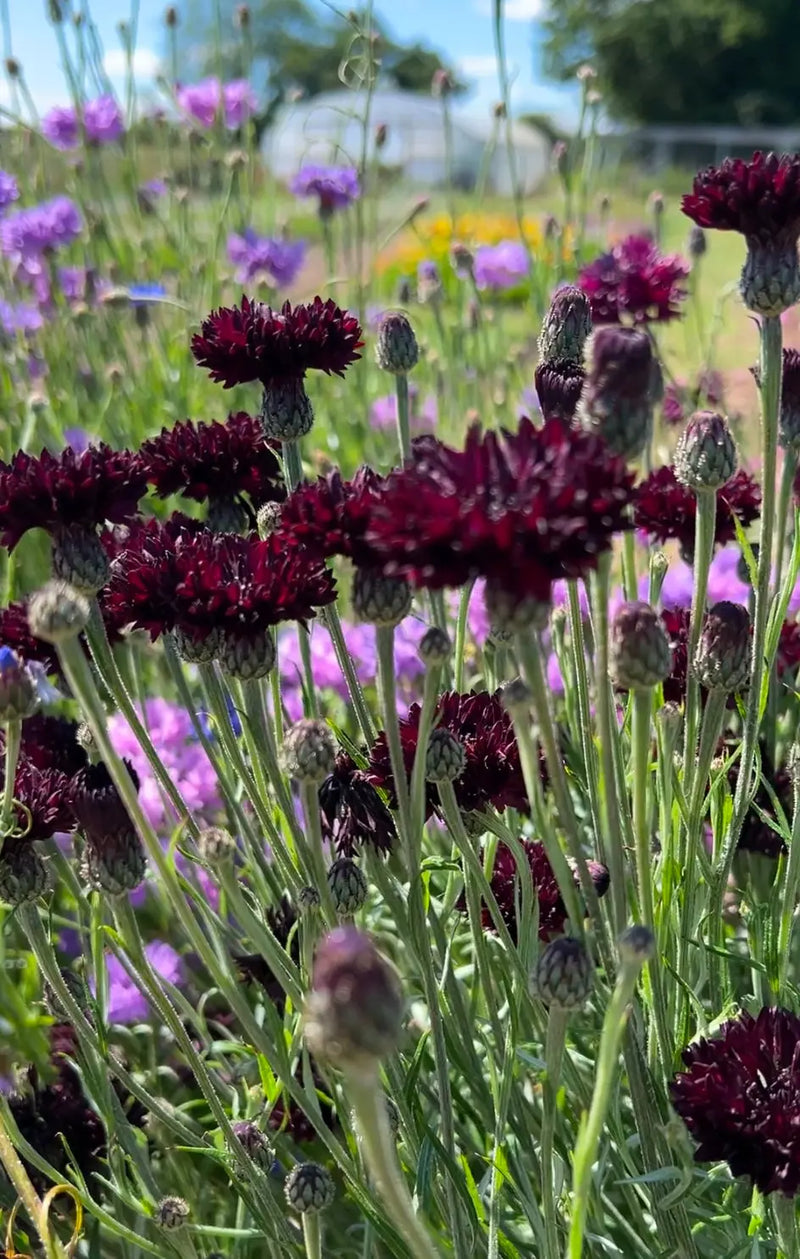
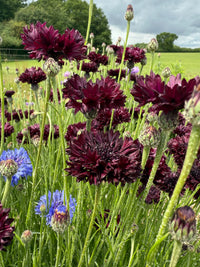
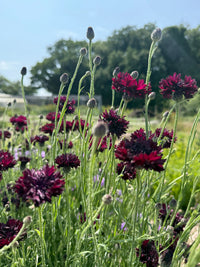
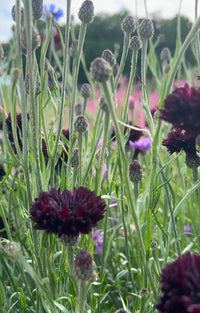
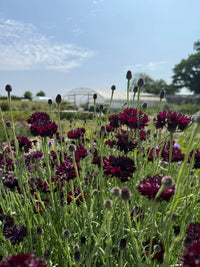
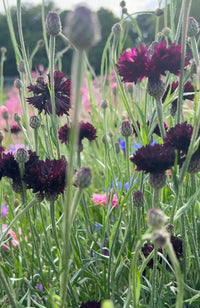
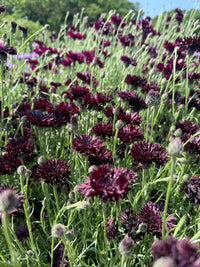
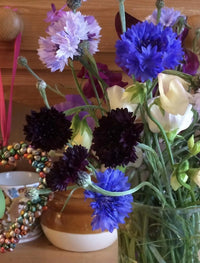
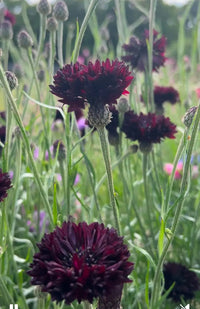
Deep velvet maroon-chocolate cornflowers like crushed blackberries — the sophisticated dark double "Ball" type that turns standard borders into Dutch oil paintings.
About this variety
Centaurea cyanus 'Black Ball' Cornflower 'Black Ball'
Despite its name, the colour isn't truly black — it's a deep, sumptuous velvet maroon-chocolate that looks like crushed blackberries, vintage velvet, the dark plum ink of a Dutch oil painting. 'Black Ball' is the moody, mysterious sophisticate of the cornflower family, and the variety that transforms a standard cottage border into something genuinely modern and elegant.
This is the cornflower for gardeners who find the standard cobalt-blue version too obvious. The double, ruffled "Ball"-type blooms are dense and substantial — far fuller than wild cornflowers — and the velvet-chocolate colour reads almost as black at a distance, while close inspection reveals the rich plum and burgundy depths within. Standing tall on silvery-green stems with characteristic feathery foliage, 'Black Ball' is one of the great cut flowers of the modern cottage garden — absolutely stunning when tumbled into a vase with white or lime-green companions. Hardy annual (H7), drought-tolerant once established, RHS Plants for Pollinators recognised, edible petals. Like all cornflowers, it produces buckets of flowers all summer long if regularly cut.
A note on growing
Cornflowers have deep taproots and resent transplanting — direct sowing is essential. Sow direct outdoors in September for the autumn-secret advantage (strong root system, much earlier and bigger flowers the following year), or in March to May for a summer display. Sow at 3mm depth in well-drained soil. Germination 14–21 days. Full sun. Lean, poor soil produces the strongest plants — rich ground gives lush leaves and floppy stems. Sandy or chalky soil is ideal. At 90cm tall, 'Black Ball' benefits from twiggy support inserted early to prevent flopping after rain. Deadhead weekly or cut regularly for the vase to keep the plant blooming until the frosts.
Where it shines
In sophisticated, moody cottage borders where the deep maroon adds gravitas and depth. As a primary cut flower for modern, designer-style arrangements — particularly outstanding combined with white Ammi or pure-white Cosmos for high-contrast "black and white" bouquets. In hot, warm-toned borders where the dark cornflower adds depth amongst reds, oranges and yellows. For autumn sowing, where the September-sown plants produce significantly bigger, more architectural specimens the following year. As a starring ingredient in any vintage or "Dutch master" planting scheme.
Plant alongside
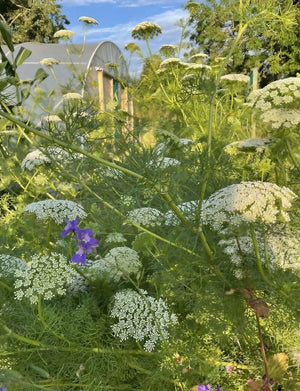
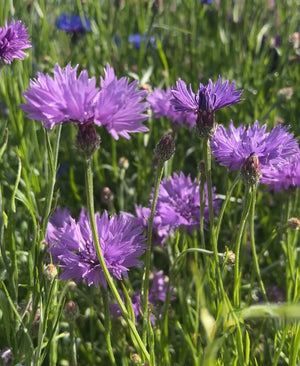
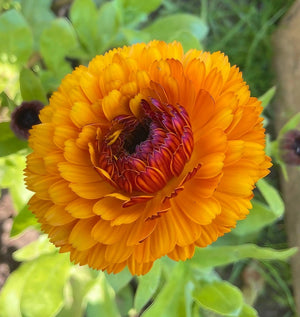
For the timeless cutting combination, plant alongside Ammi majus — the lacy white umbels are the perfect foil for the deep velvet of 'Black Ball'. For warm-tone contrast, the burnished orange and mahogany undersides of Calendula 'Touch of Red' echo the dark notes beautifully. For an all-cornflower vintage palette, combine with the soft mauve of 'Mauve Boy' or the curated 'Black & Mauve Mix'.
Plant alongside
Cornflower Black Ball pairs beautifully with these cottage garden classics

RHS Plants for Pollinators
This plant has been assessed by the Royal Horticultural Society and recommended as especially beneficial to bees, butterflies and other pollinators. Growing plants like this directly supports UK pollinator populations — something close to our hearts at Salle Moor Hall Farm, where we see the difference a cottage garden full of the right plants can make.
Learn more at RHS.org.uk →