


Oxeye Daisy
Leucanthemum vulgare -- Oxeye Daisy; Moon Daisy; Dog Daisy; native British perennial
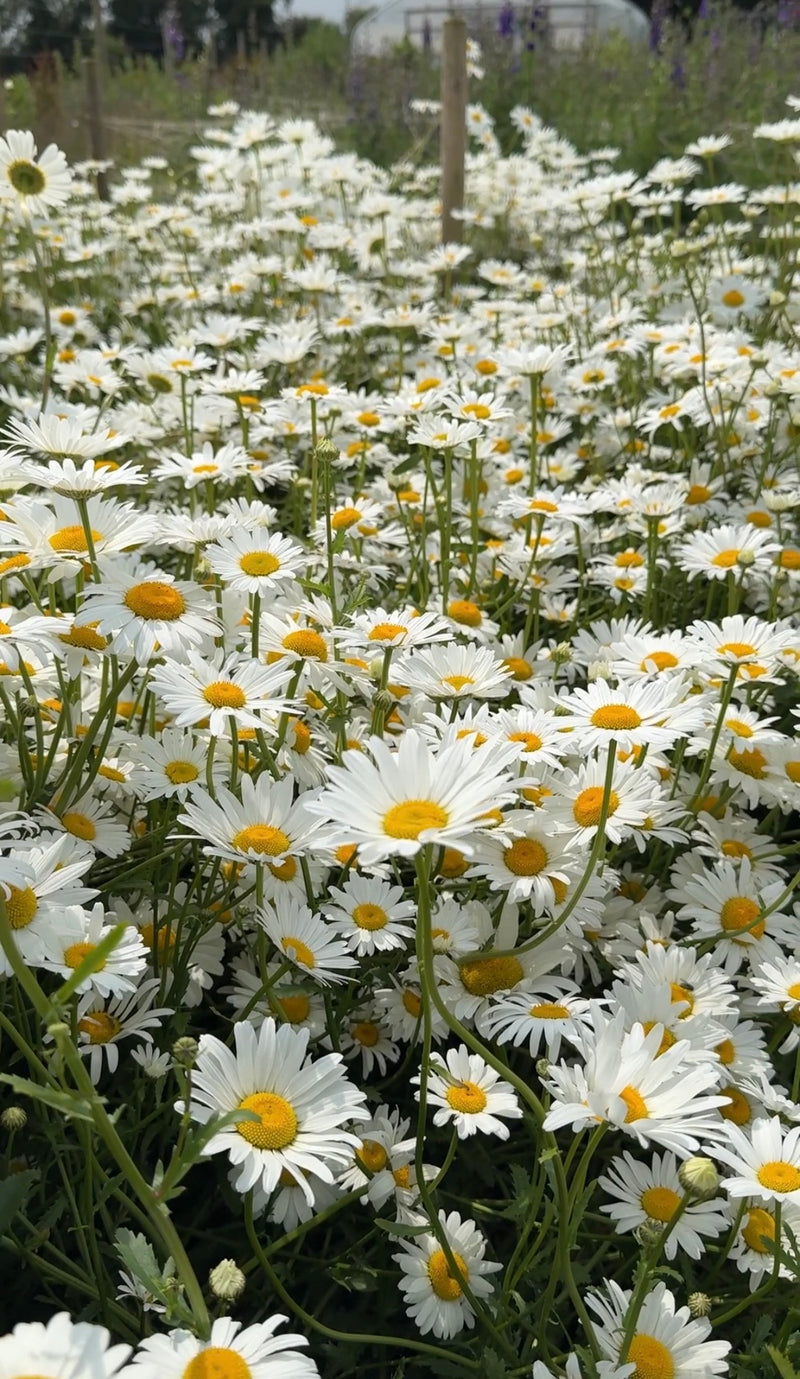
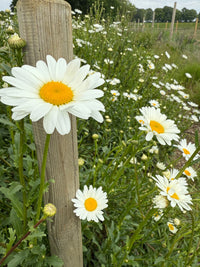
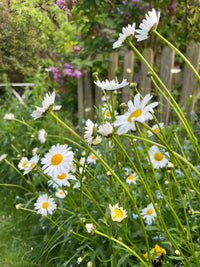
The original British wildflower — pure white petals around a vibrant yellow eye, swaying on tall wiry stems. Tough native perennial, foundation of any meadow project. RHS Pollinators.
About this variety
Leucanthemum vulgare Oxeye Daisy / Moon Daisy / Dog Daisy
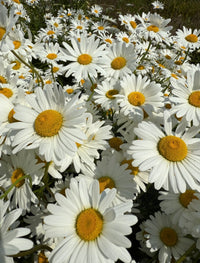
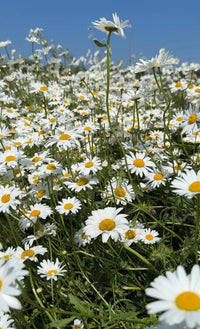
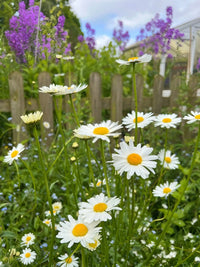
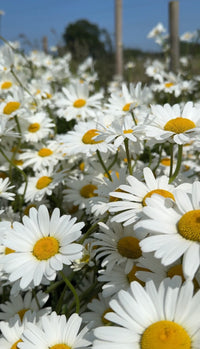
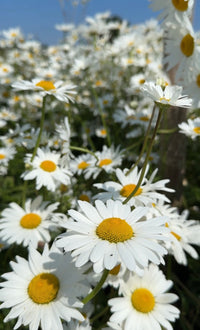
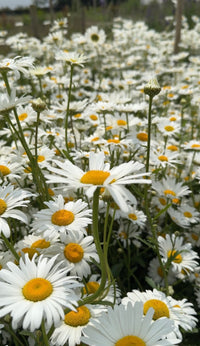
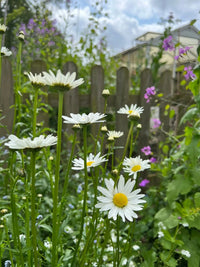
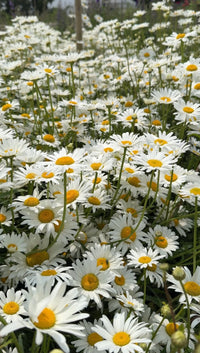
The original British wildflower — large pure-white petals around a vibrant yellow eye, bobbing and swaying on tall wiry stems through the long light of British early summer. Oxeye Daisy is the foundation plant for any wildflower meadow project, a tough vigorous native perennial that establishes quickly, returns year after year, and acts as the ecological anchor around which any naturalistic planting establishes.
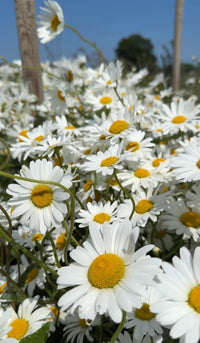
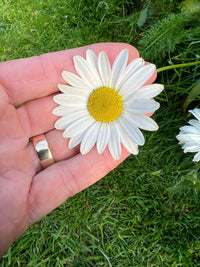
This is the definitive native British wildflower. Also known as the Moon Daisy (the white flowers appear to glow in evening light) and the Dog Daisy, the Oxeye is the daisy that has given the word "daisy" its associations with simplicity, cheerfulness and the innocent pleasure of a summer field. The large flower heads (5–7cm across) feature broad pure-white petals surrounding a vibrant yellow disc, held on tall (40–60cm) wiry stems that bob and sway in summer breezes, creating the characteristic rippling meadow effect that has been part of the British countryside for as long as records exist — exactly the same way it grew in the fields of Saxon England, medieval Britain, and the unimproved pastures John Constable painted in the early 19th century. Hardy native perennial (H7), surviving the harshest UK winters. RHS Plants for Pollinators — the broad flat heads act as a landing pad for a vast array of insects, particularly butterflies, beetles and hoverflies.
The pioneer plant: In the wild, Oxeye Daisies are often the first flowers to colonise bare ground. They spread via underground rhizomes and by self-seeding, effectively "knitting" a wildflower patch together. They are perfect for stabilising banks or filling large wild areas quickly.
A note on growing
The single most important rule for Oxeye Daisy (and for virtually all native wildflowers): poor soil produces the best plants. Rich, fertile, heavily-amended soil produces tall, leggy, floppy plants with proportionally fewer flowers — and crowds out smaller meadow companion species. Do not feed. Wildflowers evolved in the lean, competitive conditions of unimproved grassland where fertility is low — they are genetically programmed to produce their best performance under precisely these conditions.
Sow outdoors in Autumn (September–October) or Spring (March–May). Scatter seeds onto bare, raked, weed-free soil. Press them firmly into the surface — light required, do not bury. Germination 14–28 days. Full sun. Poor, well-drained soil. No feeding.
Year 1 vs Year 2 — the patience requirement: Oxeye Daisy sown from seed typically establishes a rosette of basal leaves in year one without significant flowering. The plant invests its first year in root development. From year two onwards, established plants produce the full flowering display with multiple stems per clump. By year three, established clumps begin to expand and self-seed, gradually building the meadow colony that was the original intention. Companion annuals sown alongside (Cornflower, Poppy, Calendula) provide year-one colour while the perennials establish.
The annual cut: in late summer or early autumn after the flowers have set seed, cut the entire planting back to the ground. Remove all cuttings immediately — leaving them in place would add fertility to the soil and tip the balance against the wildflowers. This single annual cut is the entire management requirement of a wildflower meadow containing Oxeye Daisy.
⚠️ Moon Daisy Warning: Oxeye Daisies are incredibly vigorous and spread freely. While perfect for wildflower meadows and naturalistic areas, they can easily take over a small formal border. Plant them where they have room to spread, not in a delicate composition with small or slow-growing neighbours.
Where it shines
In wildflower meadows as the foundation native perennial — there is no better starter plant for any meadow project. In rewilding corners and naturalistic plantings. On banks and slopes for stabilisation. In sunny borders where the wildflower aesthetic is wanted. In children's nature gardens. As cut flowers for cottage-style posies (the same white-and-yellow we sell as dried Oxeye stems in the dried-flower range here at Salle Moor Hall Farm).
Plant alongside
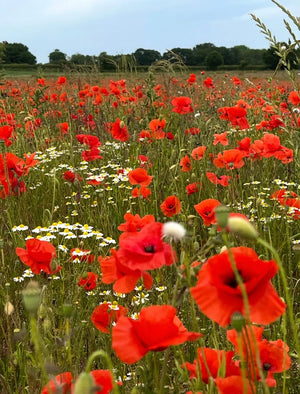
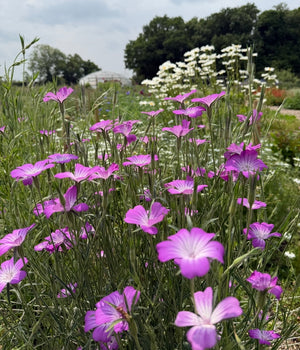
The classic British wildflower meadow combination: pair Oxeye Daisy with Poppy 'Flanders Red' for instant colour while the perennials establish — Poppies are hardy annuals that flower in year one, providing scarlet impact while the Oxeye Daisies build their root systems. With Yellow Rattle (if stocked) — essential if sowing into existing grass; semi-parasitic to grass, weakening it and allowing the wildflowers room to thrive. With Cornflower 'Blue Ball' and Corncockle for a complete traditional cornfield meadow tapestry. With Wild Carrot (Daucus carota) for the iconic native lace-and-daisy meadow combination.
Plant alongside
Oxeye Daisy pairs beautifully with these cottage garden classics


RHS Plants for Pollinators
This plant has been assessed by the Royal Horticultural Society and recommended as especially beneficial to bees, butterflies and other pollinators. Growing plants like this directly supports UK pollinator populations — something close to our hearts at Salle Moor Hall Farm, where we see the difference a cottage garden full of the right plants can make.
Learn more at RHS.org.uk →