

Hollyhock Bishy Barnabee Mix
Alcea rosea
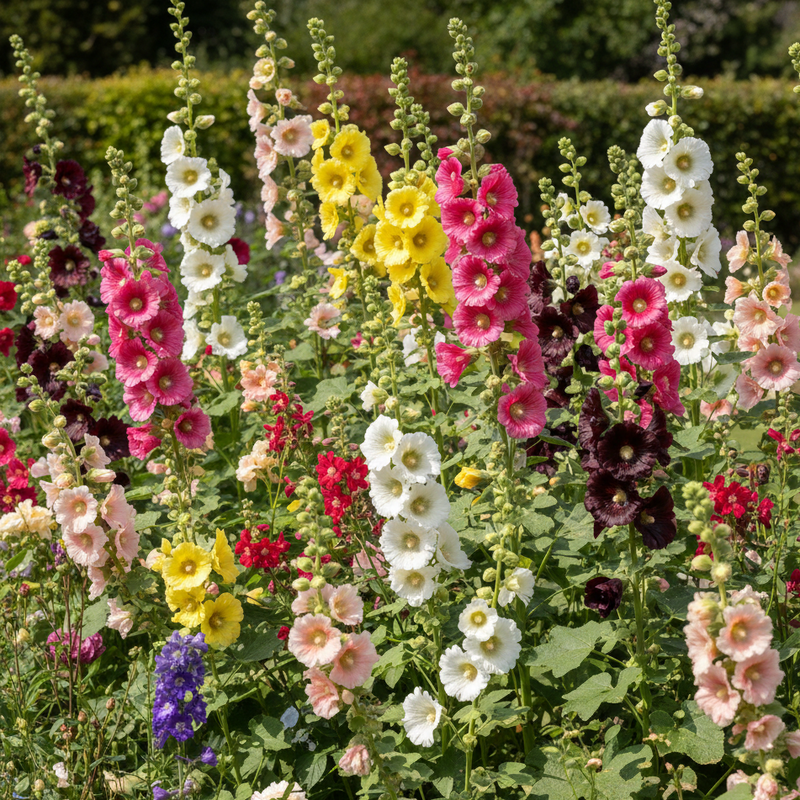
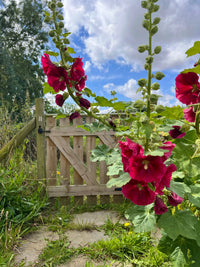
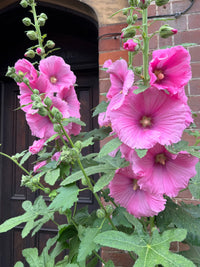
Our exclusive house blend of single and double Hollyhocks in every shade from lemon to chocolate-maroon — rising 1.8–2.2m against warm walls. Hand-picked at Salle Moor Hall Farm.
About this variety
Alcea rosea 'Bishy Barnabee Mix' Bishy Barnabee House Blend Hollyhock
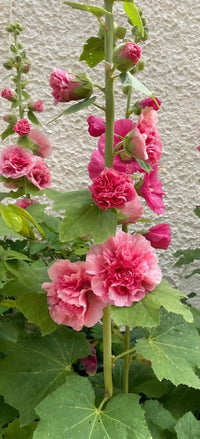
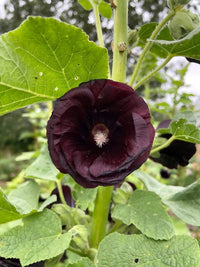
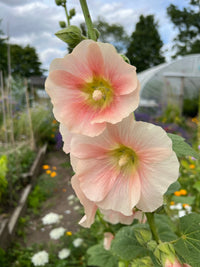
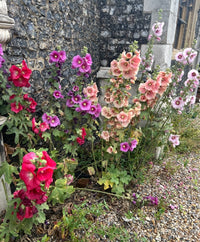
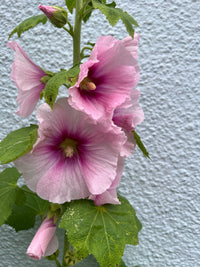
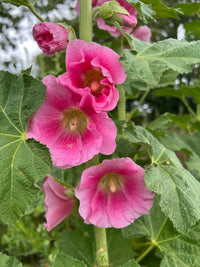
Our exclusive hand-picked house blend — bringing together our favourite single and double Hollyhocks in every shade from soft lemon to dramatic chocolate-maroon. The 'Bishy Barnabee Mix' delivers Chater's Double powder-puff globes alongside classic open single saucers in soft yellow, rich crimson, apple-blossom pink, pure white, and dramatic chocolate-maroon — a complete cottage-garden Hollyhock display from a single packet.
This is our personal hand-picked blend, curated from the Hollyhocks we grow and trial each year at Salle Moor Hall Farm. The mix is deliberately varied — combining the heavy ruffled doubles of the Chater's group with the open single forms that bumblebees prefer, in a palette spanning the full Hollyhock spectrum. The towering spires reach 1.8–2.2m against warm walls and fences, providing the proper vertical drama that defines a traditional English cottage garden. Hardy biennial (H5), following the classic two-year cycle: rosette of substantial rough-textured leaves in Year 1, majestic flowering spires in Year 2, then setting seed and dying — but self-seeding so freely that established colonies essentially renew themselves indefinitely. In practice, many Hollyhocks behave as short-lived perennials, flowering for two, three or even more years before declining. RHS Plants for Pollinators recognised — particularly valued by bumblebees.
A note on growing
Hollyhocks have deep taproots and hate disturbance — direct sowing or sowing into deep individual pots is essential. Sow indoors April–May in deep pots (root trainers or 9cm pots minimum) to accommodate the long root, or direct outdoors June–July. Sow seeds 1cm deep. Germination 14–21 days. Move young plants to their final position in September or October so they can establish roots before winter. Plant in full sun in rich, well-drained soil — a spot against a warm wall or fence is ideal, providing shelter from wind and radiated warmth that ripens the seeds.
⚠️ Rust prevention is essential: Hollyhocks are notorious for "rust" — a fungal disease causing orange spots on leaves. To prevent: give plants plenty of space for air circulation, water only at the base never on the leaves, and remove any affected lower leaves promptly. Cut down to ground level after flowering to prevent rust spores overwintering.
⚠️ Skin irritation note: The stems and leaves are covered in rough bristly hairs that can irritate sensitive skin. Wear gloves when handling.
Where it shines
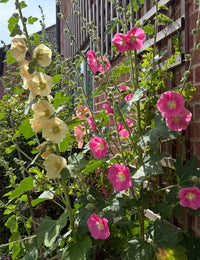
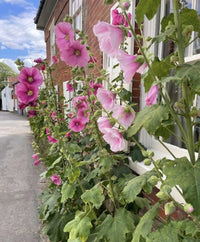
Against warm walls and fences — the classic cottage garden position where the height, the radiated warmth that ripens seeds, and the visual drama of tall spires against a vertical surface all combine for maximum effect. As the architectural backbone of cottage borders, providing vertical structure that few other biennials can match. As a self-seeding colony plant — once established in a position they like, Hollyhocks renew themselves prolifically year after year. In wildlife gardens, where the open single forms are particularly valued by long-tongued bumblebees.
Plant alongside
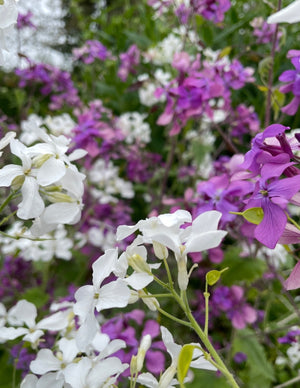
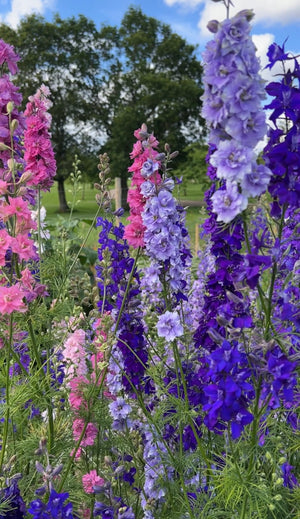
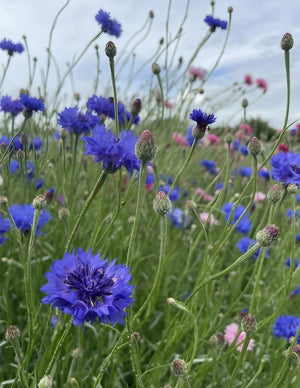
For a traditional English cottage wall scheme, plant 'Bishy Barnabee Mix' against a warm wall with Larkspur 'Giant Imperial Mix' for the middle layer and Cornflower 'Blue Ball' carpeting the ground. With Hollyhock 'Nigra' (matching tall height; chocolate-maroon contrast) for a single-genus drama scheme. With Honesty (Lunaria annua, matching biennial cycle) for the classic Hollyhock-Honesty partnership.
Plant alongside
Hollyhock Bishy Barnabee Mix pairs beautifully with these cottage garden classics
RHS Plants for Pollinators
This plant has been assessed by the Royal Horticultural Society and recommended as especially beneficial to bees, butterflies and other pollinators. Growing plants like this directly supports UK pollinator populations — something close to our hearts at Salle Moor Hall Farm, where we see the difference a cottage garden full of the right plants can make.
Learn more at RHS.org.uk →