








Didiscus Madonna Mixed
Trachymene coerulea — Didiscus; Blue Lace Flower; Australian native
Elegant lacy umbels in powder-blue, gentle pink and pure white on tall slender stems — the three-tone Madonna Mixed Blue Lace Flower for sophisticated cottage cutting.
About this variety
Trachymene coerulea 'Madonna Mixed' Blue Lace Flower 'Madonna Mixed'
The expanded colour range from the Didiscus family — umbels of soft powder-blue, gentle pink, and pure white on tall slender stems above lacy ferny foliage. 'Madonna Mixed' is the Blue Lace Flower for gardeners who want the elegant umbel architecture with more colour flexibility, all carrying the same quiet evening fragrance and exceptional cut-flower value.
While Didiscus 'Blue Lace' offers the genus's defining soft blue, 'Madonna Mixed' provides the same elegant lacy umbel structure across three soft cottage colours — powder-blue, gentle pink and pure white. The result is a single packet that delivers a soft pastel umbel display, particularly useful for cutting where the three-tone mix gives flexibility for different arrangements. Tall stems (45–60cm) with the same finely divided ferny foliage as the species. Faintly fragrant, particularly in evening air. RHS Plants for Pollinators recognised. Half-hardy annual flowering July through September. Like its blue relative, this is a quietly sophisticated cut flower that British gardeners rarely grow and florists genuinely covet.
A note on growing
Sow indoors from March to April at 18–20°C. Cover seeds lightly with about 3mm of compost. Germination 14–21 days. Pot on carefully into individual modules — Didiscus dislikes root disturbance. Harden off thoroughly before planting out only after all risk of frost has passed (late May/June). Plant in a warm, sheltered position with full sun and well-drained soil. Didiscus is genuinely frost-tender and won't tolerate cold wet British conditions in early spring — choose the warmest sunniest spot you have. Drought-tolerant once established.
Where it shines
In the cutting garden as an elegant mixed-colour umbel cut flower with proper sophistication. The three-tone mix provides flexibility for different bouquet schemes — extract the blues for cool palettes, the pinks for warm, the whites as neutrals. In modern wedding flowers, where the soft pastel mix suits romantic cottage-garden weddings. In sheltered sunny cottage borders for soft pastel summer colour. As a slightly more interesting alternative to the standard Ammi majus in mixed cutting plantings.
Plant alongside
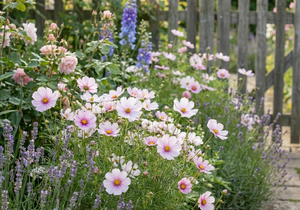
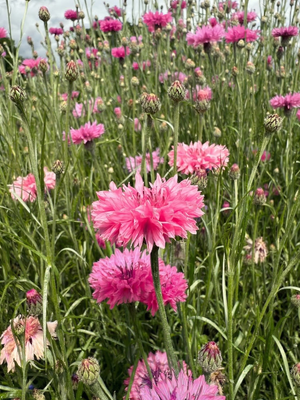
For a soft three-tone cutting scheme that matches the Madonna palette, combine with Cosmos 'Daydream' (white-and-blush ombré), Cornflower 'Snowman' (white), and Cornflower 'Pink Ball' (soft pink) — all flowering at the same time and providing the airy cottage-garden character. For variety with related umbels, plant alongside Ammi majus, Daucus 'Dara' and the cool blue of Didiscus 'Blue Lace' for an umbel-themed cutting border.
Plant alongside
Didiscus Madonna Mixed pairs beautifully with these cottage garden classics


RHS Plants for Pollinators
This plant has been assessed by the Royal Horticultural Society and recommended as especially beneficial to bees, butterflies and other pollinators. Growing plants like this directly supports UK pollinator populations — something close to our hearts at Salle Moor Hall Farm, where we see the difference a cottage garden full of the right plants can make.
Learn more at RHS.org.uk →