

Achillea Cerise Queen
Achillea millefolium 'Cerise Queen'
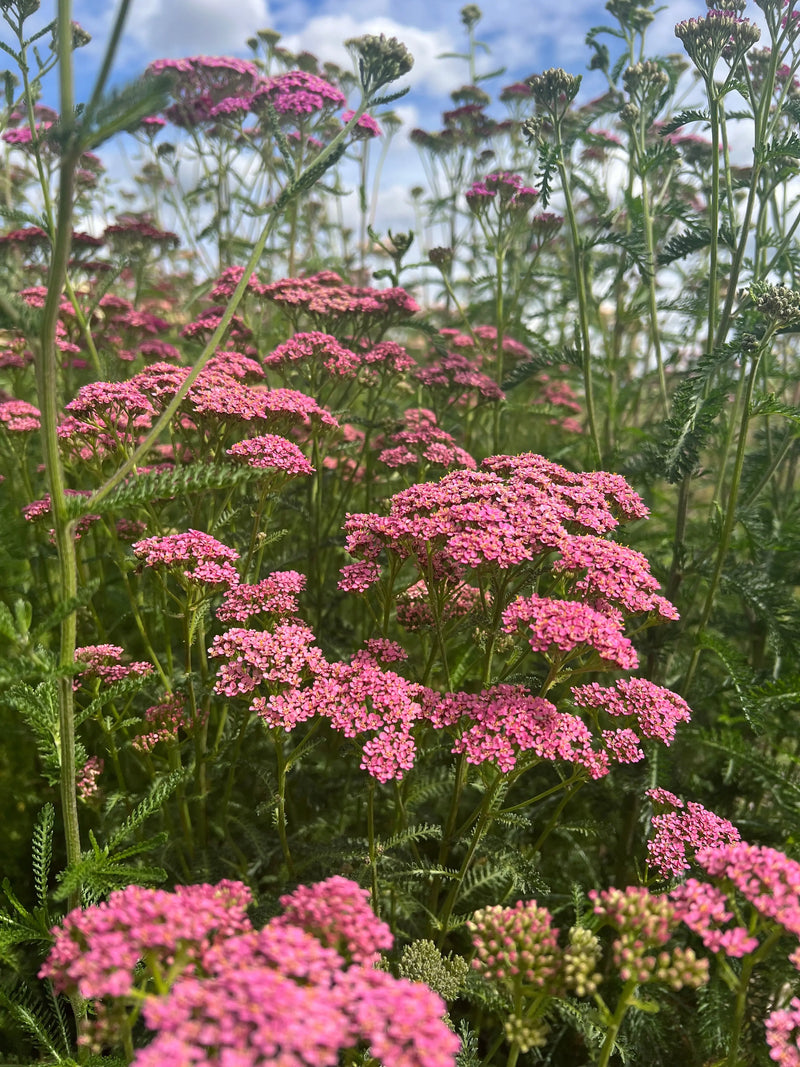
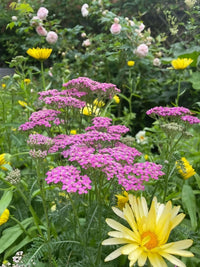
Flat-topped plates of deep cerise-pink that hold their colour through summer, age to vintage tones, and dry beautifully. A drought-tolerant cottage garden classic.
About this variety
Achillea millefolium 'Cerise Queen' Pink Yarrow 'Cerise Queen'
Flat-topped plates of deep cerise-pink that hold their colour through summer, age to warm vintage tones in autumn, and dry to a soft, dusty rose that is one of the finest things in any dried arrangement.
'Cerise Queen' is the yarrow that taught a generation of cottage gardeners what achillea could really do. Each flower head is made up of dozens of tiny florets arranged in a wide, flat plate — a perfect landing pad for bees, hoverflies and butterflies — and the colour shifts gracefully through the season from saturated cherry-pink to softer, smokier shades by autumn. Above feathery, aromatic, finely-divided foliage, the flowering stems rise to 60–70cm and continue producing from June well into September. Drought-tolerant once established, RHS Plants for Pollinators recognised, and one of the most useful perennials a cutting gardener can grow.
A note on growing
Surface-sow indoors from February to April — achillea seed needs light to germinate, so press the tiny seeds onto moist compost and don't cover them. Keep at 18–20°C and expect germination within two to three weeks. Plant out after the last frost in full sun, in well-drained or even poor soil. Rich, heavy ground produces lush foliage but fewer flowers; this is a plant that genuinely thrives on neglect once established. First-year plants may flower modestly; from year two onwards they come into their full glory.
Where it shines
In cottage borders, gravel gardens and naturalistic prairie-style schemes — anywhere that wants reliable summer colour with no fuss. The flat heads are exceptional for cutting and have the rare quality of looking just as good fresh as they do dried. Harvest stems when the flowers are fully open and hang in small bunches in a cool, dark place to preserve the colour. Spreads slowly via rhizomes to form generous clumps; lift and divide every three years to keep it vigorous.
Plant alongside
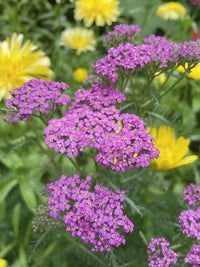
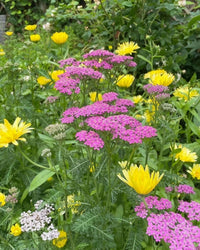
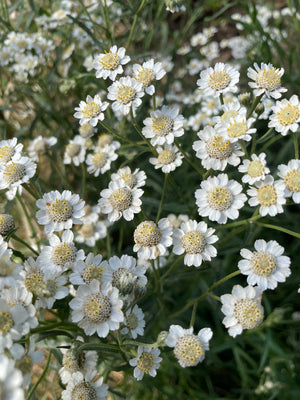
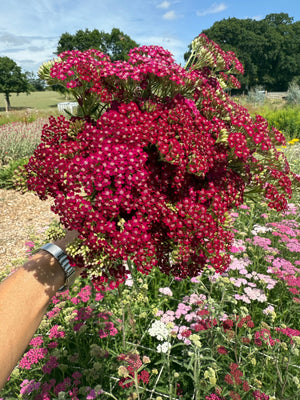
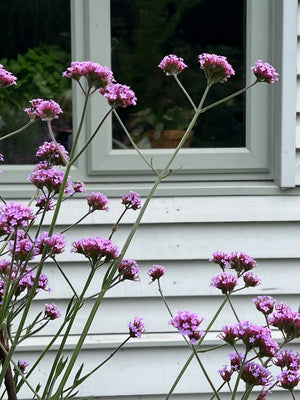
Pair the cerise-pink with the white clouds of Achillea 'Ballerina' for a classic cottage border combination, or use the deep ruby-red of Achillea 'Rubra' for a richer, warmer palette. The strong horizontal lines of yarrow are best balanced by something vertical — try Larkspur or Verbena bonariensis for height.
Plant alongside
Achillea Cerise Queen pairs beautifully with these cottage garden classics

RHS Plants for Pollinators
This plant has been assessed by the Royal Horticultural Society and recommended as especially beneficial to bees, butterflies and other pollinators. Growing plants like this directly supports UK pollinator populations — something close to our hearts at Salle Moor Hall Farm, where we see the difference a cottage garden full of the right plants can make.
Learn more at RHS.org.uk →
RHS Award of Garden Merit
The RHS Award of Garden Merit is given to plants of outstanding excellence for ordinary garden use. To earn this award a plant must be of good constitution, available to the gardening public, and perform reliably across a range of UK growing conditions. It is one of the most trusted plant recommendations in British gardening and a genuine mark of quality.
Learn more at RHS.org.uk →