

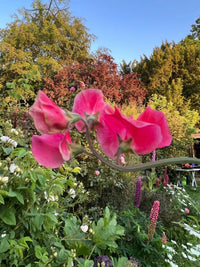
Sweet Pea Mammoth Rose Pink
Lathyrus odoratus 'Mammoth Rose Pink' — Early Multiflora Gigantea type
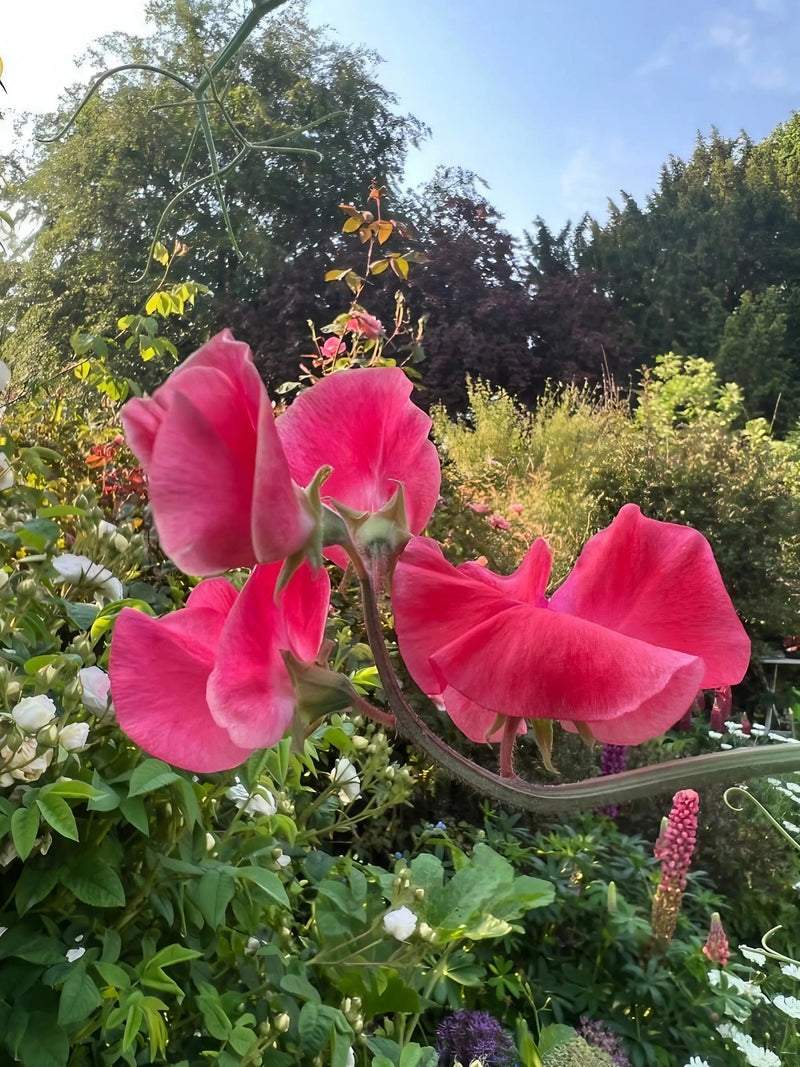
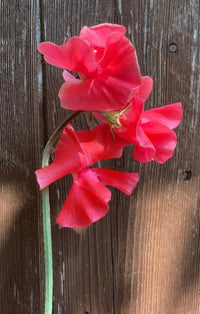
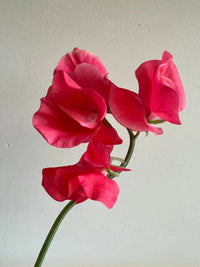
Extra-large deep rose-pink Sweet Pea on long sturdy stems — the giants of the Sweet Pea world, built for substantial cutting and exhibition use.
About this variety
Lathyrus odoratus 'Mammoth Rose Pink' Mammoth Sweet Pea 'Rose Pink'
The giants of the Sweet Pea world — extra-large deep rose-pink blooms on long sturdy stems, the ultimate variety for cutting and exhibition. Sweet Pea 'Mammoth Rose Pink' produces flowers significantly larger than standard Spencer types, on stems built for the show bench and the cottage vase alike.
If size matters in your Sweet Pea growing, 'Mammoth Rose Pink' is the variety to plant. As the name suggests, this is the giant-flowered selection — producing some of the largest Sweet Pea blooms available from any UK seed catalogue, in a rich deep rose-pink that holds its colour beautifully through the season. The stems are long and exceptionally sturdy — built for the vase, the show bench, and the demands of substantial cottage cutting arrangements that need flowers with proper visual weight. Hardy annual climbing to 2 metres. Flowers June through October.
Best use: 'Mammoth Rose Pink' is genuinely the variety to grow when you want big flowers and substantial cutting material rather than maximum delicacy or maximum fragrance (it's still scented, but not as intensely as 'Heaven Scent' or 'Old Spice Starry Night').
A note on growing
Standard Sweet Pea cultivation:
- Autumn sow October–November or spring sow January–March
- Soak seeds 2–4 hours before sowing
- Plant out April–May in full sun in rich fertile soil
- Provide sturdy support immediately
- For the largest flowers, allow only 2–3 main growing shoots per plant and remove sideshoots — concentrating the plant's energy into fewer, larger blooms (the "cordon system" used by exhibition growers)
- Pick daily — even more important for Mammoth varieties to maintain bloom size
⚠️ Toxicity warning: seeds toxic if eaten.
Where it shines
In cottage cutting gardens for substantial cut flowers with proper visual weight. On the exhibition bench for show-quality blooms. In wedding work where the substantial flower size suits ceremonial arrangements. As a "cordon-grown" specimen for serious Sweet Pea enthusiasts who want maximum flower size from each plant.
Plant alongside
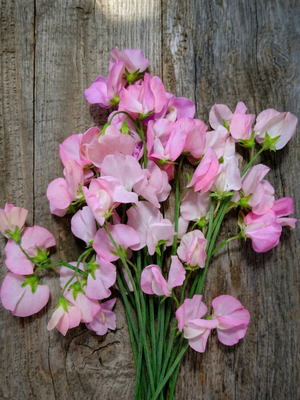
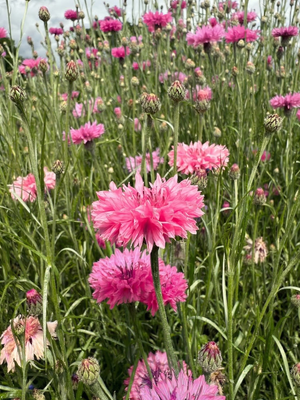
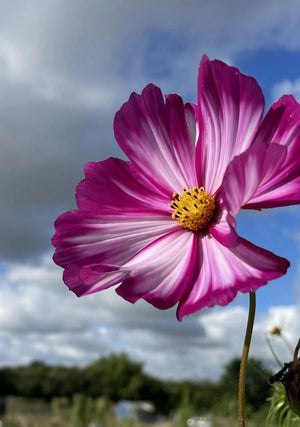
For a substantial pink cottage cutting scheme, combine 'Mammoth Rose Pink' with Cosmos 'Sensation Mixed' (matching pink-romantic cottage palette) and Ammi majus (delicate lace against substantial pink). With Cornflower 'Pink Ball' for tonal layering. With Sweet Pea 'Mollie Rilstone' for matching scale and complementary cream-and-pink picotee partnership.
Plant alongside
Sweet Pea Mammoth Rose Pink pairs beautifully with these cottage garden classics

RHS Plants for Pollinators
This plant has been assessed by the Royal Horticultural Society and recommended as especially beneficial to bees, butterflies and other pollinators. Growing plants like this directly supports UK pollinator populations — something close to our hearts at Salle Moor Hall Farm, where we see the difference a cottage garden full of the right plants can make.
Learn more at RHS.org.uk →