

Osteospermum Sky and Ice - African Daisy
Osteospermum ecklonis 'Sky and Ice' -- African Daisy; Half-Hardy Annual H2
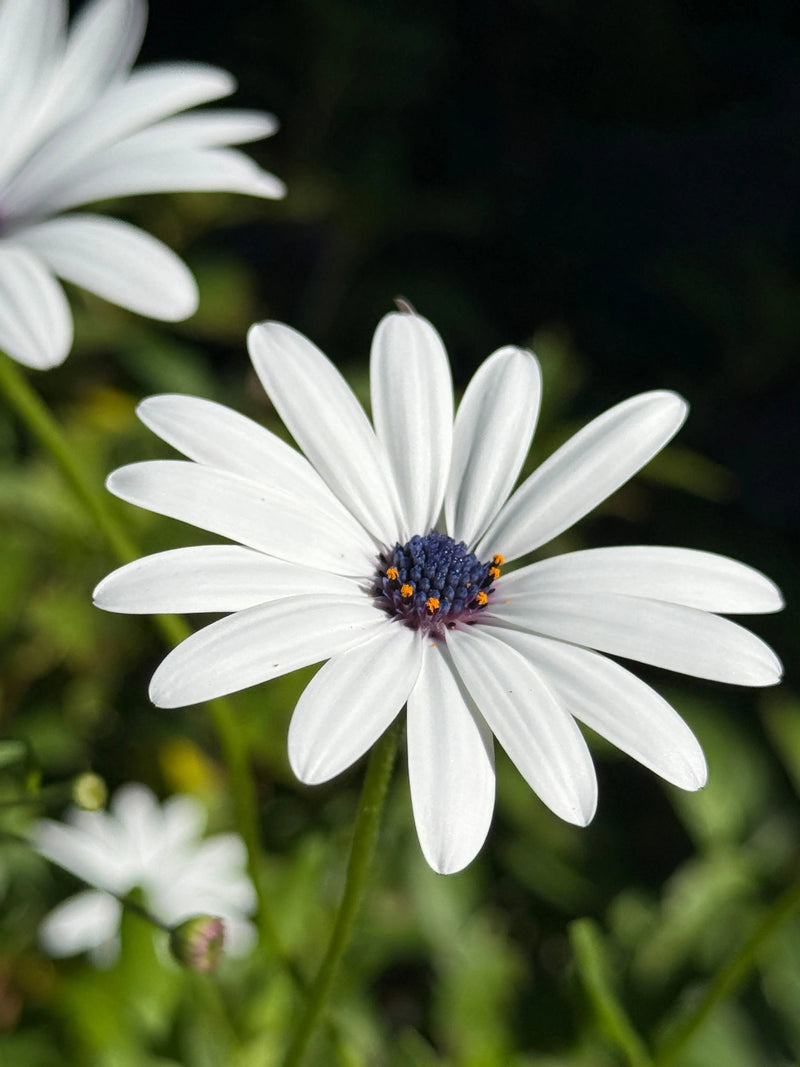
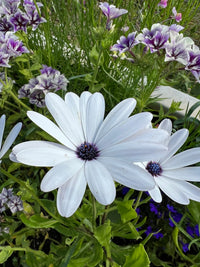
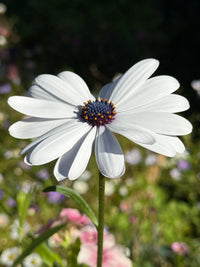
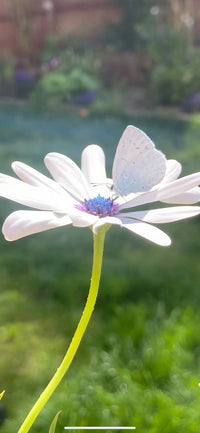
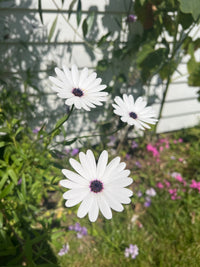
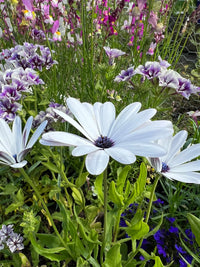
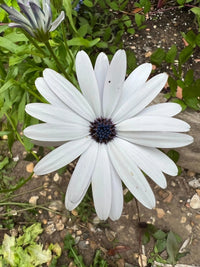
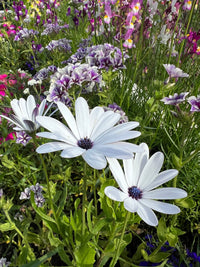
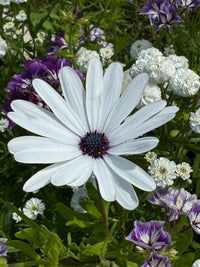
Pure white daisy petals with cool sky-blue undersides creating a "frosted" effect — the sophisticated cool African Daisy for sunny borders, containers and Mediterranean schemes.
About this variety
Osteospermum ecklonis 'Sky and Ice' African Daisy 'Sky and Ice'
Pure white daisy petals with stunning cool sky-blue undersides — creating a "frosted" effect that gives the variety its evocative name — held above neat compact mounds of glossy mid-green foliage. Osteospermum 'Sky and Ice' is the half-hardy annual African Daisy that brings sophisticated cool elegance and exceptional drought-tolerance to summer borders, patio containers, and the warmest sunniest positions.
This is the African Daisy for gardeners who want cool sophisticated daisy colour rather than the brash oranges and hot pinks of standard Osteospermum cultivars. Each flower is a large daisy with pure white petals on the upper surface, but the petal undersides are a cool sky-blue that creates a "frosted" effect, particularly visible as the flowers open in morning light or close in evening when the blue undersides show. The flowers are held above compact mounds of glossy mid-green foliage at 25–35cm height, blooming profusely from June through October. Half-hardy annual (H2) in the UK — originating from South Africa, the plant thrives in heat and tolerates drought far better than most summer bedding plants, but cannot survive a British winter outdoors.
The "solar flower" phenomenon: these daisies are highly light-sensitive. In the UK, the flowers only fully open during sunny spells — they close during dull weather or rain to protect their nectar and pollen. This is a natural mechanism the plant has evolved for its native semi-arid conditions, and it means Osteospermum looks at its most spectacular on the warmest sunniest days. Despite their "cool" appearance, they are high-energy pollinator plants: providing valuable nectar for bees and butterflies during the peak of British summer.
A note on growing
African Daisies are easy from seed but need a warm start indoors to flower early enough in the UK season. Sow indoors February–May at 18–22°C. Sow seeds on the surface of moist high-quality seed compost and cover lightly with a dusting of vermiculite — Osteospermum seeds benefit from some light during germination. Germination 14–21 days. Pot on once large enough to handle and grow on in bright cool conditions.
Plant out only after all risk of frost has passed (late May or June) in full sun and well-drained soil. Osteospermum is genuinely drought-tolerant once established and resents waterlogged conditions. Lean soils suit it perfectly — don't fertilise unless plants look pale. Deadhead regularly to maintain the long flowering season.
Where it shines
In patio containers and hanging baskets, where the compact bushy habit and continuous flowering provide reliable summer display. As the central daisy in a Mediterranean-style or gravel border, where the drought-tolerance and heat-loving character suit the conditions perfectly. In sophisticated cool cottage colour schemes — the white-and-blue palette of 'Sky and Ice' is genuinely refined alongside more typical cottage pinks and whites. As a reliable summer-into-autumn bedding plant for those wanting something more interesting than standard Osteospermum varieties. In wildlife gardens during peak British summer when many traditional plants are stressed by heat.
Plant alongside
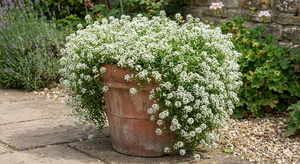
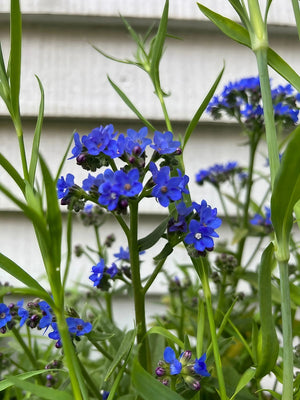
For a "Moon Garden" container effect, plant Osteospermum 'Sky and Ice' with a low-growing carpet of Alyssum 'Carpet of Snow' around the base — the white-on-white-with-blue creates a clean sophisticated moon-garden look ideal for containers or path edges. For an all-blue cool scheme, combine with Anchusa 'Blue Angel' and Nigella 'Miss Jekyll' Blue. For drought-tolerant Mediterranean-style planting, pair with Gaura 'The Bride' and Mesembryanthemum 'Harlequin'.
Plant alongside
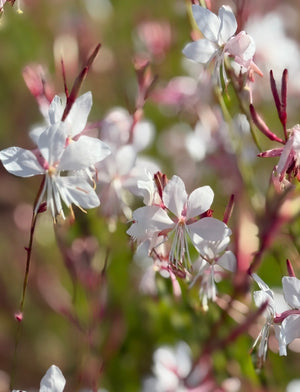
Osteospermum Sky and Ice - African Daisy pairs beautifully with these cottage garden classics
RHS Plants for Pollinators
This plant has been assessed by the Royal Horticultural Society and recommended as especially beneficial to bees, butterflies and other pollinators. Growing plants like this directly supports UK pollinator populations — something close to our hearts at Salle Moor Hall Farm, where we see the difference a cottage garden full of the right plants can make.
Learn more at RHS.org.uk →