

Dill Bouquet
The acid-green highlighter of the cutting garden — 90cm stems topped with large flat umbels of vibrant lime-green florets that intensify every surrounding colour; equally valuable as a culinary herb (fresh leaves, edible flowers, flavourful seed heads), an architectural cut flower filler, and a hoverfly haven that supports natural aphid control throughout the entire garden
The cut-flower gardener's dill - tall 90cm stems with architectural lime-green umbels for cutting, slow-bolting feathery foliage for the kitchen, and aromatic seed heads for the pickle jar. Triple-purpose; RHS Plants for Pollinators.
About this variety
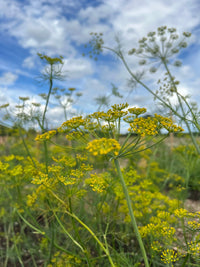
Dill 'Bouquet' is the variety the cutting garden uses when other dills are sold for the kitchen alone. Where standard dill is grown chiefly for the kitchen, 'Bouquet' has been specifically selected for the cut-flower bench — tall 90cm stems topped with large, architectural flat-umbels of vibrant acid-green florets that intensify every surrounding colour in a vase or border. The flowers are showstopping and properly distinctive; pair them with deep purple cosmos, rusty rudbeckia, dark sweet peas or burgundy dahlias and the contrast lights up the whole arrangement.
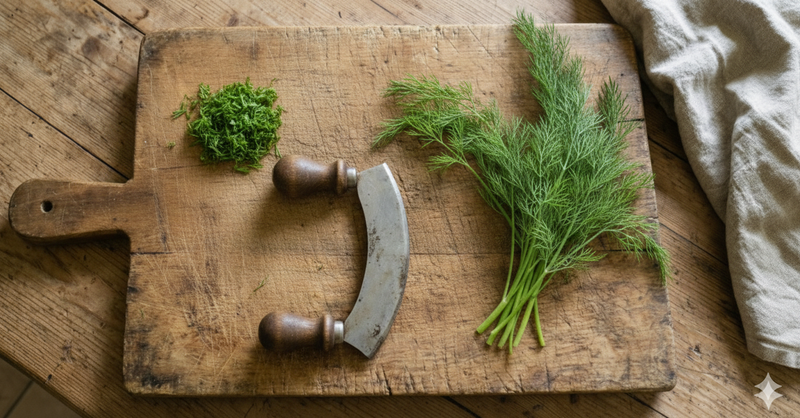
And because it's still proper dill, you get the everyday herb-garden gifts alongside the architectural flowers: feathery aromatic foliage for the kitchen, edible umbel florets to scatter over fish, salads or new potatoes, and aromatic seed heads to dry for the spice rack. One plant; three different ways to use it.
Triple-purpose — the genuine cultivar advantage
- As a cut flower filler — the headline use, and what makes 'Bouquet' distinctive. The large flat lime-green umbels (8–15cm across) are properly architectural, lasting 7–10 days in the vase. The colour — that vivid acid-green/yellow-green — works as the visual highlighter that makes neighbouring blooms pop. Florists love it; cutting-garden gardeners love it more
- As a kitchen herb — the feathery fresh foliage is everything traditional dill should be: aromatic, anise-toned, properly pungent. Slow-bolting compared to other dill varieties means you get a longer leaf-harvest before the plant turns its attention to flowering
- As a seed spice — the dried umbels yield the aromatic dill seed that's the proper traditional pickling spice. The flavour intensifies once dried; harvest the seeds in late summer for a year's supply of homegrown dill seed
You can grow 'Bouquet' purely for any one of these uses, but the genuine pleasure is having all three available from the same plant through the season — leaves through summer, flowers through midsummer, seed in late summer.
Why 'Bouquet' specifically
'Bouquet' is one of a small group of dill cultivars selected for taller, more architectural flowering rather than purely for leaf production:
- Tall stems (90cm) — properly long enough to cut for vase arrangements without bending
- Large flat umbels (8–15cm) — significantly more substantial than the smaller umbels on standard dill
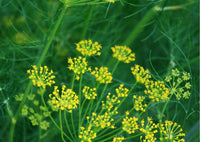
- Vibrant lime-green / acid-yellow flower colour — the specific cultivar signature; brighter than the more muted yellow of other dill varieties
- Slow-bolting compared to other dills — gives you a longer leaf-harvest before flowering. Some standard dills bolt within weeks of sowing; 'Bouquet' stretches the leaf window properly
- Heavy seed yield once it does flower — the big umbels translate to generous seed production
If you're growing dill primarily for the kitchen herb and don't need cut flowers, a smaller cultivar like Mammoth or Hera would do the job. If you want the dual benefit of kitchen dill AND a properly distinctive cut flower in the same plant, 'Bouquet' is the right choice.
In the cutting garden
The acid-green flowers are properly versatile companions in a cut-flower arrangement:
- With deep purple cosmos ('Rubenza' or 'Velouette') — classic acid-and-burgundy contrast
- With rusty bronze rudbeckia ('Cherry Brandy' or 'Sahara') — the lime intensifies the orange-rust tones
- With dark dahlias ('Karma Chocolate' or 'Black Jack') — the lime against near-black is one of the great floral colour combinations
- With deep red zinnias — vivid summer contrast
- As airy filler in a wedding bouquet — the umbels read as cottage-garden romantic rather than overly designed
- With lighter pastels too — lime-green works as a "highlighter" against pink cosmos, soft sweet peas, lavender stocks
'Bouquet' is one of the genuine workhorses of the British cutting garden — the flower that lifts every arrangement it's part of.
In the kitchen
- Fresh leaves — chopped into potato salad, scrambled eggs, soups, dips, smoked salmon. The classic British Sunday-lunch herb for new potatoes with butter
- With fish — particularly salmon (raw cured into gravlax, or grilled with butter), trout, mackerel, herring (the Scandinavian pickled herring traditions are dill-led)
- With cucumber and yoghurt — the classic Greek tzatziki, eastern European cucumber salads, raita
- In bread and savoury baking — dill bread and rye crackers benefit from chopped fresh dill
- Pickling — the traditional and headline use of dill seed. Cucumber dill pickles, gherkins, beans, beetroot. Either fresh umbels (the "dill heads" of traditional pickles) or dried seed
- Edible flower florets — scatter the individual lime-green florets over salads, smoked fish, or as edible garnish on summer dishes
The wildlife garden bonus
Dill 'Bouquet' carries the RHS Plants for Pollinators award — recognised by the Royal Horticultural Society as especially beneficial to bees, butterflies and other pollinators. The flat-umbel flower form is properly accessible to short-tongued insects:
- Hoverflies in particular — dill umbels are one of the absolute best plants for attracting hoverflies into the garden. Their larvae are voracious aphid predators — a hoverfly larva eats hundreds of aphids during its development. Planting dill near roses, broad beans, or anything aphid-prone gives you natural biological pest control without spraying
- Solitary bees and wasps — the small accessible florets suit short-tongued bee species
- Butterflies and lacewings — visiting for nectar; lacewings as additional aphid predators
- Beneficial insects generally — Apiaceae flowers (carrot family) are universally good for the wider insect ecosystem; dill is one of the most accessible to grow at home
If you garden organically or want to encourage natural pest control, planting a few dill 'Bouquet' near vegetable beds and roses is one of the genuine practical contributions you can make to a chemical-free garden.
Growing tips
- Sow March to July direct outdoors, or under cover from February if you want the earliest flowering. Successive sowings every 3–4 weeks give continuous cutting and leaf harvest
- Sow shallowly — 5mm deep, in moist well-drained soil. Cover with vermiculite or fine compost. Germination usually 10–14 days at 15–20°C
- Thin seedlings to 20cm apart as they develop
- Full sun position — dill needs proper warmth and bright light for the best flavour and the most vigorous flowering
- Well-drained, moisture-retentive soil — not too rich (over-feeding produces leaf rather than flower)
- Doesn't transplant well — sow direct rather than in modules. The tap-root resents disturbance
- Stake if windy — the tall 90cm stems can topple in exposed gardens with the big flower heads
- Cut flowers in cool morning — when stems are fully turgid. Plunge straight into water; lasts 7–10 days in the vase
- Harvest leaves regularly — from young plants before flowering; encourages bushier growth
- Harvest seeds when umbels turn brown — cut whole umbels, hang upside down in paper bags in a warm dry spot, then thresh and store
- Self-seeds happily — once you've grown a year of 'Bouquet', you'll get volunteer seedlings appearing in subsequent years. Easy to manage and quite useful in a cottage garden
At a glance
- Type: Annual herb & cut flower (Anethum graveolens, Apiaceae family)
- Height: 90cm; Spread: 30cm; Spacing: 20cm
- Flowers: Large flat umbels (8–15cm), vibrant acid-green / lime-yellow
- Sow: March to July direct outdoors
- Harvest: Leaves from June; flowers July to September; seeds August to October
- Position: Full sun; well-drained moisture-retentive soil
- Uses: Cut flowers, kitchen herb, pickling, seed spice, edible florets
- RHS Plants for Pollinators — properly beneficial to bees, hoverflies, butterflies
- Open-pollinated — save your own seed; reliably self-seeds in cottage gardens
Plant alongside
Dill 'Bouquet' grows happily alongside Calendula 'Neon' for a cottage-garden colour combination, and pairs particularly well in the cutting garden with the wider cutting garden range. In the kitchen garden, plant near tomatoes, brassicas, cucumbers and roses for the hoverfly-attraction benefit (the larvae are exceptional aphid predators). For the proper "grow your own spice rack" theme, pair with our Cumin seeds — both Apiaceae spice plants, both grown for the seed harvest, both genuine kitchen-garden ambitions.