

Cobaea scandens Purple
Cobaea scandens — Cup and Saucer Vine, Cathedral Bells, Monastery Bells
Vigorous climbing annual to 4–6m with huge bell flowers transforming from lime-green to deep purple over days — the architectural cup-and-saucer vine. RHS AGM.
About this variety
Cobaea scandens Cup and Saucer Vine / Cathedral Bells
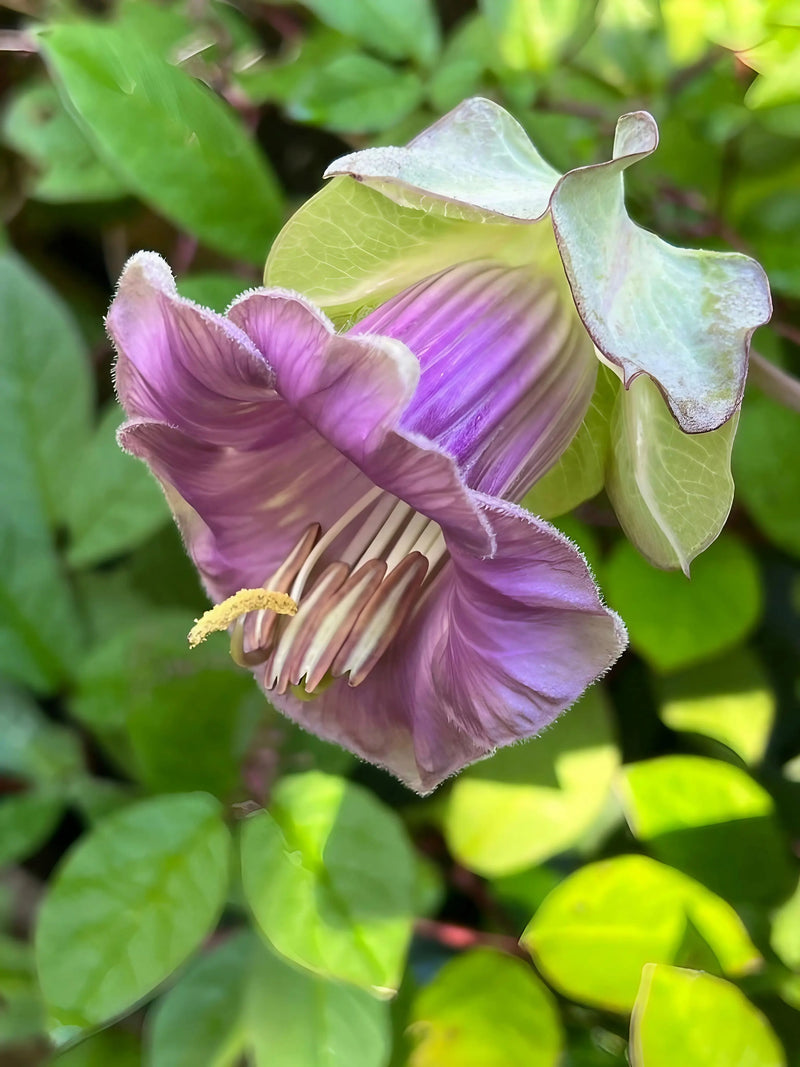
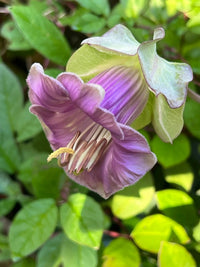
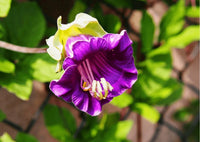
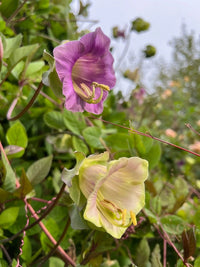
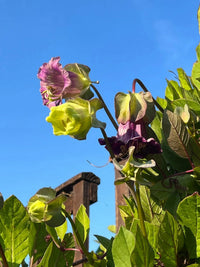
Vigorous climbing annual reaching 4–6m in a single season, producing huge bell-shaped flowers that perform a private colour transformation over four to five days — opening pale lime-green, then striped with violet, then deepening to rich varnished purple, all framed by the leaf-like green calyx that gives the plant its "saucer" name.
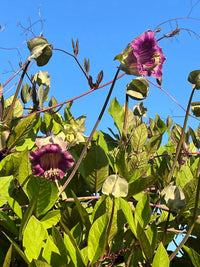
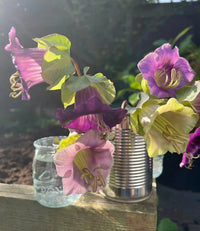
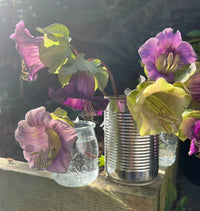
This is one of the most extraordinary climbing annuals you can grow. Native to the tropical mountain forests of Mexico, where it is a perennial woody vine climbing into the canopy of trees, Cobaea grows as a half-hardy annual in the UK — completing a full season from seed sown in January to a 6m vine in flower from August to November. The flowers themselves conduct a slow private drama: emerging as papery, five-cornered lime-green buds, opening to bell-shaped flowers still green, then gradually striped with violet as the pigment develops, finally deepening to a rich varnished purple over the course of three to four days. The plant always displays multiple stages simultaneously — green buds, violet-striped bells, fully purple cups, and fading past-peak flowers all visible at once. RHS Award of Garden Merit holder. Sweet musky fragrance released in the evening. Adored by bees and bumblebees in UK gardens (in its native Mexico, it is bat- and moth-pollinated, which explains the evening fragrance and robust flower structure).
A note on growing
Two crucial points often missed:
- Sow the seeds vertically, on their edge. Cobaea seeds are large, flat and wafer-like — if laid flat on wet compost, water pools on the broad surface and the seed rots before germinating. This is by far the most common cause of Cobaea germination failure. Always push each seed into the compost on its edge so water runs off the flat faces.
- Start early. Cobaea needs a long growing season to flower. Sow indoors in January, February, or at the latest early March, in deep individual pots (the long taproot resents disturbance). Maintain 20–25°C; germination takes 14–21 days. Grow on through spring in bright light. Plant out only after all frost risk has passed (June) against a sunny wall, fence, trellis or pergola. The vine climbs by branched tendrils that hook onto rough surfaces — needs trellis, wires or netting to climb up smooth walls.
Where it shines
Against sunny walls and fences where the vigorous growth and late-season flowers transform a vertical surface from June through November. Over pergolas and arches, where the rambling stems and pendant bells create a properly architectural display. In cottage gardens, where the sheer scale and the slow flower-colour transformation become a long-running feature talking-point. Note: Cobaea flowers do not last well as cut flowers — enjoy them in the garden rather than the vase.
Plant alongside
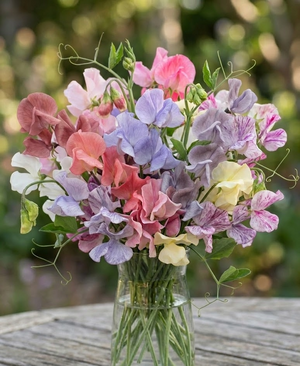
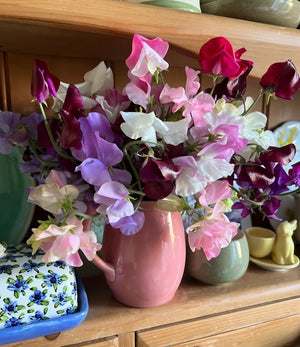
Cobaea flowers late, so pair with earlier climbing companions to keep the trellis interesting all season. Sweet Peas flower early in summer and fade as the heat hits — plant them on the same trellis as Cobaea, and as the Sweet Peas finish, the Cobaea takes over. Climbing Nasturtiums planted at the base hide the bare lower stems and add a splash of warm orange against the cool purple.
Plant alongside
Cobaea scandens Purple pairs beautifully with these cottage garden classics


RHS Award of Garden Merit
The RHS Award of Garden Merit is given to plants of outstanding excellence for ordinary garden use. To earn this award a plant must be of good constitution, available to the gardening public, and perform reliably across a range of UK growing conditions. It is one of the most trusted plant recommendations in British gardening and a genuine mark of quality.
Learn more at RHS.org.uk →