

Aquilegia 'Nora Barlow' Seeds
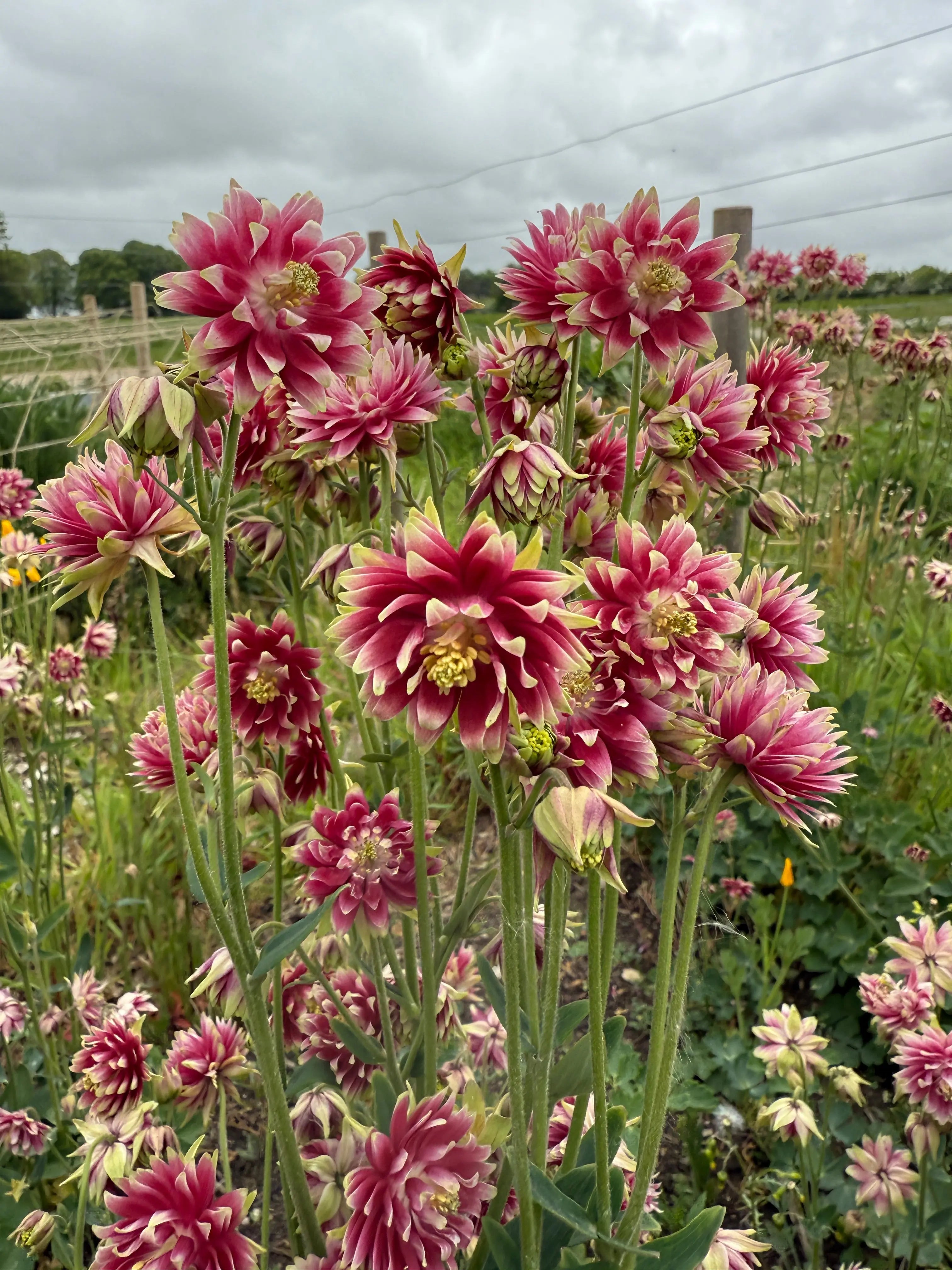
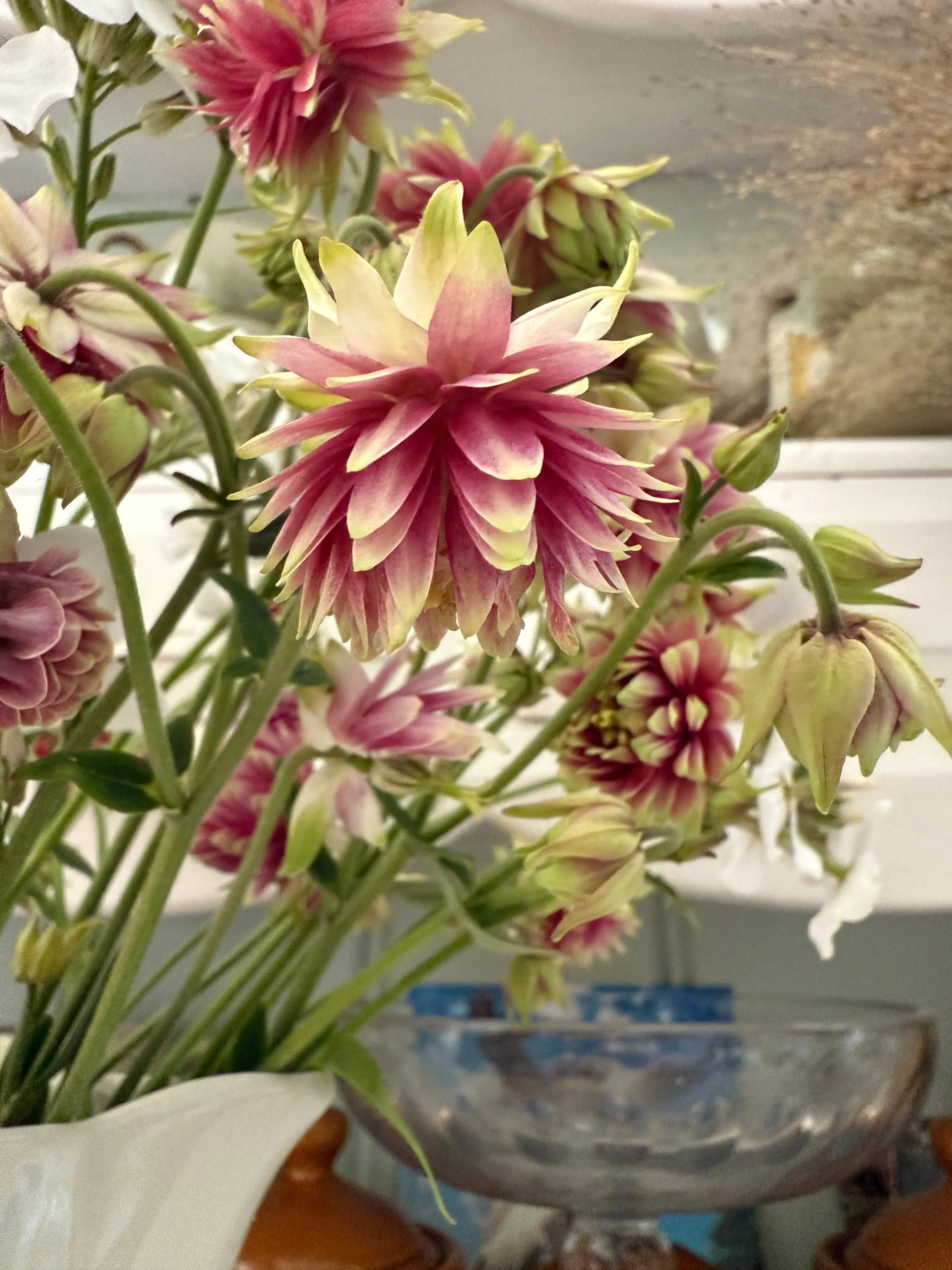
A fully double, spurless *stellata* type producing pompon flowers of raspberry-pink and creamy white with the unmistakable lime-green petal tips that set 'Nora Barlow' apart from every other columbine, named after Charles Darwin's granddaughter and known in gardens since the seventeenth century.
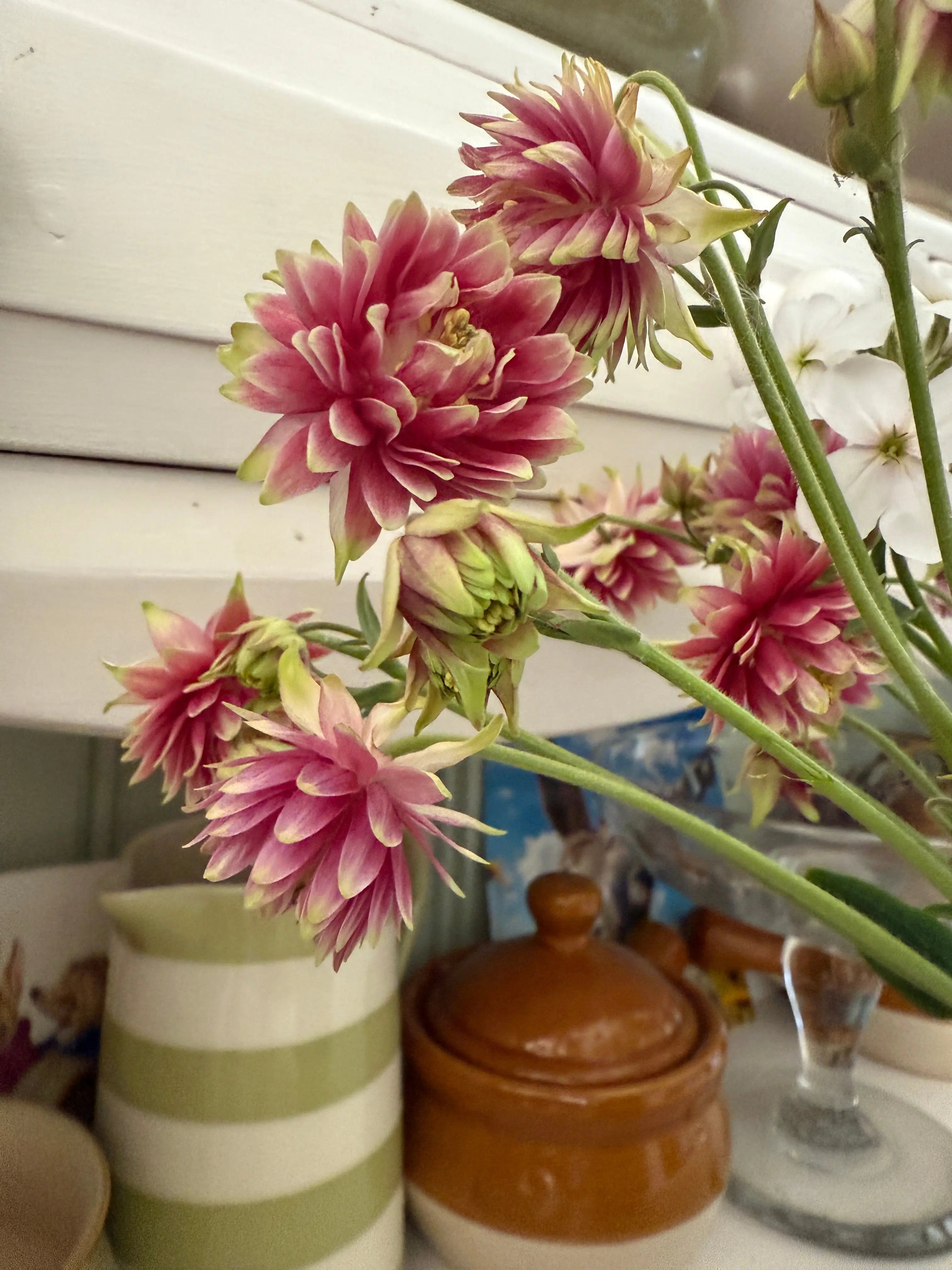
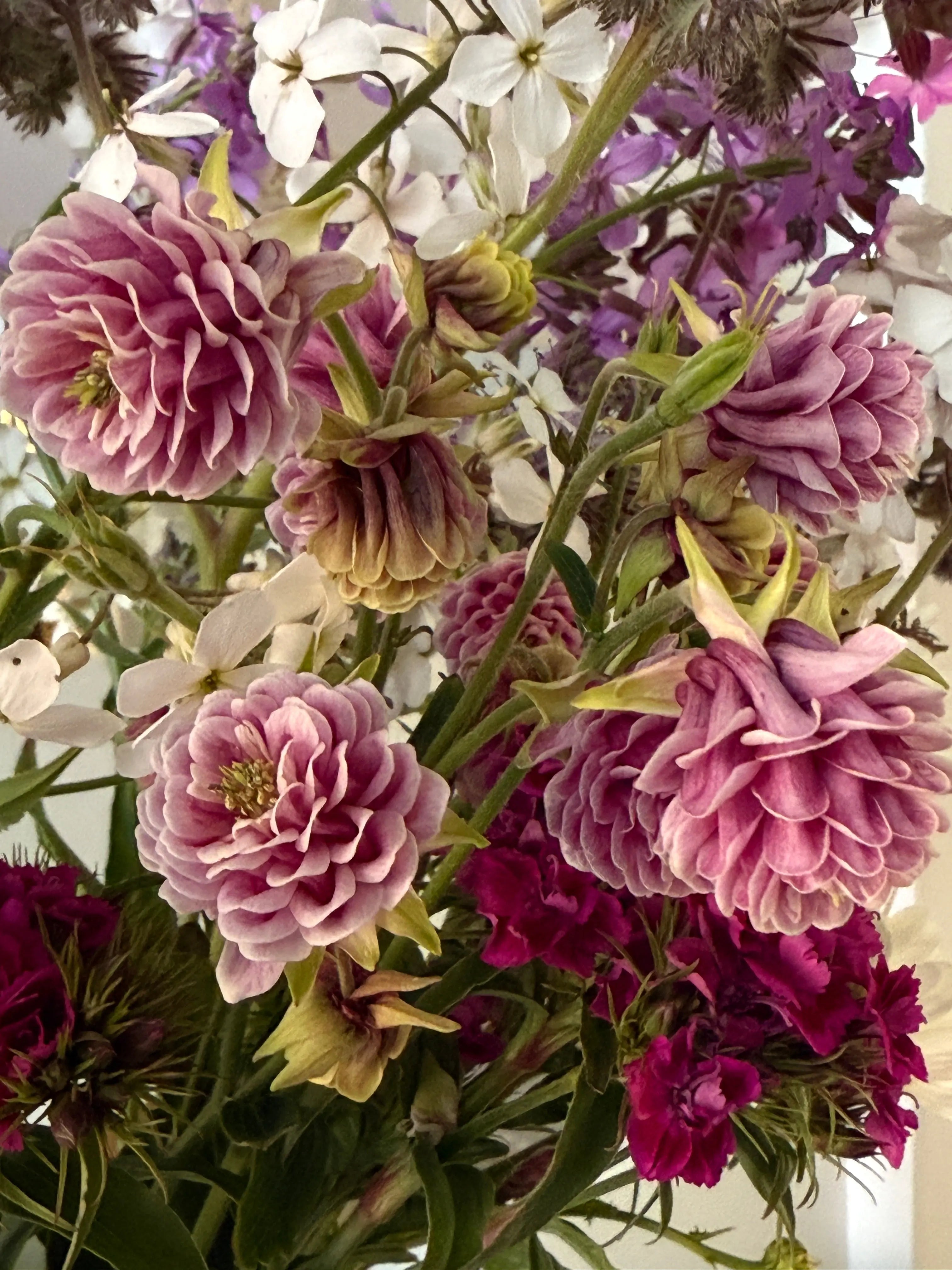
Among all the aquilegia varieties available from seed, 'Nora Barlow' is the one that is immediately and unmistakably identifiable. The fully double, spurless rosette form it shares with the Barlow Mixed series gives it the characteristic pompon appearance — layers of petals rather than the classic nodding bonnet — but the colour combination is entirely its own: raspberry-pink petals with creamy-white edges, and at the very tips of each petal, a distinctive flush of pale lime-green that no other aquilegia variety carries. This green-tipped quality is 'Nora Barlow's signature — the detail that makes visitors stop, look closely, and ask what it is — and it intensifies as the flower matures, the green becoming slightly more pronounced as the pink fades gently toward the creamy-white outer edge.
The plant carries the RHS Award of Garden Merit for consistently excellent performance, and it carries the name of Nora Barlow (1885–1989), Charles Darwin's granddaughter and a botanist and geneticist in her own right, who became associated with this ancient garden variety through her championing of it at a time when more flamboyant modern hybrids were beginning to displace the older cottage garden forms. The variety itself is considerably older than its namesake — it appears in seventeenth century horticultural records — but Nora Barlow's advocacy gave it a name, a renewed place in cultivation, and the kind of human story that turns a beautiful flower into something genuinely memorable.
🌿 Understanding the Plant
Aquilegia vulgaris var. stellata 'Nora Barlow' is a Hardy Herbaceous Perennial (H7) and holder of the RHS Award of Garden Merit — the fully double, spurless *stellata* aquilegia in the specific raspberry-pink, cream, and lime-green colouring that has made this one of the most instantly recognisable and most sought-after perennials in the cottage garden tradition. At 80–90cm it is the tallest of the three aquilegia varieties in the range and the one with the broadest spacing requirement (45cm).
The Lime-Green Petal Tips: The characteristic green tips of 'Nora Barlow' are caused by a partial reversion of the petal cells toward chlorophyll-producing tissue — in a sense, the very tip of each petal is behaving slightly like a leaf rather than a flower petal. This is a stable genetic characteristic of the variety, not a sign of disease or stress, and is one of the most botanically interesting colour features in the garden. The green intensifies slightly as the flower ages, giving 'Nora Barlow' a colour that evolves through its vase and garden life rather than simply fading uniformly. In a cutting garden arrangement, the green tips add a quality of freshness and botanical interest that no other aquilegia can provide.
The Darwin–Barlow Connection: Nora Barlow (1885–1989) had an extraordinary life by any measure — the granddaughter of Charles Darwin, a botanist and geneticist who worked in an era when women in science faced formidable barriers, and a scholar who edited and published important scientific correspondence well into her old age. She became associated with this aquilegia variety through her cultivation of it at her home, where she grew and studied plants in the tradition of her famous grandfather. The aquilegia was not bred by her — it was already centuries old when she encountered it — but her name has become its most lasting association, and it is a particularly fitting one. Darwin's work was built on the observation of natural variation and inheritance in plants; his granddaughter's name now permanently attached to one of the most botanically interesting and most visually distinctive of all cultivated columbines.
The Cross-Pollination Reality: A practical note that is important for gardeners wanting to maintain 'Nora Barlow' as a distinct variety: aquilegias cross-pollinate freely between varieties and even between species. Seedlings from a 'Nora Barlow' plant grown near other aquilegias will often show hybrid characteristics — some may be recognisably Nora Barlow in form, others may be intermediate or surprisingly different. To maintain the variety's characteristics most reliably, either grow it in isolation from other aquilegias or deadhead the flower heads before they set seed and propagate from carefully collected and identified seed. For gardeners who are happy with the natural variation this cross-pollination produces, allowing open self-seeding produces an interesting and ever-evolving colony that retains the double form and much of the pink-green colouring but with natural variation over generations.
🌱 Growing Guide
'Nora Barlow' is grown in the same way as all aquilegias — cold stratification, surface sowing, partial shade, two-year cycle — but with the additional care notes for maintaining the variety's specific colouring.
Cold Stratification:
As with all aquilegias, cold stratification significantly improves germination. Sow in pots in autumn and leave in an unheated cold frame for natural winter stratification, or place seeds in a sealed bag with damp vermiculite and refrigerate for three to four weeks before spring sowing. If germination stalls after sowing, a further seven to ten days in the cold can break remaining dormancy.
How to Sow:
Sow indoors from February to May. Surface sow onto moist compost — do not cover, or use only the very lightest dusting of vermiculite. Maintain a temperature of 15–20°C. Germination typically occurs within 14–30 days after stratification. With 50 seeds per packet, there is plenty for a generous first sowing with some in reserve.
Transplanting:
Plant out from May to June after hardening off. Space plants 45cm apart — slightly wider than the Blue aquilegia's 35cm, reflecting 'Nora Barlow's greater ultimate size and spread. Partial shade is preferred though it tolerates full sun in moist soil. Humus-rich, moisture-retentive soil produces the finest plants.
Maintaining Varietal Purity:
For the truest 'Nora Barlow' characteristics in seedlings, deadhead spent flower heads before the seeds ripen and fall — or collect seed from the plants and sow only from identified 'Nora Barlow' plants in the following season. If other aquilegias are growing nearby, some cross-pollination and colour variation in self-seeded offspring is inevitable. This is either a nuisance or an interesting experiment depending on temperament.
Hollow Stems and Vase Life:
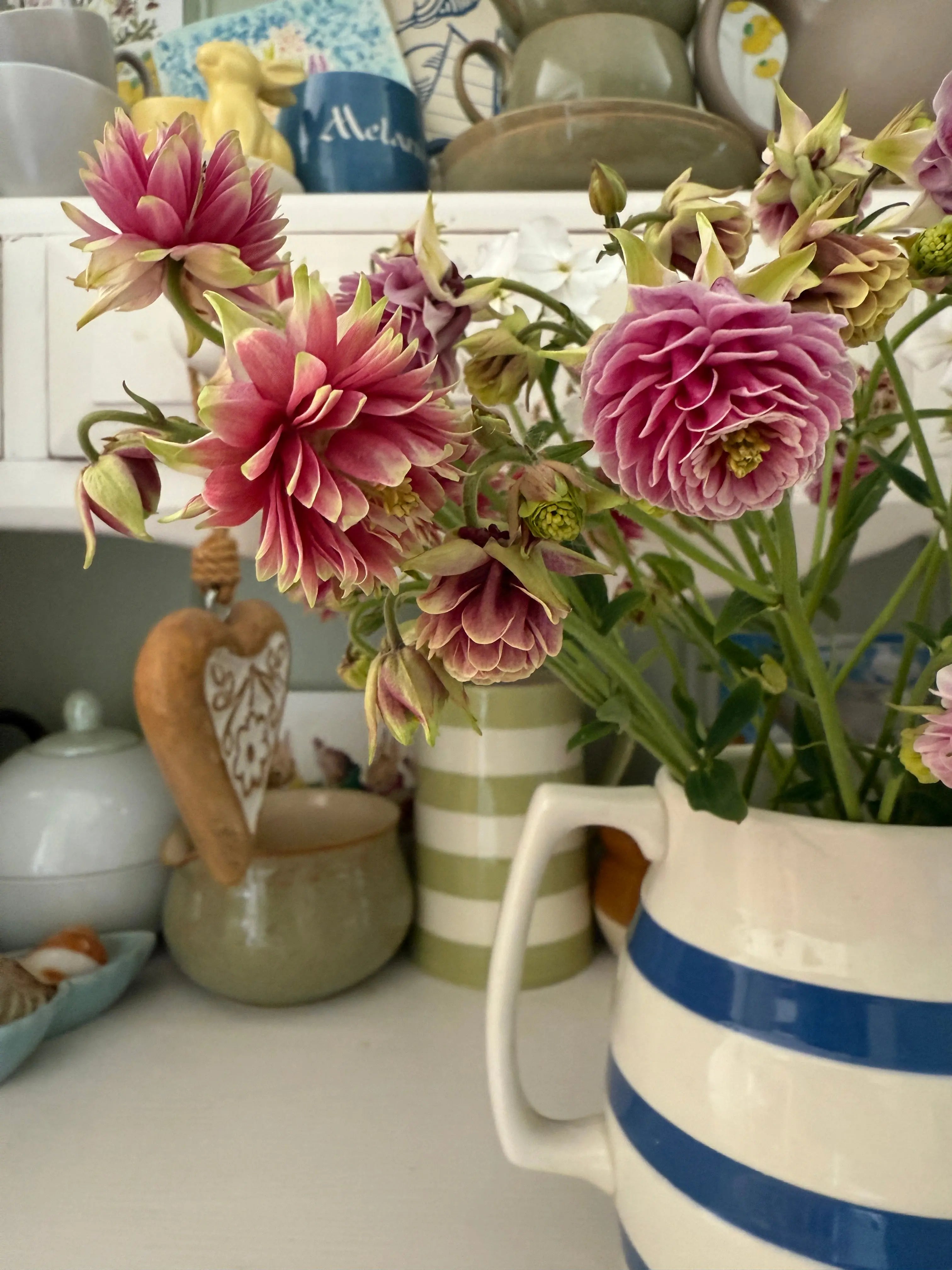
Aquilegia stems are hollow and prone to wilting quickly after cutting. To condition cut stems for the vase, plunge the cut ends into boiling water for approximately ten seconds immediately after cutting, then transfer to deep cool water for several hours before arranging. This seals the hollow stem and prevents air locks that cause premature wilting. With this conditioning, 'Nora Barlow' provides four to six days of good vase life.
📋 Plant Specifications
| Botanical Name | Aquilegia vulgaris var. stellata 'Nora Barlow' |
| Common Names | Nora Barlow Columbine / Double Granny's Bonnet |
| Plant Type | Hardy Herbaceous Perennial |
| Hardiness | H7 — ultra-hardy to below -20°C |
| Light Requirements | Partial Shade / Full Sun ⛅☀️ — prefers dappled shade |
| Plant Height | 80–90cm — the tallest aquilegia in the range |
| Plant Spread | 45cm |
| Plant Spacing | 45cm apart |
| Flower Form | Fully double, spurless *stellata* rosette — pompon appearance |
| Flower Colour | Raspberry-pink and cream with distinctive lime-green petal tips |
| Flowering Period | May to July (Year 2 from seed) |
| RHS Award of Garden Merit | Yes ✓ |
| Lifespan | 3–4 years per plant; self-seeds (with some colour variation) |
| Vase Life Note | Hollow stems — sear in boiling water 10 seconds before conditioning |
| Seeds per Packet | Approximately 50 seeds |
| Perfect For |
Woodland & Shaded Border Planting
Distinctive Spring Cut Flower
Heritage & Historic Garden Varieties
Early Pollinator Support
Classic Cottage Garden Planting
|
🤝 Beautiful Garden Combinations
The raspberry-pink, cream, and lime-green of 'Nora Barlow' is a combination of considerable botanical interest and considerable visual charm — these companions create the most beautiful and most appropriate pairings:
- 🌿 Ammi Majus: The White Lace Framework. In a cutting garden arrangement rather than a border combination, Ammi Majus provides the finest white framework for 'Nora Barlow' cutting stems — the pure white lace umbels creating the airy space around the more substantial double pompon flowers that shows both to their best advantage. The lime-green petal tips of 'Nora Barlow' coordinate particularly well with the fresh, clean white of ammi, the green giving the combination a botanical freshness that prevents it from reading as simply pink-and-white. In a vase, three or four stems of Nora Barlow with an equal number of ammi stems is a spring arrangement of genuine elegance that requires no additional flowers and photographs beautifully.
- 💜 Aquilegia 'Barlow Mixed': The Complete Barlow Collection. Growing 'Nora Barlow' alongside 'Barlow Mixed' provides the most complete and most interesting double aquilegia collection the border can hold — the specific, historically named raspberry-pink-and-green variety alongside the full jewel-toned palette of the mixed series, all in the same double spurless *stellata* form, sharing the same growing requirements and the same flowering season. The two together create a border of considerable botanical diversity within a single flower form, and the lime-green tips of 'Nora Barlow' among the deep blues, wines, and pinks of the mixed series give the whole planting a note of botanical specificity and visual interest that the mixed variety alone, for all its beauty, cannot achieve.
📅 Sowing & Flowering Calendar
Sow indoors from February after cold stratification, or direct sow in autumn for natural winter stratification — 'Nora Barlow' establishes in year one and flowers from May to July in year two, with July extending the aquilegia season one month beyond the Blue and Barlow Mixed varieties.
| Jan | Feb | Mar | Apr | May | Jun | Jul | Aug | Sep | Oct | Nov | Dec | |
|---|---|---|---|---|---|---|---|---|---|---|---|---|
| 🌱 Sow Indoors | ||||||||||||
| 🪴 Plant Out | ||||||||||||
| 🌸 Flowering (Yr 2) |
Three things make the most of 'Nora Barlow'. First, sear cut stems in boiling water for ten seconds immediately after cutting — aquilegia stems are hollow and prone to air lock, which causes wilting within hours. The ten-second boiling water treatment seals the stem end and allows the plant to draw water properly; it is the difference between a cut stem that wilts in a day and one that remains beautiful for four to six days. Second, watch the green tips develop as the flower matures — the lime-green intensifies slightly as the raspberry-pink fades toward cream at the petal edges, and a flower that is all-pink in bud is subtly and beautifully three-toned — pink, cream, and green — by the time it is fully open. The green is most visible and most striking close up, and 'Nora Barlow' more than any other aquilegia rewards the attention of looking very closely. Third, deadhead consistently if you want to maintain the variety's characteristic colouring in self-seeded offspring — allow open cross-pollination with other aquilegias and the distinctive green-tipped pink-and-cream of 'Nora Barlow' will gradually dilute in subsequent generations.
🏆 RHS Award of Garden Merit
Aquilegia vulgaris 'Nora Barlow' is the aquilegia with the lime-green petal tips, the Darwin connection, the seventeenth century history, and the RHS Award of Garden Merit — a plant of considerable botanical interest, considerable human story, and considerable beauty that earns every one of these credentials in the garden and in the vase. Stratify the seed, grow it alongside alliums for the May-June border combination it has been producing since the seventeenth century, sear the cut stems before vasing them, and look very closely at those lime-green tips when the flower is fully open. This is the aquilegia that rewards attention.
📖 Want more detailed growing advice?
View our Complete Growing Guide →
- Regular price
-
£2.55 - Regular price
-
- Sale price
-
£2.55
Couldn't load pickup availability