
Carolina Reaper Chilli
The world's hottest chilli for a decade - and still the most famous superhot ever bred
The most famous chilli on earth - Guinness World Record holder 2013-2023, bred by Ed Currie of PuckerButt Pepper Company. Sweet, fruity, and properly fearsome.
Handle with care — this is a superhot chilli
This variety is exceptionally hot. The capsaicin in superhot chillies can cause real discomfort and even burns to skin and eyes, so a few simple precautions make all the difference when handling the fresh or dried fruit:
- Wear disposable gloves whenever you cut, deseed, or handle the fruit
- Keep your hands well away from your eyes, nose, and face while working
- Never touch contact lenses with hands that have handled the fruit
- Work in a well-ventilated space — the fumes from cooking or drying can irritate the lungs and eyes
- Wash hands, knives, and boards thoroughly with soapy water afterwards
- Keep fresh and dried fruit well out of reach of children and pets
The plants themselves are perfectly safe to grow and handle — these precautions apply to the ripe fruit and its seeds.
About this variety
Capsicum chinense 'Carolina Reaper' The world's hottest chilli for a decade — and still the most famous superhot ever bred
If chillies have celebrities, the Carolina Reaper is one of them. From 2013 to 2023 it held the Guinness World Record as the hottest chilli on earth — a full decade at the top of the heap — and although it was finally dethroned by Ed Currie's own Pepper X in October 2023, it remains the most famous, most-grown, and most culturally significant superhot ever created. The chilli that broke through into mainstream awareness; the chilli that launched a thousand YouTube challenge videos and the long-running Hot Ones series; the chilli whose name, even non-gardeners recognise.
And there's a real human story behind it. Ed "Smokin' Ed" Currie, of the PuckerButt Pepper Company in Fort Mill, South Carolina, spent years crossing a Pakistani Naga with a red habanero from St Vincent's Island, working through generation after generation in pursuit of a sweeter superhot. The original code-name was wonderfully prosaic: HP22B — Higher Power, pot 22, plant B. The "Reaper" name came from the wickedly curved scorpion-like "stinger tail" the pods develop, which is one of the most recognisable shapes in the chilli world. The official Guinness-certified average is 1,641,183 Scoville heat units, with individual pods reaching peaks of over 2,200,000 SHU. For context, a jalapeño sits around 5,000 SHU.
What makes the Carolina Reaper genuinely remarkable, though — beyond the headline numbers — is its flavour. Currie set out to breed a sweet superhot, and he succeeded. Beneath the searing fire is a surprisingly fruity, almost tropical sweetness, with notes of red apple, peach and a hint of cinnamon. The sweetness comes first, in the brief moment before the heat arrives; then the heat does what the heat does. It's this rare combination — genuine flavour married to extreme heat — that makes the Reaper the chilli of choice for serious hot-sauce makers, and what kept it the world's most popular superhot even after it lost its record.
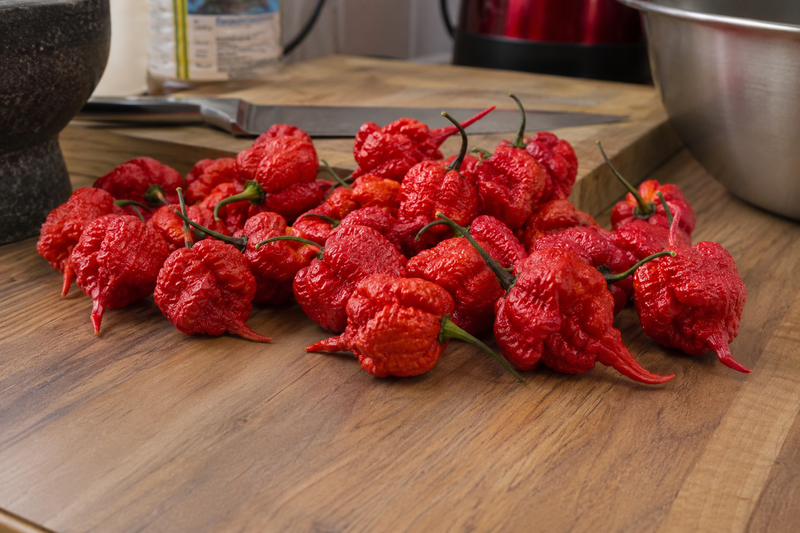
The pods themselves are small — just 5 to 7.5cm long, bumpy and wrinkled, ripening from green to a deep scarlet red, finished with that signature stinger tail. The plant is a typical chinense: slow to germinate, warmth-hungry, and not the easiest variety in the catalogue — but established plants are productive, ornamental, and rewarding once they get going. A genuine grower's pepper.
Safety: please read this before growing or handling
The Carolina Reaper is genuinely extreme — we sell these seeds for experienced chilli enthusiasts who understand what they're handling, and we ask all customers to follow proper safety precautions:
- Wear gloves when picking, cutting, or processing the pods, and ideally eye protection too. Capsaicin oil at this concentration causes severe burning on contact with skin and eyes
- Never touch your face, eyes, or sensitive skin after handling, even after washing — the oil clings to skin for hours
- Wash hands thoroughly with soap and oil-cutting detergent immediately after handling; wash the chopping board, knife, and work surface the same way
- Use ventilation when cooking with these pods — the fumes alone can cause coughing, eye irritation, and breathing difficulties
- Use vanishingly small amounts in food — a fraction of a single pod can dominate a whole dish. Start with far, far less than seems reasonable; add more later if needed
- Keep away from children, pets, and anyone with respiratory, heart, or digestive conditions — ingesting peppers at this heat is not advisable for them
- Do not eat whole pods or attempt "challenges" — consuming a whole Carolina Reaper is genuinely dangerous and has led to documented medical emergencies, including hospitalisations
- If heat becomes overwhelming: dairy (milk, yoghurt, ice cream) and starch (bread, rice) are the most effective relief; water makes it worse. Seek medical advice if breathing or heart symptoms develop
This isn't a chilli for casual cooking — it's a chilli for experienced enthusiasts who'll dehydrate pods into a tiny pinch of fiery powder, blend single pods into a batch of hot sauce, or simply grow the plant for the ornamental satisfaction of having raised a record-breaker on a UK windowsill.
A note on growing
Like all chinense superhots, Carolina Reaper is slow and demanding compared to easier annuum varieties. Sow indoors from January to early March to give the plants the longest possible season — the earlier you start, the better your chance of a full harvest. Germination is famously unpredictable: warmth is critical, ideally a heated propagator at 25–30°C, with consistent moisture. Allow two to six weeks for seedlings to appear, sometimes longer; don't give up if nothing shows in a fortnight.
Prick out into 9cm pots once the seedlings have two true leaves, and grow on in good light at a minimum of 20°C. Pot on progressively, never letting the plants check or chill, until they reach a generous final container. The Carolina Reaper does best in a heated greenhouse or conservatory in the UK; outdoors it will struggle to ripen a full crop without exceptional summer weather. The longer and warmer the season, the better the harvest.
Water consistently, never letting the compost dry out, and feed weekly with a balanced or high-potash tomato food once the first flowers set. The plants are productive once established — expect a generous crop from a healthy, mature plant. Pods take a long time to ripen fully (often 90–120 days from flower), so patience is essential; they're at their fieriest and fruitiest only when fully red. Harvest with gloves and a sharp knife or snips, never by hand. Stop watering as the season ends to let the plant focus on ripening the last pods.
Where it shines
Carolina Reapers are most often dried — pods cure beautifully on the plant or in a dehydrator, and the dried fruit grinds into one of the world's most fearsome chilli powders, a tiny pinch of which can transform a whole pot of chilli con carne or a batch of curry. They're prized by serious hot-sauce makers for the rare combination of extreme heat and genuine fruity flavour, and a single Reaper in a batch of habanero-based sauce will push the heat into a different league entirely.
For most growers, though, the real satisfaction is simply having raised one. A mature Carolina Reaper plant in fruit, hung with its strange wrinkled scarlet pods and signature stinger tails, is one of the most distinctive things you can grow in a UK greenhouse — a genuine piece of horticultural history and a guaranteed conversation piece. And as the ultimate "I grew this" achievement, it's hard to beat.
At a glance
- Heat: extreme superhot, 1.4 to 2.2 million SHU — Guinness World Record holder 2013–2023
- Flavour: surprisingly sweet and fruity — tropical, apple, peach, hint of cinnamon
- Looks: small, wrinkled scarlet pods with a signature scorpion-like stinger tail
- Pods: 5–7.5cm long, 2.5–5cm wide
- Plant: slow, warmth-hungry, productive once established; UK greenhouse essential
- Story: bred by Ed Currie of PuckerButt Pepper Company; original code HP22B; world record holder for a full decade
- Sow: January to early March, 25–30°C
- Harvest: 90–120 days from flower; pick fully red for peak heat and flavour
- Best for: drying, grinding into powder, hot sauces, and the sheer pride of growing a legend
- Strictly for experienced chilli enthusiasts
Plant alongside
Chillies do well with companions that draw in pollinators and help keep pests down. Plant alongside French Marigold 'Spanish Brocade' to deter aphids and whitefly, and Calendula 'Neon' to attract beneficial predators. Basil is a classic greenhouse companion that enjoys the same warmth and sun.
Plant alongside
Carolina Reaper Chilli pairs beautifully with these kitchen garden companions