

Hungarian Hot Wax Chilli
Heritage Hungarian wax pepper - mild-medium heat, outdoor-reliable
The Hungarian heritage wax pepper that crops reliably outdoors in a UK garden - long tapered fruits ripening through yellow, orange and red, gentle 5,000-10,000 SHU heat suited to everyday cooking.
About this variety
Capsicum annuum 'Hungarian Hot Wax' Heritage Hungarian wax pepper, mild-medium heat, outdoor-reliable
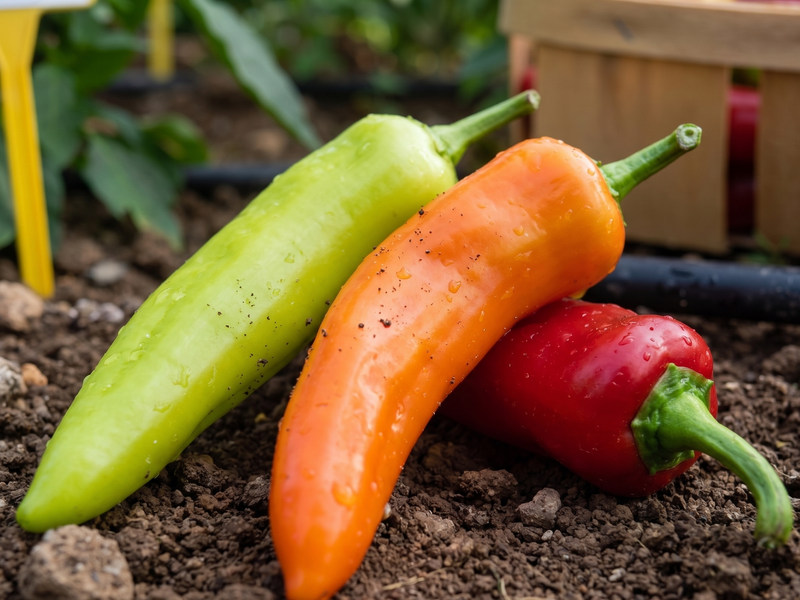
The Hungarian heritage wax pepper that has earned its place as one of the most reliable chillies for UK outdoor growing. Hungarian Hot Wax produces long, tapered, pointed fruits 12–15cm in length, ripening from pale yellow-green through orange to deep red — the same fruit displaying all three colours at different stages, making the plants genuinely beautiful through the summer. The flavour is properly fruity and the heat sits in the mild-medium range at roughly 5,000–10,000 SHU on the Scoville scale — warmer than a bell pepper, gentler than a jalapeño, accessible to most cooks without overwhelming the palate.
What sets Hungarian Hot Wax apart is its reliability in British conditions. Unlike many chillies that demand greenhouse warmth to crop properly, Hungarian Hot Wax was bred in Eastern European continental conditions and crops generously outdoors in a sunny sheltered UK garden. The plants are compact and bushy at around 60cm tall, rarely needing staking, and produce 20–30 fruits per plant in a good summer. For the gardener who wants chillies without committing to a greenhouse, this is genuinely the variety to start with.
The mild-medium heat level is the second reason Hungarian Hot Wax has held its place in catalogues for decades. The fruits add proper chilli warmth and flavour to cooking without the searing intensity of habanero-type varieties — you can use whole pods rather than tiny slivers, the seeds can go in without worry, and the heat builds gently rather than overwhelming the dish. This makes it the cook's chilli for everyday use: stuffing, pickling, frying, slow-cooking, drying. The thick walls also make Hungarian Hot Wax outstanding for stuffing — few other chillies have the structural integrity to hold a filling.
Hungarian Hot Wax is open-pollinated heritage. Seed saved from your best fruits will grow true the following year.
A note on growing
Sow indoors from February to April at 20–25°C in seed compost at 0.5cm depth — chilli seeds need genuine warmth to germinate well, and a heated propagator makes a real difference. Germination takes 14–21 days. Prick out seedlings into 9cm pots once they have two true leaves, growing on at 18°C minimum.
Plant out from late May (greenhouse) or early June (outdoors) once all frost risk has passed and night temperatures stay reliably above 12°C. Plant in 25–30cm pots filled with quality compost, or directly into fertile, well-drained garden soil in a sunny, sheltered position — against a south-facing wall produces the heaviest crops. Allow 45cm between plants.
Water consistently — chillies dislike drought but also dislike waterlogging. A weekly liquid feed of high-potash tomato food from the appearance of the first flowers substantially improves cropping. Pinch out the growing tip when plants reach 30cm to encourage bushy branching and more flower trusses.
Harvest from July onwards. The fruits can be picked at any stage — pale yellow for the mildest, orange for medium, red for the fullest heat and sweetness. Regular picking encourages further flowering and substantially extends the cropping season. Plants typically crop continuously from July to first frost.
Where it shines
In the kitchen, Hungarian Hot Wax is the universal everyday chilli. Stuff with cream cheese and bake (the classic chilli popper). Pickle whole in spiced vinegar — the wax skin holds beautifully in jars. Slice into stir-fries, curries, and pasta sauces. Use whole in slow-cooked stews. Stuff with rice and mince for substantial Hungarian-style mains. Dry whole strung up on a kitchen string for winter use. Add to scrambled eggs, omelettes, and frittatas. The mild-medium heat suits everyday family cooking where you want flavour and warmth rather than challenge.
In the garden, two or three plants produce a substantial summer supply of chillies for fresh use, pickling, and drying. The decorative value of the multicoloured fruits through summer makes Hungarian Hot Wax suitable for ornamental positions as well as production beds — a row in a sunny mixed border looks intentional and beautiful.
Plant alongside
Chillies benefit from companion plants that attract pollinators and deter pests. Plant alongside French Marigold 'Spanish Brocade' to deter aphids and whitefly. Basil is the traditional Mediterranean companion that improves both flavour and pollinator attraction. Calendula 'Neon' attracts beneficial predators. Avoid planting near brassicas or fennel.

