


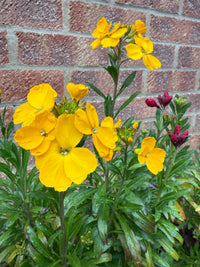
Wallflower Cloth of Gold
Erysimum cheiri 'Cloth of Gold' — Biennial
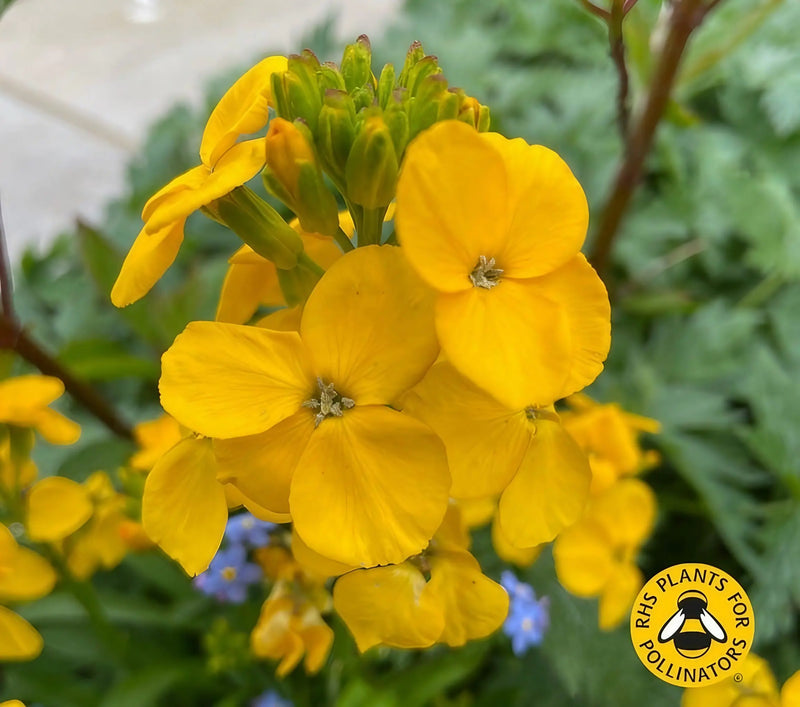
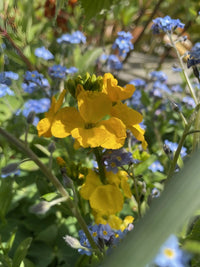
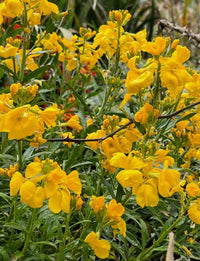
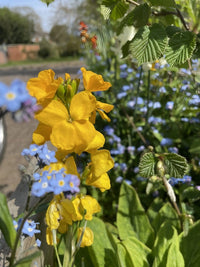
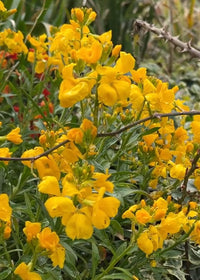
A glorious cottage cloak of rich deep golden-yellow blooms with the legendary Wallflower clove-and-spice fragrance — the warm-gold cottage biennial for spring borders.
About this variety
Erysimum cheiri 'Cloth of Gold' Wallflower 'Cloth of Gold'
A glorious cloak of rich deep golden-yellow blooms with the legendary Wallflower clove fragrance — Wallflower 'Cloth of Gold' is the cottage biennial that floods the spring garden with warm gold and the unmistakable spice-market perfume that defines the genus. Hardy biennial (H5). RHS Plants for Pollinators — one of the most important early-spring nectar sources for waking bumblebees.
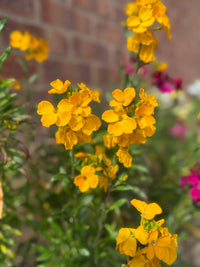
This is the traditional cottage Wallflower in the pure-gold colour. Dense spikes of small four-petalled flowers in rich deep golden-yellow rise from compact bushy mounds of dark green leaves, providing substantial warm-gold colour in March, April and May when many other plants are still dormant. But the colour is only half the story — 'Cloth of Gold' carries the legendary Wallflower scent: a rich, heady perfume of honey, clove and spice that hangs in the air on still spring days. Plant near a path or doorway where you can enjoy the fragrance every time you pass. Hardy biennial (H5). RHS Plants for Pollinators — Wallflowers are among the first substantial nectar sources of the year, providing critical early resource for queen bumblebees emerging from hibernation.
A note on growing
Wallflowers are classic biennials following a two-year cycle:
- Sow May/June/July in a nursery bed outdoors or in modules. Cover lightly. Germination 10–14 days at cool temperatures.
- Pinch out the growing tip when plants are 15cm tall — this critical intervention stops them getting leggy and forces them to bush out, giving more flower spikes the following spring.
- Transplant to final flowering position in October — plant firmly to withstand winter wind. Plants overwinter as established bushy rosettes.
- Flowers March–May the following year, with the cottage scent at peak in April.
After flowering, Wallflowers are typically discarded as they are short-lived. However, plants may persist for a second year in favourable conditions.
⚠️ Toxicity note: Wallflowers contain cardenolides (similar compounds to digitalis in Foxgloves). All parts are toxic if ingested by humans or pets. Wear gloves when handling for sensitive skin.
Where it shines
In cottage borders for warm-gold spring colour combined with the classic spring fragrance — 'Cloth of Gold' is the variety that defines the traditional English cottage garden in spring. Near paths, doorways and seating areas where the fragrance can be appreciated. As underplanting for spring bulbs — Wallflower mounds provide colour at ground level while tulips, daffodils and other bulbs rise above. In wildlife gardens specifically for the early-spring bumblebee value. As cut flowers for fragrant indoor bouquets (the scent is genuinely intoxicating).
Plant alongside
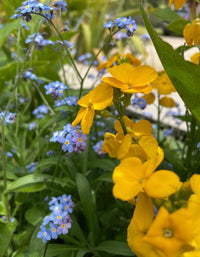
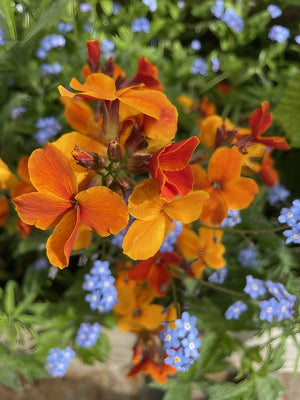
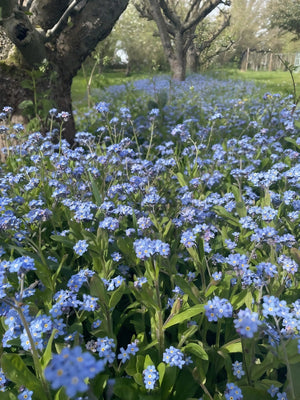
The textbook "citrus mix" combination: pair 'Cloth of Gold' with Wallflower 'Fire King' for a vibrant warming display of yellow and orange that smells like a spice market. For high-contrast designer drama, combine with Tulip 'Queen of Night' (deep almost-black purple) — the moody dark tulip rising from the warm gold Wallflower carpet is a designer cottage favourite. With Forget-me-not 'Blue' for the classic cottage spring carpet underneath.
Plant alongside
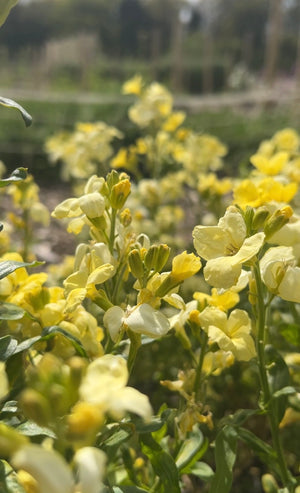
Wallflower Cloth of Gold pairs beautifully with these cottage garden classics

RHS Plants for Pollinators
This plant has been assessed by the Royal Horticultural Society and recommended as especially beneficial to bees, butterflies and other pollinators. Growing plants like this directly supports UK pollinator populations — something close to our hearts at Salle Moor Hall Farm, where we see the difference a cottage garden full of the right plants can make.
Learn more at RHS.org.uk →