

Swan River Daisies Mixed
Brachyscome iberidifolia 'Mixed' — Swan River Daisy
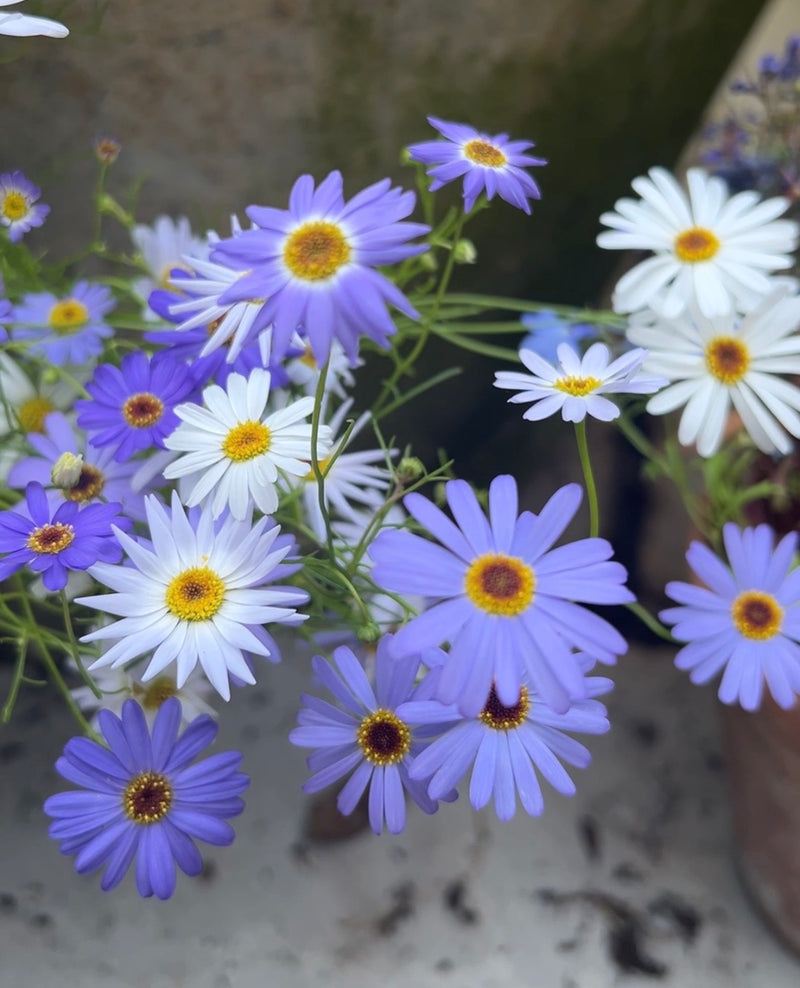
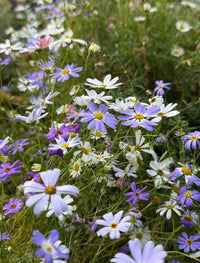
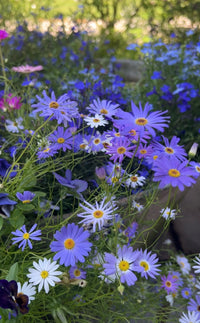
Masses of tiny star-like daisies in mauve, blue, white and pink above a cloud of feathery grey-green foliage — the unsung Australian cottage daisy for containers, baskets and borders.
About this variety
Brachycome iberidifolia 'Mixed' Swan River Daisy Mixed
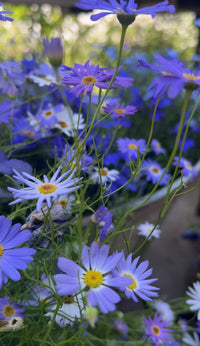
Masses of tiny star-like daisies (2–2.5cm across) in soft shades of mauve, blue, white and pink, held above a cloud of fine fern-like grey-green foliage that creates a delicate misty "cloud" effect. Swan River Daisy is one of the finest compact flowering annuals for UK containers, hanging baskets, and front-of-border planting — and one of the most underused. RHS Plants for Pollinators.
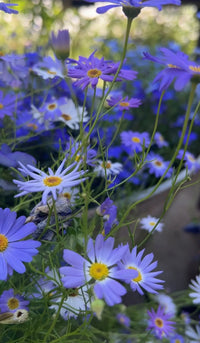
This is one of the great unsung heroes of the cottage container garden. The plant earns its evocative name from the Swan River area of Western Australia, where it grows wild in open woodlands and along watercourses. In UK gardens it's grown as a half-hardy annual (H2) — frost-tender, but flowering profusely from June through October with a delicate cloud-like presence that few other annuals can match. The flowers are tiny, simple, daisy-like stars in soft shades of mauve, blue, white and pink, often with yellow or dark centres, but the defining feature is the foliage: fine, feathery, fern-like leaves in soft grey-green that create a delicate misty "cloud" effect quite unlike any other commonly-grown annual. The flowers appear in such profusion that they often cover the foliage entirely at peak flowering, creating drifts of pastel colour with cloud-like underplanting in a single plant. Drought-tolerant once established despite the delicate appearance. Height 20–30cm; spread 30–40cm.
The fragrance bonus: the flowers carry a subtle sweet scent, particularly noticeable on warm days.
A note on growing
Swan River Daisy seeds are extremely fine and even distribution is difficult without assistance. The practical solution: mix the seeds thoroughly with a small amount of dry silver sand before sowing — the sand gives the seeds a visible carrier material and allows even distribution. Surface-sow on moist fine compost; no covering — light required for germination. Maintain 18–20°C; germination 10–21 days.
Pinch out the growing tip at 8–10cm height — this single intervention is essential for developing the bushy compact mounded habit that makes Swan River Daisy outstanding in containers. The RHS specifically recommends this practice for compact container display. Without pinching, plants develop as taller less bushy individuals that provide less complete coverage.
Plant out late May–June in full sun. Slug protection for the first 2–3 weeks after planting. Once established, drought-tolerant.
Where it shines
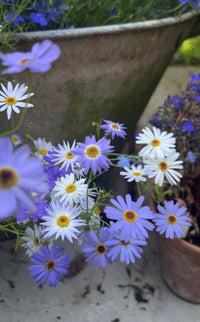
In hanging baskets, window boxes and patio containers — Swan River Daisy is one of the most useful compact flowering annuals for vertical and small-space gardening, with a softness and naturalistic charm that breaks up the tight rigid flowering of more conventional bedding. At the front of cottage borders, where the cloud-like foliage softens hard edges and the tiny star-flowers add delicate colour. In rock gardens for naturalistic charm. In children's gardens where the small flowers and feathery foliage genuinely captivate.
Plant alongside
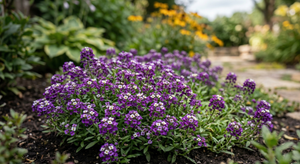
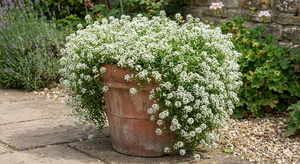
The "stunning low-growing tapestry" combination: pair Swan River Daisies with Alyssum 'Royal Carpet' — the deep violet-purple of Alyssum mixing with the pastel tones of Brachycome creates a low-growing carpet of cottage colour perfect for edging borders, rockeries, or spilling over container edges. Both fragrant, both compact, both pollinator-friendly. With Verbena bonariensis (if stocked) for height contrast in borders — low-growing Brachycome at 20–30cm at the front with tall airy Verbena at 90–120cm rising behind creates a romantic cottage-garden effect.
Plant alongside
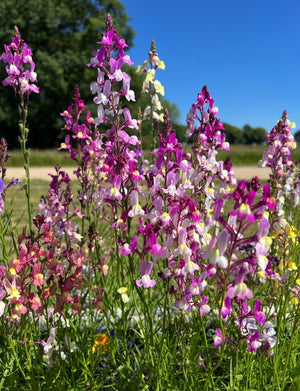
Swan River Daisies Mixed pairs beautifully with these cottage garden classics
RHS Plants for Pollinators
This plant has been assessed by the Royal Horticultural Society and recommended as especially beneficial to bees, butterflies and other pollinators. Growing plants like this directly supports UK pollinator populations — something close to our hearts at Salle Moor Hall Farm, where we see the difference a cottage garden full of the right plants can make.
Learn more at RHS.org.uk →