

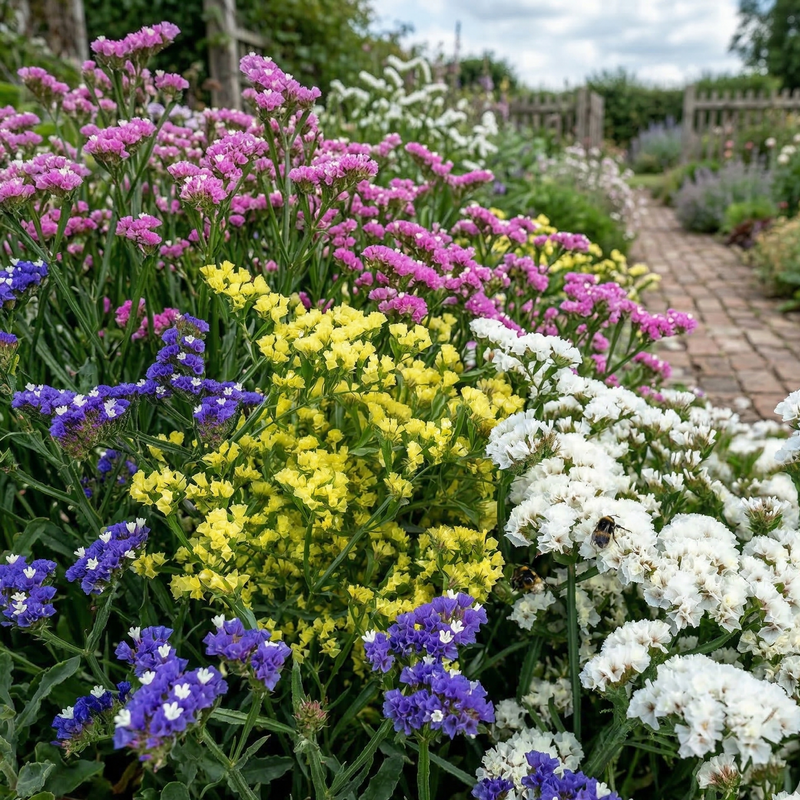
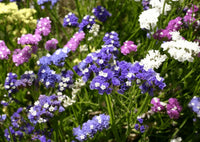
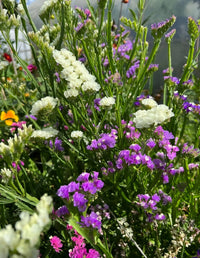
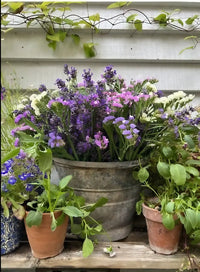
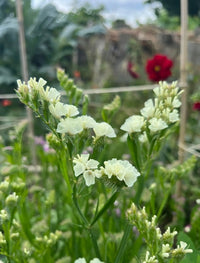
Statice Hipster Mixed
Limonium sinuatum 'Hipster Mixed' -- Statice; Sea Lavender
Sturdy winged stems with large flat clusters of papery flowers in violet, rose, apricot, yellow, blue and white — the absolutely essential dried-flower filler that holds its colour for years.
About this variety
Limonium sinuatum 'Hipster Mixed' Sea Lavender 'Hipster Mixed' / Statice Mixed
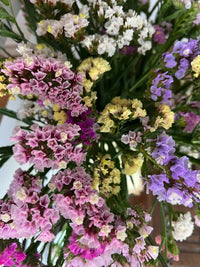
The "workhorse of the dried flower world" — sturdy winged stems topped with large flat clusters of papery flowers in a vibrant spectrum of deep violet, rose, apricot, yellow, blue and pure white. Statice retains its brilliant jewel-saturated colour for years after harvesting, making it the absolutely essential ingredient for everlasting bouquets, dried arrangements, and winter wreaths.
Once considered "retro", Statice has seen a massive resurgence in popularity thanks to the sustainable flower movement and the modern rediscovery of dried-flower craft. This variety is now highly valued for its sturdy winged stems (the stem itself has distinctive flat "wings" along its edges, providing the plant with extra structure) topped with large flat-topped clusters of flowers with a unique papery texture. The colourful parts of the plant are actually papery calyces rather than petals — which means they feel crisp and dry even while the plant is still growing in the garden. Because of this, they hold their brilliant colour for years after being harvested. Half-hardy annual (H2). Height 60–75cm. RHS Plants for Pollinators — the flat flower clusters provide a stable nectar-rich landing platform for butterflies and hoverflies throughout the height of summer.
A note on growing
Statice is remarkably easy to grow given a sunny spot and soil that doesn't stay waterlogged. Sow indoors February–April. Sow seeds on the surface of moist compost and do not cover — they require light to trigger germination. Maintain 18–21°C; seedlings typically appear in just 7–14 days (one of the faster germinators in the range). Pot on once large enough to handle.
Plant out in late May or June once all risk of frost has passed in full sun and well-drained soil. Drought-tolerant once established. Like most everlasting flowers, Statice prefers slightly lean conditions over rich fed soil. Space 25–30cm apart.
For drying (the main purpose for most gardeners): pick when the buds are half-open — they continue to open and develop as they dry. If picked fully open, they may turn inside out or brown during drying. Strip the leaves (which don't dry well), bundle loosely in small groups, and hang upside down in a warm dark dry place. Darkness is essential to keep the colours bright — UV light fades dried Statice quickly.
Where it shines
In the dried-flower cutting garden as the absolute essential filler — Statice is the single most useful flower for everlasting arrangements, providing colour, structure and reliability that few other dried flowers can match. In cottage borders for vibrant late-summer colour. As fresh cut flowers (less common, but the papery texture provides unusual interest in fresh arrangements too). In containers for sustained summer display. In wildlife gardens for butterfly support.
Plant alongside
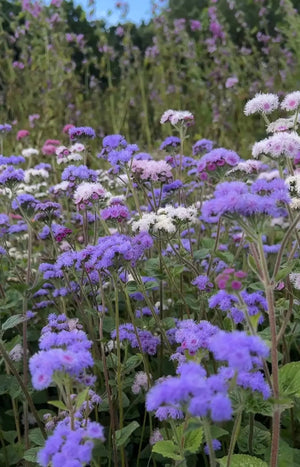
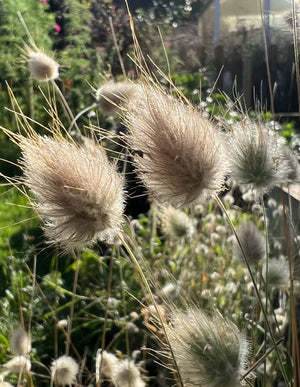
The classic dried-flower combination: pair 'Hipster Mixed' with Helichrysum 'Swiss Giant Mix' — Statice provides the filler colour, Helichrysum provides the focal point bold colour. With Ageratum 'Timeless Mix' for the soft fuzzy "powder puff" contrast against the sharp papery Statice — together they create a sophisticated textural display in summer bouquets. With Bunny Tails, Briza Maxima and Craspedia for the complete drying garden harvest.
Plant alongside
Statice Hipster Mixed pairs beautifully with these cottage garden classics

RHS Plants for Pollinators
This plant has been assessed by the Royal Horticultural Society and recommended as especially beneficial to bees, butterflies and other pollinators. Growing plants like this directly supports UK pollinator populations — something close to our hearts at Salle Moor Hall Farm, where we see the difference a cottage garden full of the right plants can make.
Learn more at RHS.org.uk →