


Poppy Ladybird
Papaver commutatum 'Ladybird' -- RHS AGM; RHS Pollinators
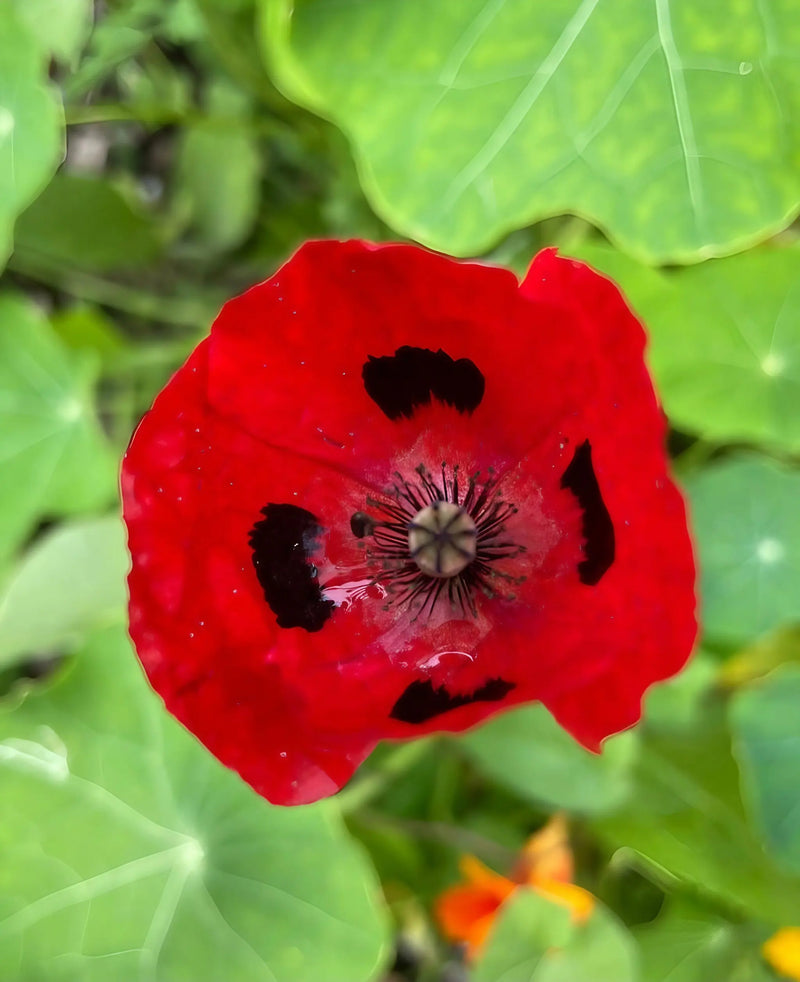
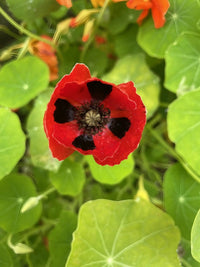
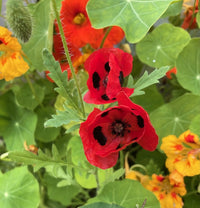
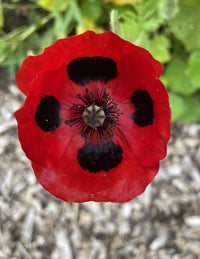
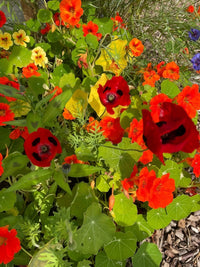
Vibrant scarlet cups with huge contrasting black blotches — the dramatic "ladybird-pattern" poppy. RHS Award of Garden Merit, hardy annual, exceptional bee plant.
About this variety
Papaver commutatum 'Ladybird' Ladybird Poppy / Caucasian Scarlet Poppy 'Ladybird'
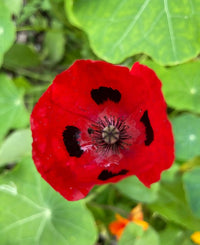
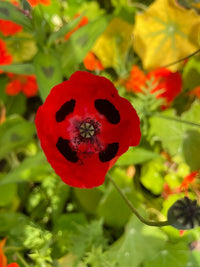
Vibrant scarlet cup-shaped flowers with huge contrasting black blotches at the petal bases — the colour and pattern of an enormous ladybird (and the source of the variety's common name) — held on bushy hardy annual plants that bees absolutely adore. RHS Award of Garden Merit winner.
If 'Flanders Red' is the classic delicate field poppy, 'Ladybird' is the bolder more dramatic relative. This variety produces vibrant pure-scarlet cup-shaped flowers, but each petal carries a huge contrasting black blotch at its base — the four blotches together creating a dramatic central "cross" or "ladybird-pattern" of black against the saturated red. The effect is genuinely striking and unmistakable. The plants are bushier and more compact than typical Field Poppies (reaching 45–50cm) but produce the same delicate tissue-paper silky petals on slender stems. Holds the RHS Award of Garden Merit — recognition reserved for plants of consistently outstanding garden performance. RHS Plants for Pollinators — the open accessible cup form combined with the dark high-protein pollen makes 'Ladybird' exceptional for bee support. Hardy annual.
A note on growing
Like all poppies, has a sensitive taproot and must be direct-sown where it is to flower. Direct sow outdoors in March–May for summer blooms, or September–October for stronger autumn-sown plants the following year.
Rake soil to fine tilth, scatter seeds thinly on the surface — do not cover (seeds need light to germinate). Press firmly into soil. Germination 14–21 days. Full sun, well-drained soil. Do not feed. Thin seedlings to 20–25cm apart for the best flowering.
Where it shines
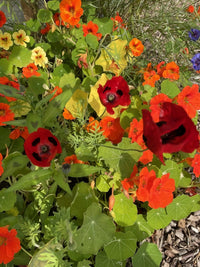
In cottage borders for the dramatic scarlet-and-black combination — 'Ladybird' is properly eye-catching in a way that few other annual poppies can match. In wildlife gardens for the high pollinator value combined with the bold colour signal. In children's gardens where the "ladybird-pattern" markings genuinely capture children's imaginations. In cutting from the cottage garden (with the same proper handling all poppies need — cut in early bud and sear stem ends immediately).
Plant alongside
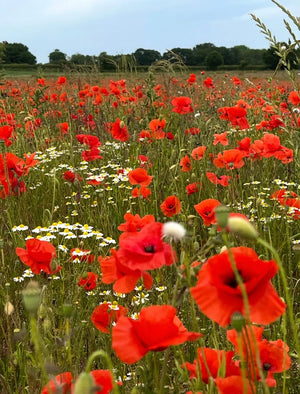
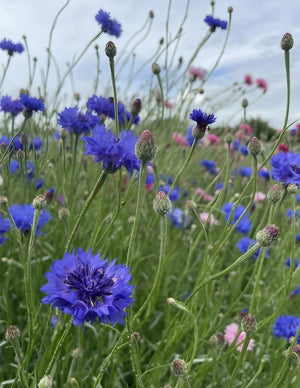
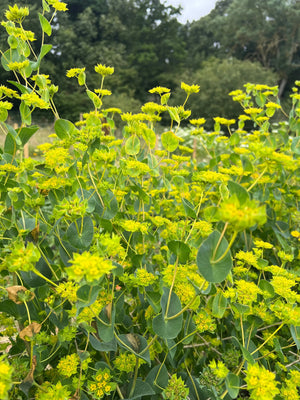
For complementary colour drama, pair 'Ladybird' with the lime-green of Bupleurum 'Griffithii' — the green and scarlet creates designer cottage contrast. For traditional wildflower meadow combinations, plant with Cornflower 'Blue Ball' and Corncockle for the classic British cornfield mix. With Poppy 'Flanders Red' for layered scarlet poppy display at slightly different heights.
Plant alongside
Poppy Ladybird pairs beautifully with these cottage garden classics

RHS Plants for Pollinators
This plant has been assessed by the Royal Horticultural Society and recommended as especially beneficial to bees, butterflies and other pollinators. Growing plants like this directly supports UK pollinator populations — something close to our hearts at Salle Moor Hall Farm, where we see the difference a cottage garden full of the right plants can make.
Learn more at RHS.org.uk →
RHS Award of Garden Merit
The RHS Award of Garden Merit is given to plants of outstanding excellence for ordinary garden use. To earn this award a plant must be of good constitution, available to the gardening public, and perform reliably across a range of UK growing conditions. It is one of the most trusted plant recommendations in British gardening and a genuine mark of quality.
Learn more at RHS.org.uk →