

Nigella Persian Jewels Mixed (love-in-a-mist)
Nigella damascena 'Persian Jewels Mixed' -- Love-in-a-Mist; Hardy Annual H6
A vibrant jewel-toned mix of Nigella in deep rose-pink, violet-blue, rich mauve and white — the "Persian carpet" upgrade from classic Miss Jekyll. RHS AGM.
About this variety
Nigella damascena 'Persian Jewels Mixed' Love-in-a-Mist 'Persian Jewels Mixed'
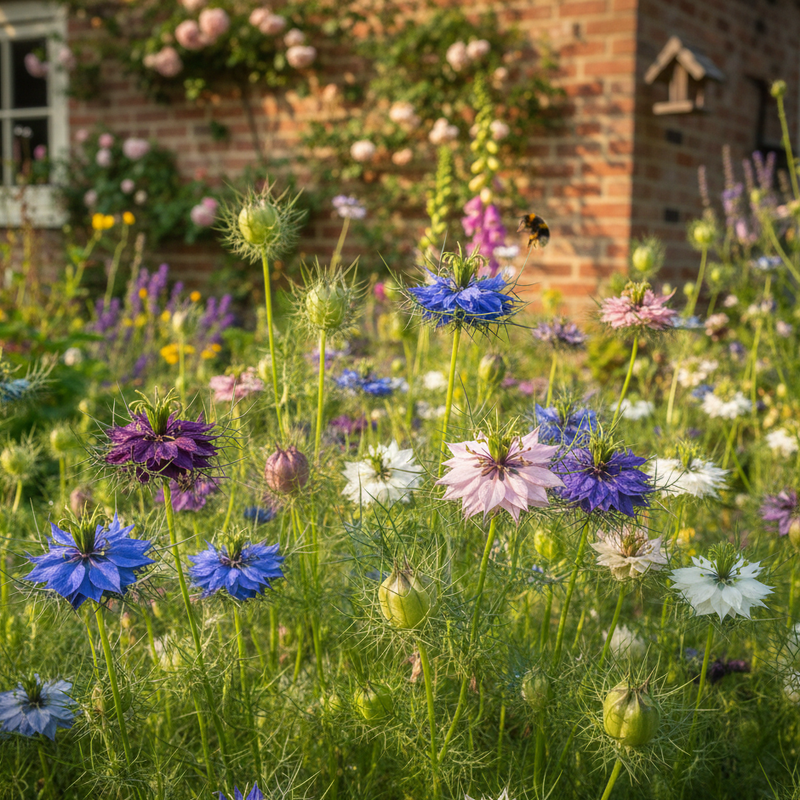
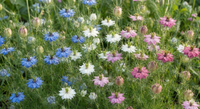
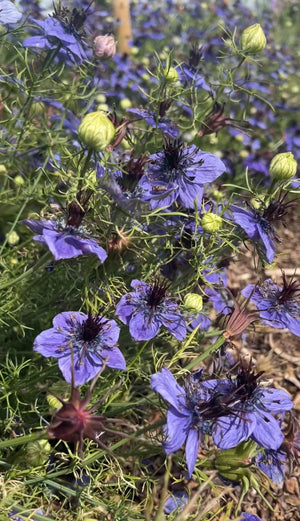
If you've been growing the classic pale-blue Miss Jekyll Nigella for years and secretly wishing it came in a more exciting, vibrant, jewel-like colour palette — 'Persian Jewels Mixed' is the spectacular upgrade you've been waiting for. A dazzling colour range of deep rose-pink, intense violet-blue, rich mauve and pure white, every shade working together to create a romantic "Persian carpet" effect.
This is the bolder, more saturated cousin of the classic Miss Jekyll types. The semi-double flowers appear to float ethereally within the characteristic "mist" of thread-fine feathery bright green foliage, but the colours are properly vibrant — deep rose-pink, intense violet-blue, rich mauve and pure white, creating a multi-coloured tapestry that justifies the "Persian carpet" name. Reaching 50–60cm tall, plants are uniform in habit so that despite the colour diversity all flower simultaneously and grow to matching heights, creating a beautifully harmonious display. Excellent for cutting — the jewel-toned palette suits sophisticated cottage cutting schemes that need bolder colour than the Miss Jekyll pastel mix provides. Hardy annual (H6). RHS Award of Garden Merit and RHS Plants for Pollinators.
A note on growing
Like all Nigellas, direct sow only — sensitive taproot resents transplanting. Sow direct outdoors in autumn (September) for spectacular early summer blooms the following year, or spring (March–May) for summer-long colour. Scatter onto raked soil and cover lightly (3mm deep). Germination 14–21 days.
Full sun (light shade tolerated). Average to lean soil — Nigella doesn't need feeding. Rich soil produces more "mist" (leaves) and fewer "jewels" (flowers). No staking needed.
Culinary use: while the plant and green seed pods are not for eating, the tiny pitch-black seeds found in fully dried pods (a smaller relative of the N. sativa Kalonji seed) have a mild spicy flavour and can be used sparingly as a decorative topping for bread or biscuits.
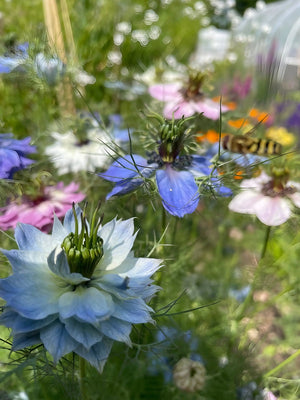
Wildlife value: Listed on RHS Plants for Pollinators. The complex semi-double flowers provide a rich source of nectar for bees in mid-summer, while the seeds provide vital winter food for birds like goldfinches.
Where it shines
In cottage borders for vibrant multi-coloured display in early-to-mid summer. In the cutting garden as a more saturated alternative to the pastel Miss Jekyll types — 'Persian Jewels' provides the bolder romantic colour that high-end florist work increasingly favours. As an autumn architectural seed-pod plant. In wildlife gardens for the high mid-summer pollinator value and winter bird food. As a self-seeding informal colony that maintains its jewel palette across years.
Plant alongside
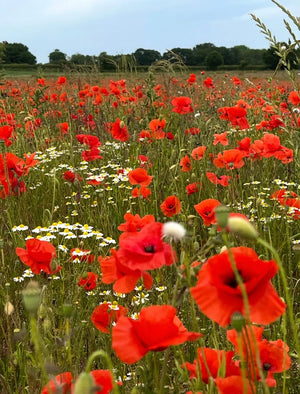
For the classic wildflower meadow look, combine 'Persian Jewels' with Poppy 'Flanders Red' — the solid scarlet of the poppies floating amongst the hazy green mist of Nigella creates a classic, effortlessly beautiful wildflower display. For a sophisticated cut-flower-grower's combination, pair with Orlaya grandiflora (if stocked) — the white "Minoan Lace" of Orlaya alongside the jewel tones of Nigella creates a textured cottage border that florists dream of. With Nigella hispanica for season extension.
Plant alongside
Nigella Persian Jewels Mixed (love-in-a-mist) pairs beautifully with these cottage garden classics
RHS Plants for Pollinators
This plant has been assessed by the Royal Horticultural Society and recommended as especially beneficial to bees, butterflies and other pollinators. Growing plants like this directly supports UK pollinator populations — something close to our hearts at Salle Moor Hall Farm, where we see the difference a cottage garden full of the right plants can make.
Learn more at RHS.org.uk →
RHS Award of Garden Merit
The RHS Award of Garden Merit is given to plants of outstanding excellence for ordinary garden use. To earn this award a plant must be of good constitution, available to the gardening public, and perform reliably across a range of UK growing conditions. It is one of the most trusted plant recommendations in British gardening and a genuine mark of quality.
Learn more at RHS.org.uk →