

Monarda didyma Mixed
Monarda didyma Mixed -- Bee Balm; Bergamot; Oswego Tea
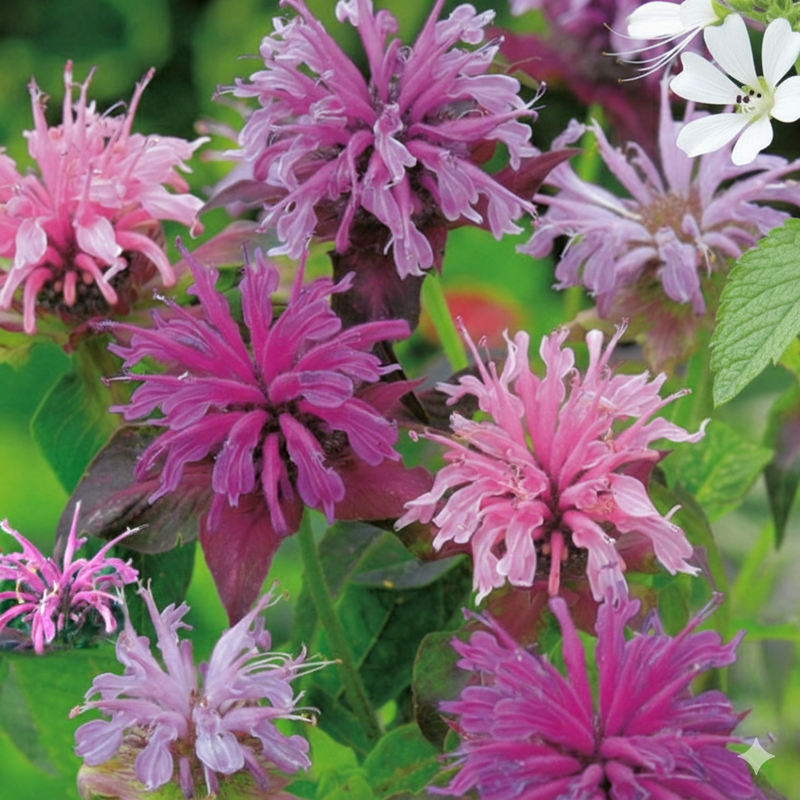
Shaggy crown-like flower whorls in scarlet, red, pink and white above Earl Grey-scented foliage — the cottage bee magnet that prefers damp clay where other perennials struggle.
About this variety
Monarda didyma 'Mixed' Bee Balm / Bergamot / Oswego Tea 'Mixed'
Shaggy crown-like whorls of tubular flowers in scarlet, deep red, rich pink, soft rose and pure white, held high on tall stems above aromatic foliage with the unmistakable scent of Earl Grey tea — Monarda didyma is the cottage garden's ultimate bee magnet, the historical plant of the Boston Tea Party, and one of the very few flowering perennials that actively prefers damp heavy soil where other plants struggle.
This is a plant with proper history. Bee Balm (also called Oswego Tea after the New York tribe who introduced it to early American colonists) was the plant Bostonians turned to for their tea after the Boston Tea Party of 1773, when British tea imports were rejected — the aromatic foliage genuinely tastes of Earl Grey, due to the bergamot oils contained in the leaves. In modern British gardens, Monarda is grown for two qualities: the spectacular shaggy crown-like flower whorls that genuinely earn the "Bee Balm" name (an established Monarda plant in flower will hum audibly with bumblebees on warm summer afternoons), and the unmistakable bergamot fragrance of the foliage when brushed. The mix produces flowers in scarlet, deep red, rich pink, soft rose and pure white, on tall stems reaching 90–120cm above the aromatic mid-green leaves. Hardy perennial (H4). RHS Plants for Pollinators recognised. Flowers June–August.
A note on growing
Sow indoors February–April. Surface-sow as Monarda seeds need light to germinate; press into moist compost without covering. Germination 14–21 days at 18–20°C. Pot on once seedlings are large enough to handle. Plant out into the final position after frost risk has passed.
The unusual Monarda requirement: unlike most cottage perennials which demand well-drained soil, Monarda actively prefers damp heavy soil and is one of the few flowering perennials that thrives in moisture-retentive clay borders, alongside ponds, and in positions where summer drought is rare. In dry conditions, Monarda suffers from powdery mildew (white dusty coating on leaves) which can be disfiguring. The solution is moist soil and air circulation — ensure plants have space around them and water during dry periods.
Like most perennials from seed, Year 1 establishes the plant; Year 2 onwards delivers the full architectural display. Divide every 3 years in spring to maintain vigour. Cut back to the ground in autumn.
Where it shines
In damp cottage borders where other perennials struggle — Monarda is one of the very few flowering perennials that actively prefers moist conditions. Alongside pond edges and stream-side plantings. In herb gardens, where the aromatic Earl Grey-scented leaves can be appreciated and harvested (the young leaves make a genuinely good herbal tea, and the flowers are 100% edible with the same bergamot flavour). In wildlife gardens, where the high nectar tubes are specifically tuned to long-tongued bumblebees — Monarda is among the very best bumblebee plants you can grow. In prairie-style and naturalistic plantings.
Plant alongside
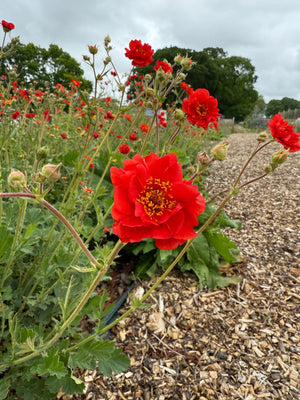
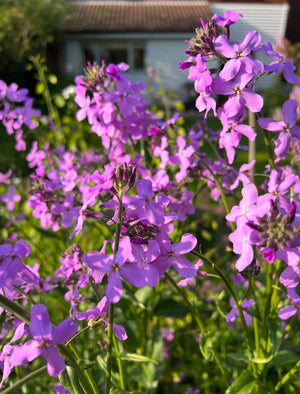
For a "wet cottage border" scheme, combine Monarda with Geum 'Mrs Bradshaw' (also clay-tolerant; complementary scarlet) and Hesperis 'Purple' (matching tall vertical structure with shade tolerance). For prairie-style planting, pair with Echinacea purpurea (matching height; flat pink discs against shaggy crown forms create proper textural contrast) and Echinops ritro 'Veitch's Blue'.
Plant alongside
Monarda didyma Mixed pairs beautifully with these cottage garden classics


RHS Plants for Pollinators
This plant has been assessed by the Royal Horticultural Society and recommended as especially beneficial to bees, butterflies and other pollinators. Growing plants like this directly supports UK pollinator populations — something close to our hearts at Salle Moor Hall Farm, where we see the difference a cottage garden full of the right plants can make.
Learn more at RHS.org.uk →