

Bishy Barnabee’s Cottage Garden
Dried Seed Heads & Grasses
The architectural side of nature — structure, texture, quiet drama
Dried Flowers
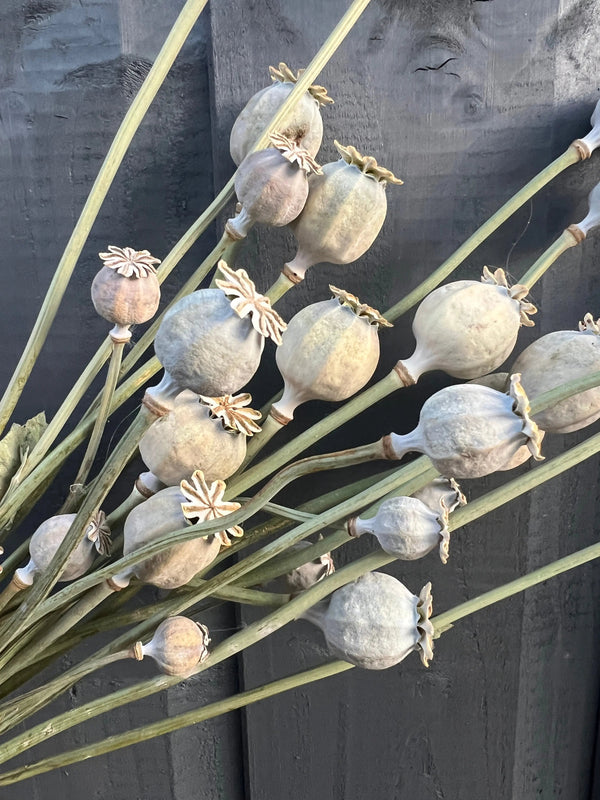
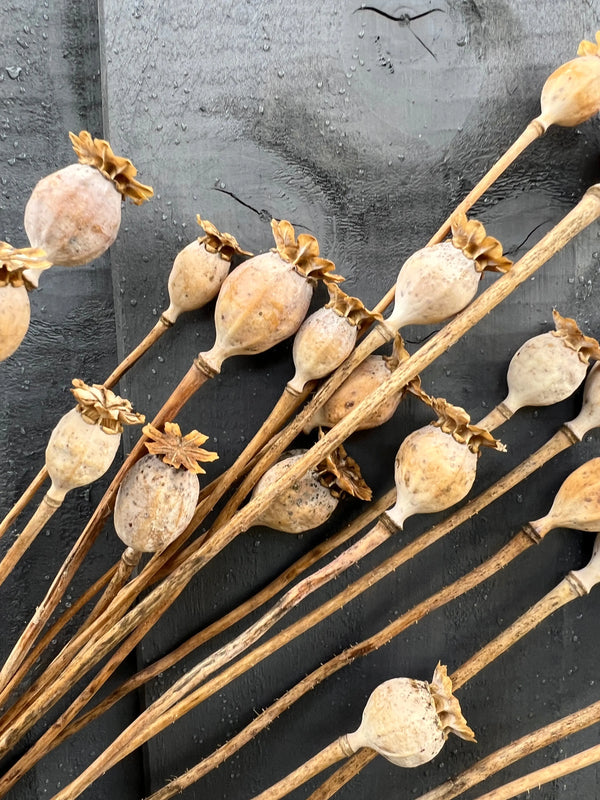
Poppy Heads Dried (Small)
Dried Poppy Heads (Small) These beautiful, slate-blue/grey seed…
£9.50
View
 Seed head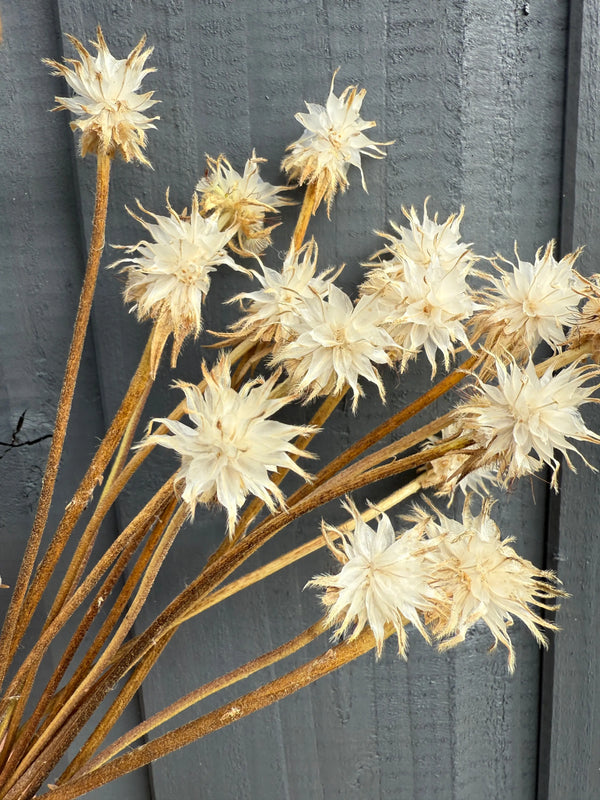
Dried seed heads & grasses — your questions answered
What are dried seed heads used for?
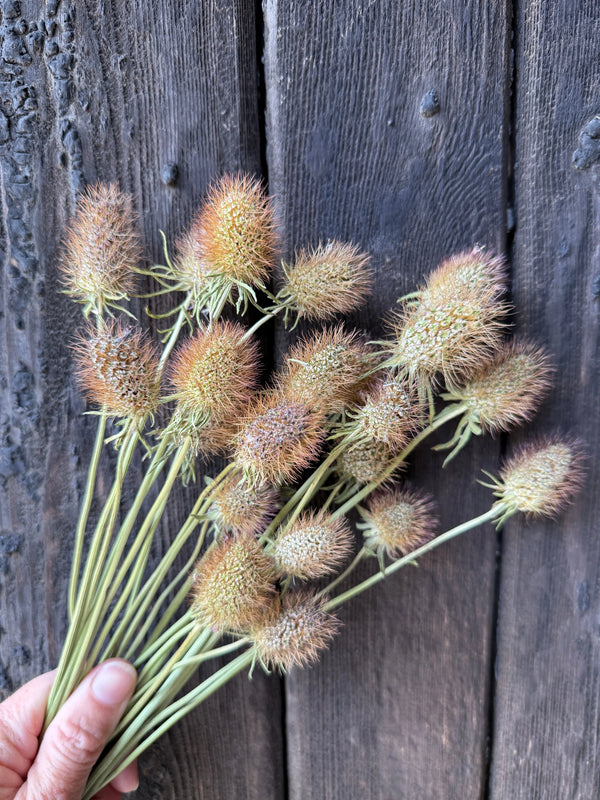
Seed heads bring structure and texture that flowers alone cannot. They work as architectural focal points in arrangements (alliums, scabious, poppy heads), as gap-fillers and bulk-builders (nigella pods, umbellifers), or as the foundation of autumn and winter wreaths. Many also rattle gently when handled — a small everyday pleasure dried flowers don't share.
Do seed heads shed seeds at home?
Some will, gently — nigella pods in particular are full of tiny black seeds that rattle inside the papery shell and occasionally find their way out. Give bunches a shake outside when you first unwrap them. The shedding is rarely significant once they're settled in place and is part of the natural character of working with real, unprocessed plant material.
What's the difference between seed heads and grasses?
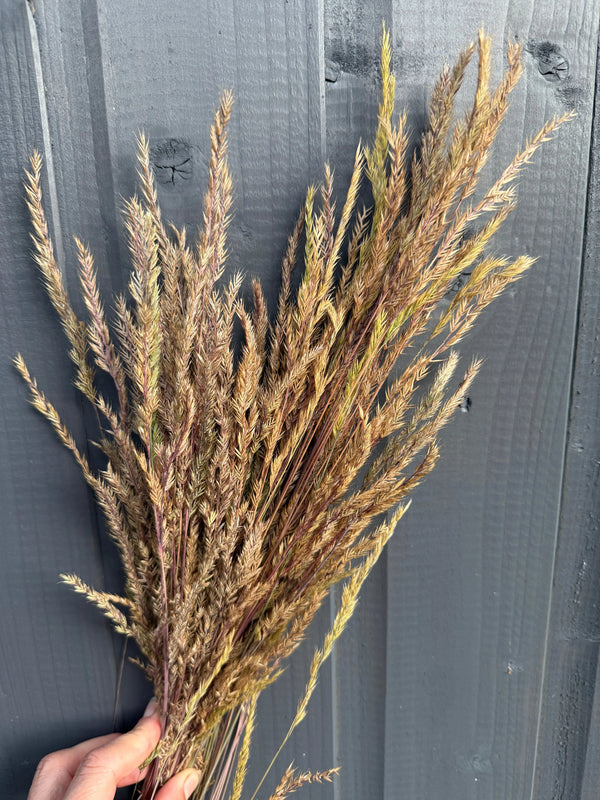
Seed heads are the structural remains of the plant's seed-producing stage — poppy capsules, scabious moons, nigella pods, allium globes. Grasses include both fluffy plumes (reed grass, bunny tails) and the more architectural awns of wheat or quaking grass. Both add texture, but seed heads tend toward shape and grasses toward movement.
Can I use them in wreaths?
Seed heads are arguably the best wreath material there is. Their flat backs and solid structure wire easily onto a wreath frame, they don't crush, and their muted tones suit autumn and winter perfectly. Snip stems short, wire individual heads in clusters of three, and tuck them between foliage and grasses for an organic, harvest-festival look.