Comfrey Seeds
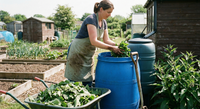
If you want to stop buying plastic bottles of tomato feed and start gardening organically, you need Comfrey. This vigorous, hardy perennial acts as a "dynamic accumulator." Its incredibly deep taproots mine potassium and minerals from the subsoil that other plants can't reach and store them in its fast-growing leaves.
By cutting these leaves and steeping them in water, you create "Comfrey Tea"—a potent, free, organic liquid fertilizer that is richer in potash than farmyard manure. On top of that, its bell-shaped purple/cream flowers are one of the best nectar sources for bumblebees in the UK.
Read More
🌿 Understanding the Plant
Symphytum officinale, or Common Comfrey, is a robust Hardy Herbaceous Perennial (H7). Unlike the sterile 'Bocking 14' clone, this native species will set seed and naturalise. It is an essential component of permaculture "guilds," valued for its ability to cycle nutrients and improve soil structure in orchards and wilder garden areas.
The "Knitbone" Legacy: Historically known as "Knitbone" or "Boneset," Comfrey has been used for centuries in traditional folk medicine as a topical salve. In the modern garden, however, its primary value lies in its exceptional NPK ratio (approx. 1.8-0.5-5.3), making its foliage a premium source of organic potassium.
Bumblebee Biology: Comfrey flowers are specifically structured for long-tongued bumblebees. The nectar re-fills remarkably quickly—sometimes in under an hour—meaning a single plant can provide a nearly continuous food source for a colony throughout the late spring and summer months.
🌱 Growing Guide
Comfrey is virtually indestructible once established, though starting from seed requires a patient approach.
How to Sow:
Sow indoors in Spring or Autumn. The seeds possess a tough outer coating; we recommend soaking them in warm water for 12 hours prior to sowing to improve germination rates. Surface sow into moist compost and cover lightly. Maintain a temperature of 15-18°C. Germination can be irregular, typically taking between 2-5 weeks.
Where to Plant:
Comfrey is remarkably versatile, thriving in both full sun and deep shade. It is particularly well-suited to heavy, damp clay soils where other plants might struggle. Once established, its taproot can reach depths of over 2 metres, making it exceptionally drought-tolerant.
The "Chop and Drop" Method:
For maximum garden benefit, use the "Chop and Drop" technique. Cut the foliage down to ground level 3-4 times per year. The leaves can be used immediately as a nutrient-rich mulch around hungry plants like tomatoes and fruit trees, or steeped in water for 3 weeks to create a high-potash liquid organic feed.
📋 Plant Specifications
| Botanical Name | Symphytum officinale |
| Common Name | Common Comfrey / Knitbone |
| Plant Type | Herbaceous Perennial |
| Hardiness | H7 (Indestructible) |
| Light Requirements | Sun or Shade ⛅ |
| Height | Up to 100cm |
| Spread | Up to 100cm (Vigorous) |
| Spacing | Plant 60cm apart |
| Flowering Period | May to September |
| Perfect For | 🍅 Organic Tomato Fertiliser 🍎 Fruit Tree Mulch Guilds 🐝 Supporting British Bumblebees ♻️ Permaculture Gardening |
| Seeds per Packet | Approximately 25 seeds |
🤝 Beautiful Permaculture Combinations
Comfrey is the unsung hero of the organic garden. Use it to feed and support these available partners from our range:
- 🍎 Fruit Tree Guilds: The Living Mulch. Plant Comfrey in a ring around the base of your fruit trees. Its leaves act as a natural potassium pump, while its large foliage suppresses competing grass and weeds. This is a classic permaculture technique for building long-term orchard health.
- 💙 Borage: The Pollinator Powerhouse. Comfrey and Borage are botanical cousins. Planting them together creates a relentless nectar station that supports bees and butterflies from late spring until the first autumn frosts, whilst both provide excellent material for compost activation.
📅 Sowing & Flowering Calendar
Sow in spring or autumn for a permanent, indestructible source of organic fertilizer and high-nectar flowers.
| Month | J | F | M | A | M | J | J | J | A | S | O | N | D |
|---|---|---|---|---|---|---|---|---|---|---|---|---|---|
| Sow Indoors | ✓ | ✓ | ✓ | ✓ | |||||||||
| Flowering | ✓ | ✓ | ✓ | ✓ | ✓ | ✓ |
🐝 Pollinator Favourite
Comfrey is an RHS Plant for Pollinators. Its high-volume nectar production re-fills remarkably fast, providing an essential and reliable food source for British bumblebees throughout the entire summer.
🏆 Biodiversity & Soil Hero
Known for its stamina and ability to thrive in poor or damp soils, Symphytum officinale is an essential choice for those wanting to create a self-sustaining, organic garden that builds fertility whilst supporting the local ecosystem.
📖 Want more detailed growing advice?
View our Complete Growing Guide for Organic Gardening →
- Regular price
-
£1.95 - Regular price
-
- Sale price
-
£1.95
Couldn't load pickup availability
5.0 / 5.0
(1) 1 total reviews


Comfrey
- Regular price
-
£1.95 - Regular price
-
- Sale price
-
£1.95
Seeds arrived promptly andbeautifully packed with individual instructions for each packet. Looking forward to sowing them and growing them.

