- The Complete Cornflower Growing Guide for UK Gardens
- Understanding Cornflowers: Hardy Annual Champions
- The Autumn Sowing Secret
- Why Autumn Sowing Works Magic
- Spring Sowing: Still Excellent
- Direct Sowing: The Cornflower Preference
- Preparing Your Site
- The Direct Sowing Process
- Thinning Seedlings
- Module Sowing: The Compromise Method
- How to Grow Cornflowers in Modules
- Growing Cornflowers Through Winter
- Winter Care Requirements
- Spring Growth and Care
- Support for Tall Varieties
- Watering
- Feeding
- The Cut-and-Come-Again Wonder
- Deadheading and Harvesting
- The Edible Bonus
- Spectacular Cornflower Varieties for UK Gardens
- The Classic: Blue Ball
- Romantic Pink: Pink Ball
- Dramatic Depths: Black Ball
- Ruby Tones: Red Boy
- Soft Lavender: Mauve Boy
- Compact Rainbow: Polka Dot Mixed
- Companion Planting with Cornflowers
- Classic Cornfield Combinations
- Cutting Garden Companions
- Border Planting Ideas
- Encouraging Self-Seeding
- Pest and Disease Management
- Aphids
- Slugs and Snails
- Powdery Mildew
- Flea Beetles
- Growing Cornflowers in Containers
- Container Requirements
- Container Care
- Cornflowers for Pollinators
- Saving Cornflower Seeds
- How to Save Seeds
- Troubleshooting Common Problems
- Seeds Not Germinating
- Weak, Floppy Plants
- Few Flowers, Lots of Leaves
- Short Flowering Season
- Plants Disappearing Over Winter
- Monthly Cornflower Care Calendar
- Final Thoughts
The Complete Cornflower Growing Guide for UK Gardens
Few flowers capture the essence of a British summer quite like cornflowers. Once a common sight dancing through golden wheat fields across the countryside, these brilliant blooms have become a cherished fixture in cottage gardens, meadows, and cutting patches. With their distinctive ruffled petals, sturdy stems, and remarkable ease of cultivation, cornflowers (Centaurea cyanus) are among the most rewarding plants you can grow in the UK climate. Whether you're dreaming of traditional electric blue blooms, romantic pinks, or dramatic near-black varieties, cornflowers deliver months of colour with minimal fuss. Better still, they're absolute magnets for bees and butterflies, earning their place on the RHS Plants for Pollinators list. This comprehensive guide will show you how to grow spectacular cornflowers that thrive in British conditions.
Understanding Cornflowers: Hardy Annual Champions
Cornflowers are classified as hardy annuals, which means they complete their entire life cycle within one year but are tough enough to withstand British winter conditions. This hardiness is their superpower—unlike tender annuals that demand frost-free conditions, cornflowers can be sown in autumn and will sit happily through winter as small seedlings, building powerful root systems ready to explode into growth come spring. This native British wildflower has adapted perfectly to our climate over centuries. Before modern agricultural herbicides, cornflowers grew abundantly amongst cereal crops, their brilliant blue blooms creating the iconic cornfield scenes celebrated in art and poetry. Today, whilst rare in the wild, they flourish in gardens where they're appreciated for their beauty, resilience, and ecological value.
The Autumn Sowing Secret
Here's the insider tip that separates ordinary cornflower displays from truly spectacular ones: autumn sowing produces dramatically superior plants. Whilst spring sowing certainly works and is perfectly respectable, autumn-sown cornflowers develop into veritable giants with hundreds of flowers.
Why Autumn Sowing Works Magic
When you sow cornflowers in September or early October, the seedlings emerge quickly in the still-warm soil and establish a modest rosette of leaves before winter sets in. Throughout the cold months, whilst top growth remains relatively static, something remarkable happens underground. The plants invest all their energy into building extensive, deep root systems. By the time spring arrives, these autumn-sown plants possess root networks that spring-sown seedlings won't match until mid-summer. This underground advantage translates to:
- Earlier flowering by 3-4 weeks
- Taller, sturdier stems (often reaching 90cm compared to 60cm for spring-sown plants)
- Significantly more flowers per plant
- Better drought tolerance
- Longer flowering season overall
Cornflower 'Blue Ball' is particularly spectacular when autumn-sown, producing masses of fully double, electric blue blooms on silvery stems that seem to glow in sunlight.
Spring Sowing: Still Excellent
Don't despair if you've missed the autumn window—spring sowing from March through May delivers wonderful results too. Spring-sown cornflowers will flower slightly later and perhaps not quite as prolifically, but they'll still provide months of gorgeous blooms and require less winter management. For beginners or those without much gardening space to dedicate over winter, spring sowing is often the more practical choice.
Direct Sowing: The Cornflower Preference
One of the most important things to understand about cornflowers is that they have a tap root—a long, central root that grows straight down. Like carrots or parsnips, plants with tap roots dislike root disturbance. This means cornflowers strongly prefer being sown directly where they're to flower rather than started in pots and transplanted.

Preparing Your Site
Choose a sunny spot—cornflowers need at least 6 hours of direct sunlight daily to perform their best. They're remarkably unfussy about soil quality and actually prefer lean, average soil to rich, heavily manured ground. Counter-intuitively, very fertile soil makes cornflowers produce excessive leafy growth at the expense of flowers.
Prepare your sowing area by:
- Removing any weeds and their roots
- Breaking up the soil to create a fine tilth (crumbly texture)
- Raking the surface smooth
- Watering if the soil is very dry (then allowing it to drain before sowing)
Don't add manure or high-nitrogen fertiliser—cornflowers genuinely flower better in "hungry" soil.
The Direct Sowing Process
Autumn Sowing (September to early October):
- Create shallow drills approximately 1cm deep using a cane or hoe handle
- Space drills 20-30cm apart
- Sprinkle seeds thinly along the drill—they look like tiny shuttlecocks
- Cover lightly with soil and gently firm
- Water gently using a rose on your watering can
Spring Sowing (March to May): Follow exactly the same process. Later sowings (April-May) may flower slightly later but extend the overall season beautifully.
Seeds germinate quickly, usually within 10-14 days in reasonable conditions. Cornflower seedlings are easy to identify with their narrow, silvery-green leaves.
Thinning Seedlings
Once seedlings have developed their first true leaves (the second pair of leaves, which look different from the initial seed leaves), thin them to 15-20cm apart. This seems ruthless, but adequate spacing is essential for good air circulation and prevents overcrowding. You can carefully transplant thinned seedlings to fill gaps elsewhere, though they may sulk briefly. Water transplants thoroughly and provide shade for a day or two whilst they recover.
Module Sowing: The Compromise Method
If you must start cornflowers in containers—perhaps because you lack suitable outdoor space or want them for specific locations—modules or deep pots offer the best compromise. The key is to transplant whilst plants are still very young, before the tap root has developed extensively.

How to Grow Cornflowers in Modules
- Use deep modules (at least 5cm deep) or root trainers
- Fill with peat-free seed compost
- Sow 2-3 seeds per module, 1cm deep
- Germinate in an unheated greenhouse, cold frame, or cool porch
- Thin to one seedling per module once germinated
- Transplant outdoors when seedlings have 2-3 pairs of true leaves
- Handle very carefully to minimise root disturbance
- Water in thoroughly after planting
Module-raised plants never quite achieve the magnificence of direct-sown ones, but they're still perfectly worthwhile, especially for containers or specific border positions.
Growing Cornflowers Through Winter
If you've autumn-sown your cornflowers, they'll spend winter as small rosettes of silvery foliage sitting at ground level. They look quite innocuous and it's easy to forget they're there, so mark rows with short canes or labels.
Winter Care Requirements
The beauty of cornflowers is that they need almost no winter care. They're genuinely hardy and will sail through typical British winter weather. However, a few considerations help:
Protection from excessive wet: In particularly heavy, waterlogged soils, young cornflowers can occasionally succumb to rot. If your soil is naturally heavy clay that sits wet in winter, consider growing cornflowers in a different area or improving drainage with grit.
Wildlife watch: Slugs and snails can nibble young seedlings, especially during mild, damp spells. Check periodically and remove any pests you find. Mice generally leave cornflower seeds alone (unlike sweet peas), but pigeons occasionally fancy young leaves.
No feeding needed: Resist any temptation to feed winter seedlings. They're dormant and don't need it. Feeding encourages soft, sappy growth that's vulnerable to frost damage.
Spring Growth and Care
As temperatures rise in March and April, cornflower seedlings—whether autumn or spring sown—begin growing rapidly. This is when the real magic starts.
Support for Tall Varieties
The 'Ball' varieties—Blue Ball, Pink Ball, Black Ball, and Red Boy—can reach 90cm tall. In exposed or windy gardens, they benefit from support installed whilst plants are still young. The most effective method is to create a grid of twiggy branches (pea sticks) or horizontal netting about 30-40cm above the ground. Push the supports into the soil around young plants in April. As cornflowers grow, they push up through the support structure, which prevents them flopping over later. The foliage quickly disguises the supports, creating a natural look. Shorter varieties like Polka Dot Mixed typically stay sturdy without support, making them ideal for exposed positions or container growing.
Watering
Established cornflowers are remarkably drought-tolerant thanks to their deep tap roots. However, consistent moisture during the flowering period (June-September) produces the best displays. In dry spells, water deeply once or twice weekly rather than little and often. Deep watering encourages roots to penetrate further into the soil, increasing drought resilience. Avoid overhead watering where possible, especially later in the season—wet foliage can encourage powdery mildew.
Feeding
Remember, cornflowers prefer lean conditions. No feeding is necessary or beneficial during the growing season. Rich feeding produces lush foliage at the expense of flowers. If you've prepared the soil properly before sowing, cornflowers have everything they need.
The Cut-and-Come-Again Wonder
This is where cornflowers truly shine. They're textbook "cut-and-come-again" plants—the more you harvest, the more they produce. Each time you cut stems, the plant responds by producing multiple new flowering shoots. A well-maintained cornflower plant can bloom continuously from June through to the first autumn frosts in October.

Deadheading and Harvesting
For maximum flowering:
- Check plants every 2-3 days
- Cut stems just above a leaf joint when flowers are fully open
- Remove any spent blooms immediately—don't let them set seed
- Take long stems (this encourages more long stems to follow)
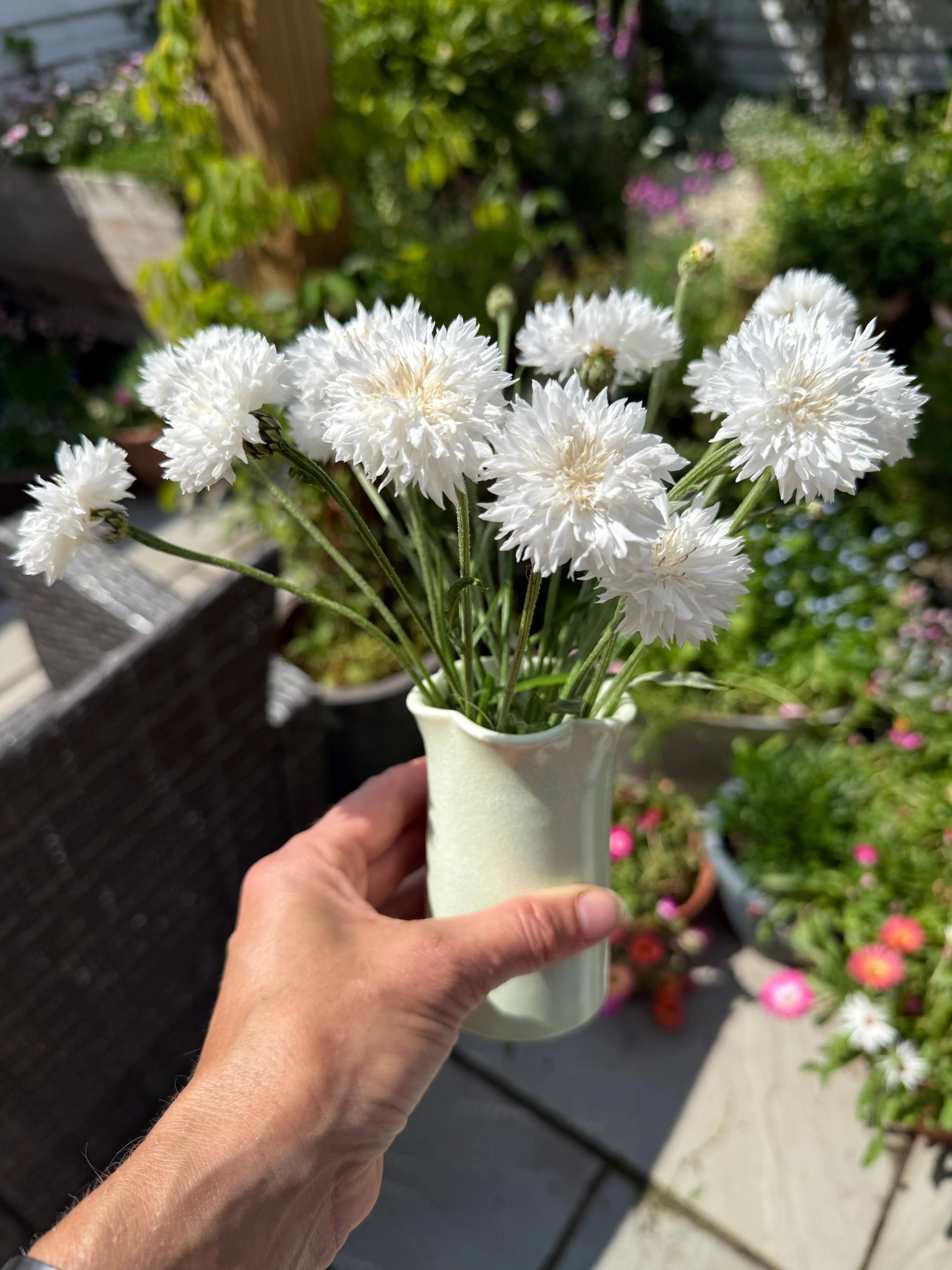
Cornflowers make exceptional cut flowers, lasting 5-7 days in water. Their wiry stems and globular flowers add wonderful texture to arrangements. Cut in the morning when stems are fully hydrated for longest vase life.
The Edible Bonus
Here's a delightful secret: cornflower petals are entirely edible! They have a mild, slightly sweet flavour and make stunning garnishes. Scatter electric blue Blue Ball petals over cakes, salads, or summer drinks, or use the ruby-red petals from Red Boy to create dramatic garnishes for white pavlovas or cheese platters. Always ensure you're harvesting from plants that haven't been sprayed with chemicals if you intend to eat the petals.
Spectacular Cornflower Varieties for UK Gardens
The range of cornflower varieties now available goes far beyond the traditional blue, offering exciting possibilities for creative planting schemes.
The Classic: Blue Ball
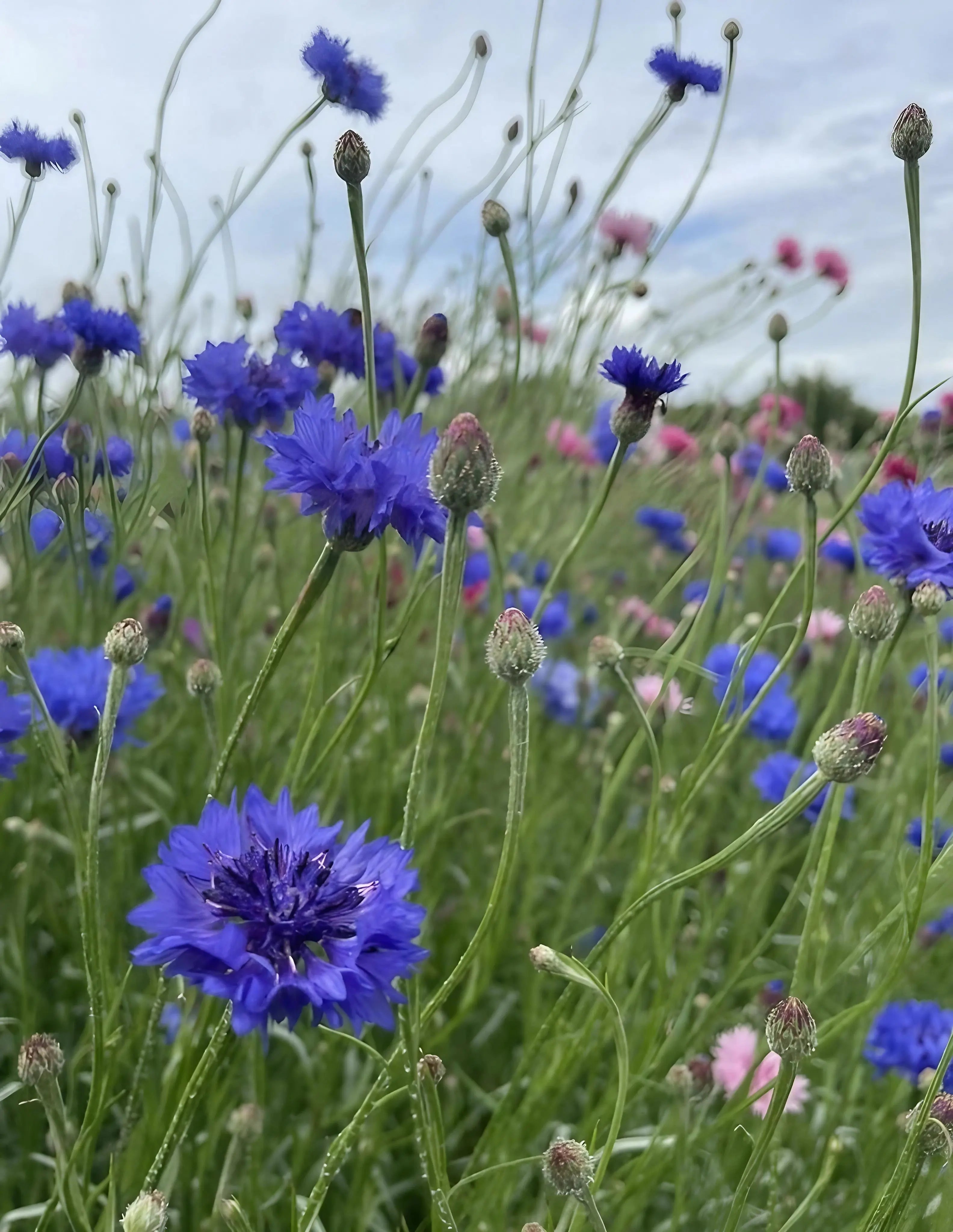
Cornflower 'Blue Ball' is the definitive cornflower. Unlike the single-flowered wild type, 'Blue Ball' produces fully double, densely ruffled blooms in that unmistakable electric azure-blue that seems to radiate light. The flowers are substantial—properly round "balls" of petals on silvery stems reaching 90cm tall. This is the workhorse for cut flower production and the variety exhibition growers favour. It looks equally good in wild-style meadow plantings and formal cutting rows.
Romantic Pink: Pink Ball
For softer, cottage garden schemes, Cornflower 'Pink Ball' delivers gorgeous eye-catching pink blooms with the same ruffled, double form as Blue Ball. These flowers add a romantic, vintage feel to arrangements and gardens. The pink is true and warm, mixing beautifully with whites, blues, and purples. At 90cm tall with long, wiry stems, it's another excellent cut flower variety.
Dramatic Depths: Black Ball
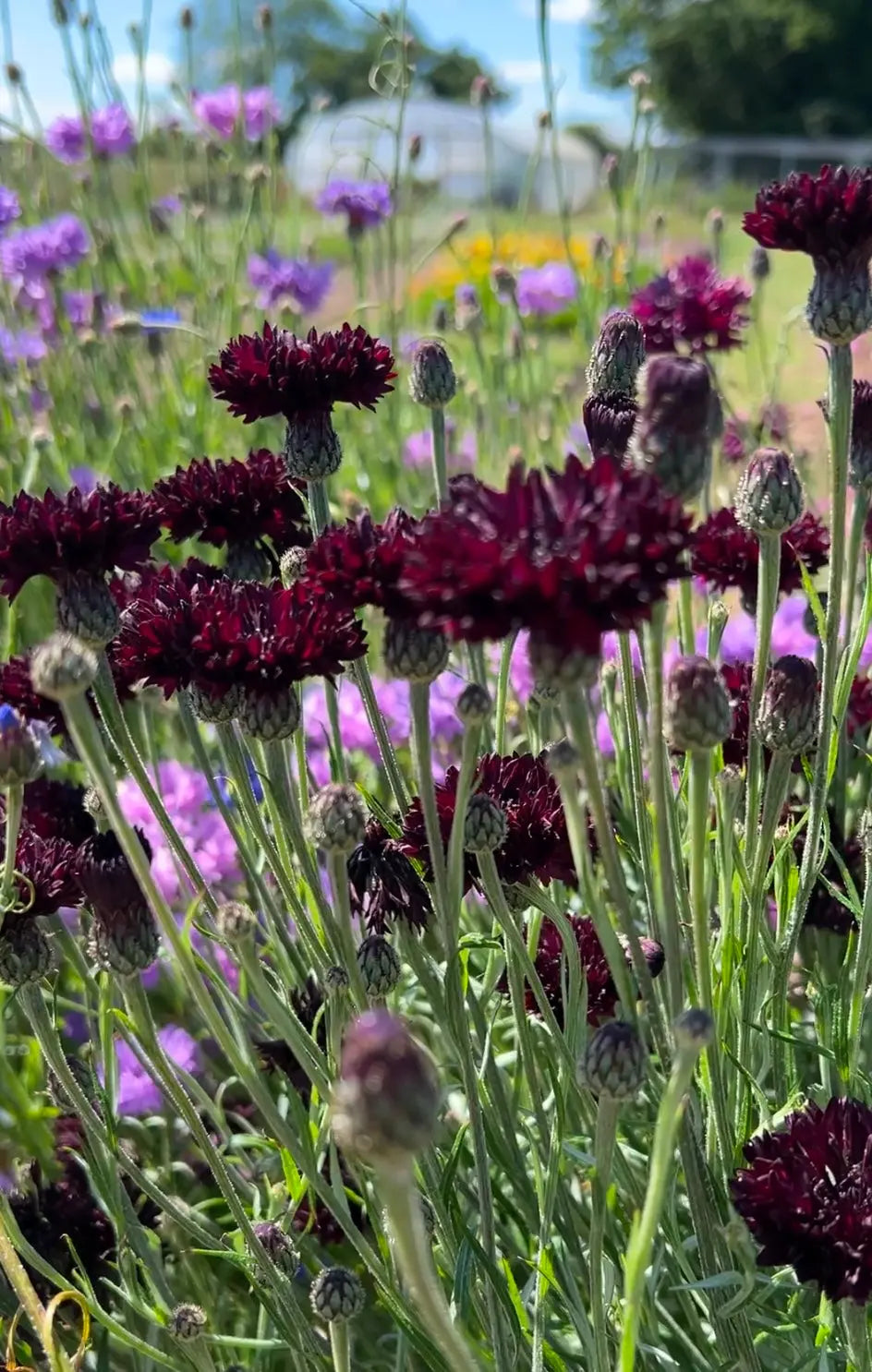
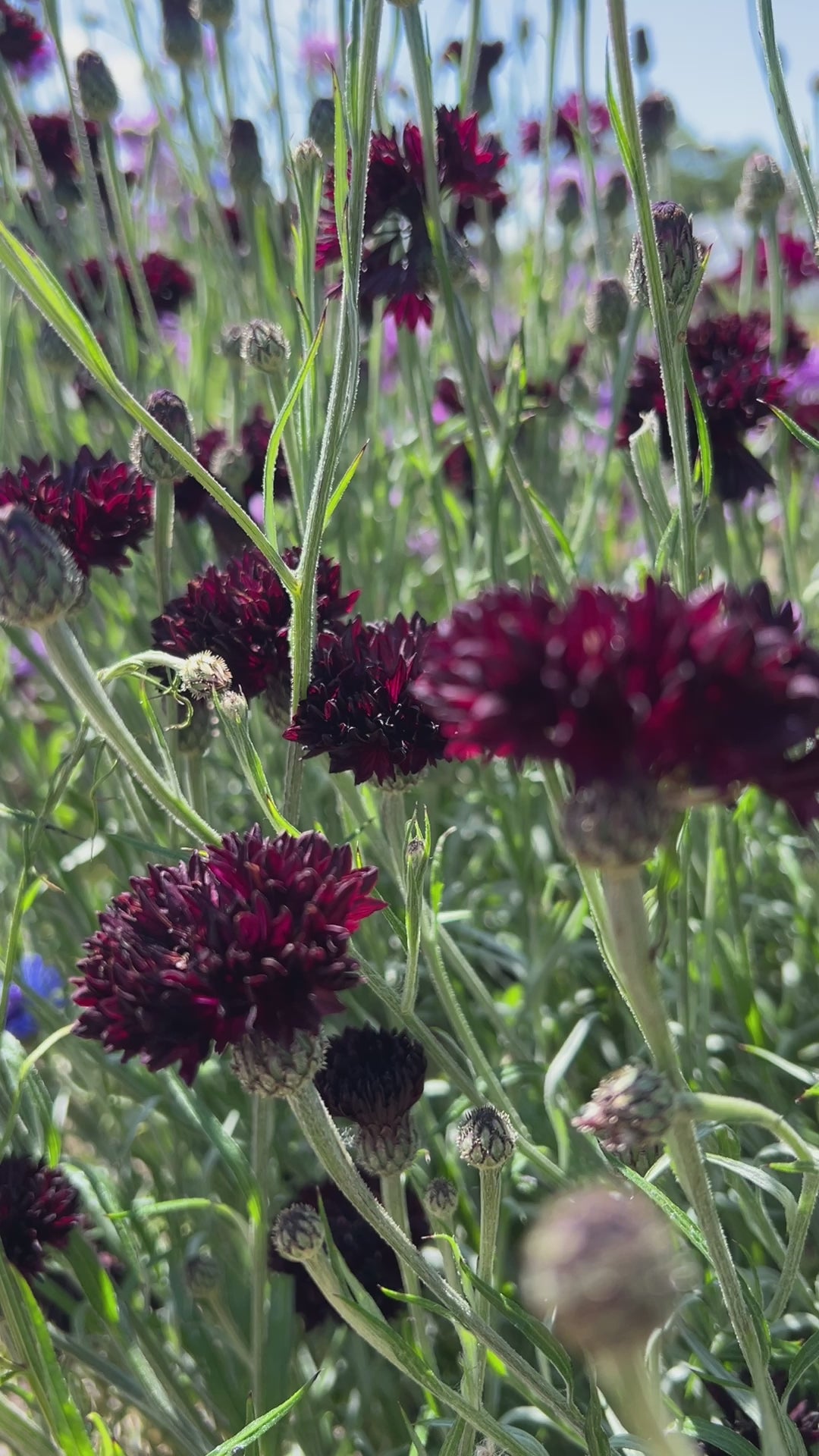
Cornflower 'Black Ball' isn't truly black but a sumptuous deep velvety maroon-plum that reads almost black in certain lights. This sophisticated variety creates stunning contrast in arrangements and borders. Try it with bright orange calendula for maximum drama, or use it to add depth to pastel schemes. The dark colouring makes it particularly striking in evening gardens where it glows richly in low light.
Ruby Tones: Red Boy
Cornflower 'Red Boy' offers gorgeous deep pink-red blooms that lean more towards ruby or cerise than true red. This variety maintains the classic informal cornflower look whilst offering unusual colouring that works brilliantly with other pinks and purples, or provides bold contrast against white flowers. The edible petals make particularly impressive garnishes.
Soft Lavender: Mauve Boy
Cornflower 'Mauve Boy' produces delicate soft lavender blooms that bring a gentle, romantic feel to plantings. This subtle colour is perfect for creating harmonious schemes and works beautifully in arrangements where you want a softer touch than the vibrant Blue Ball.
Compact Rainbow: Polka Dot Mixed
For containers, front-of-border positions, or where space is limited, Cornflower 'Polka Dot Mixed' offers a rainbow of colours on shorter, more compact plants. These multi-branching plants stay around 40-50cm tall and are perfect for creating charming posies and small bouquets.
Companion Planting with Cornflowers
Cornflowers play beautifully with other cottage garden favourites and wildflowers.
Classic Cornfield Combinations
Recreate traditional British meadows by combining cornflowers with:
- Field Poppies (Papaver rhoeas): The scarlet and blue combination is timelessly beautiful and beloved by pollinators
- Corn Marigolds (Glebionis segetum): Add sunny yellow to complete the traditional cornfield trio
- Corn Cockle (Agrostemma githago): Elegant pink-magenta blooms complement cornflowers perfectly
Cutting Garden Companions
For productive cutting patches, partner cornflowers with:
- Calendula 'Art Shades': The orange and blue create vibrant, complementary contrast
- Ammi majus (Bishop's Flower): White lacy blooms provide the perfect foil for coloured cornflowers
- Larkspur: Vertical spikes contrast beautifully with rounded cornflower forms
- Nigella (Love-in-a-Mist): Delicate blue or white flowers and feathery foliage create romantic combinations
Border Planting Ideas
In ornamental borders, combine cornflowers with:
- Sweet Peas: Classic cottage garden pairing with complementary colours
- Roses: Cornflowers provide summer colour whilst roses are between flushes
- Cosmos: Both offer long flowering seasons and similar growing requirements
- Achillea: Flat-topped yellow or pink achillea flowers contrast nicely with rounded cornflowers
Encouraging Self-Seeding
One of the great joys of cornflowers is their willingness to self-seed, creating naturalistic drifts that return year after year. To encourage this:
- Allow some plants to finish flowering completely in late summer
- Let seed heads ripen fully (they turn brown and papery)
- Leave seed heads standing into autumn so seeds can drop naturally
- Avoid heavy mulching in areas where you want self-seeding
- When weeding in spring, learn to recognise cornflower seedlings (silvery-green, narrow leaves) and leave them be
Self-sown seedlings often appear in unexpected places, creating spontaneous combinations that look wonderfully natural. Thin or transplant any that emerge in inconvenient locations.
Pest and Disease Management
Cornflowers are remarkably trouble-free, but a few issues occasionally arise.
Aphids
Check growing tips regularly from May onwards. Aphids can cluster on young shoots, causing distortion. Squash small infestations by hand or spray with soapy water. Encourage natural predators like ladybirds, lacewings, and hoverflies by growing a diversity of plants.
Slugs and Snails
Young seedlings are vulnerable, particularly in autumn and spring. Use organic slug pellets, copper tape, or beer traps. Check regularly in wet weather and remove any slugs or snails you find.
Powdery Mildew
In dry conditions, especially late in the season, powdery mildew (white powder on leaves) can appear. This is largely cosmetic and rarely affects flowering significantly. Ensure adequate watering and remove badly affected leaves. Good spacing improves air circulation and reduces mildew risk.
Flea Beetles
Tiny jumping beetles occasionally create small holes in young leaves, making foliage look peppered. This is rarely serious and plants grow through it. Keeping soil moist helps as flea beetles prefer dry conditions.
Growing Cornflowers in Containers
Whilst cornflowers prefer open ground, they adapt well to container growing, especially the shorter varieties.
Container Requirements
- Use containers at least 30cm deep and 30cm diameter
- Ensure excellent drainage (add crocks or gravel to the base)
- Use peat-free multipurpose compost mixed with 20% grit
- Choose Polka Dot Mixed or allow taller varieties room to be supported
Container Care
Containers dry out quickly, so check moisture levels daily in hot weather. Feed container-grown cornflowers every 2-3 weeks with diluted liquid tomato feed once flowering begins—unlike ground-grown plants, container plants benefit from supplementary feeding as nutrients leach through compost quickly.
Cornflowers for Pollinators
All cornflowers carry the RHS Plants for Pollinators designation, recognising their exceptional value to bees, butterflies, and other beneficial insects. The nectar is easily accessible and produced generously throughout the long flowering season. Bumblebees particularly adore cornflowers, and you'll often see multiple bees working the same plant simultaneously. Hoverflies (whose larvae eat aphids), various butterfly species, and solitary bees also frequent them regularly. By growing cornflowers, you're directly supporting declining pollinator populations whilst enjoying beautiful flowers—a perfect win-win. For maximum pollinator benefit, grow a mixture of colours and varieties to provide nectar over the longest possible season.
Saving Cornflower Seeds
Cornflower seeds are easy to save, allowing you to grow your favourites year after year free of charge.
How to Save Seeds
- Allow some flowers to fade completely on the plant (stop deadheading a few stems in late July)
- Seed heads will turn brown and papery as they ripen
- Harvest when seed heads are dry and crispy (usually August-September)
- Cut whole seed heads and place in a paper bag
- Hang the bag in a warm, dry place (like an airing cupboard) for 2 weeks
- Shake the bag vigorously—seeds will fall out
- Separate seeds from chaff by gently blowing or using a sieve
- Store in labelled paper envelopes in a cool, dry, dark place
Seeds remain viable for 3-4 years if stored properly. Always save from your best plants—those with the strongest stems, most flowers, and truest colours.
Troubleshooting Common Problems
Seeds Not Germinating
- Check soil temperature—cornflowers germinate best in cool conditions, not heat
- Ensure seeds aren't sown too deep (1cm maximum)
- Verify soil isn't waterlogged (cornflowers rot in soggy soil)
- Try autumn sowing instead—germination is often more reliable
Weak, Floppy Plants
- Usually indicates too much shade—cornflowers need full sun
- May signal overly rich soil—avoid feeding or heavy manuring
- Install support early whilst plants are still small
Few Flowers, Lots of Leaves
- Almost always caused by excessively fertile soil
- Don't feed with nitrogen-rich fertilisers
- Choose a less fertile spot for next year's planting
Short Flowering Season
- Insufficient deadheading is the usual culprit—you must remove spent flowers regularly
- Ensure adequate water during flowering period
- Autumn sowing produces longer flowering seasons than spring sowing
Plants Disappearing Over Winter
- Usually slug/snail damage on very young seedlings
- Could indicate drainage issues—cornflowers need well-drained soil
- Check for mouse damage if seeds seem to have vanished
Monthly Cornflower Care Calendar
September-October: Sow seeds directly outdoors for strongest plants. Prepare soil by removing weeds but don't add fertiliser.
November-February: Leave autumn-sown seedlings undisturbed. They'll sit as small rosettes through winter needing no attention.
March: Thin autumn-sown seedlings to 15-20cm apart. Spring sow if you missed autumn. Install support for tall varieties.
April-May: Hardening off any module-raised plants. Late spring sowings still possible. Keep young plants watered in dry spells.
June: First flowers appear on autumn-sown plants. Begin regular deadheading regime. Water consistently.
July-August: Peak flowering period. Cut regularly for indoor displays. Continue deadheading religiously. Let a few seed heads ripen if saving seed.
September-October: Late flowers on well-maintained plants. Collect ripened seeds. Pull up spent plants or allow to self-seed. Sow next year's crop!

Final Thoughts
Cornflowers embody everything wonderful about British cottage gardening: they're beautiful, easy, prolific, excellent for cutting, valuable for wildlife, and perfectly suited to our climate. Whether you choose the classic electric blue of 'Blue Ball', the dramatic depths of 'Black Ball', or the soft romance of 'Pink Ball', cornflowers will reward you with months of glorious colour and armfuls of gorgeous cut flowers.
The autumn sowing secret—though not essential—is worth embracing if you want truly spectacular plants. The minimal extra effort of protecting young seedlings through winter pays dividends in earlier, longer, and more abundant flowering. Even spring-sown cornflowers perform brilliantly, so don't let the season stop you from growing these cottage garden champions.
Most importantly, remember that regular cutting and deadheading is the key to prolonged flowering. Treat your cornflowers generously in this regard—the more you take, the more they give. Fill your home with their cheerful blooms, scatter their edible petals over summer salads, and watch as bees and butterflies flock to their nectar-rich flowers.
For the complete range of cornflower varieties and everything else you need to create your perfect cottage garden, visit Bishy Barnabees Cottage Garden.
Written with love from our Norfolk flower farm, where cornflowers have been blooming every summer for generations.

