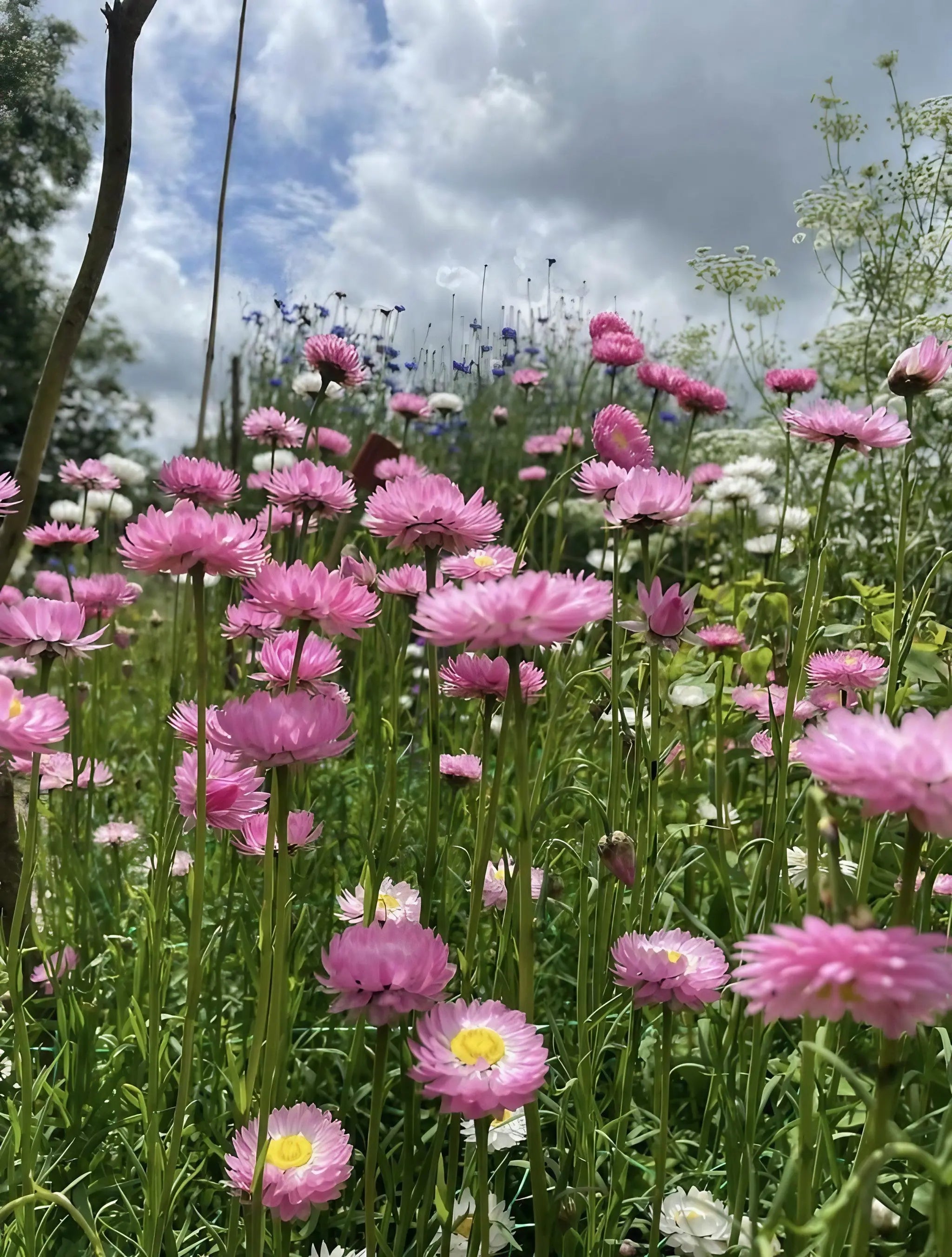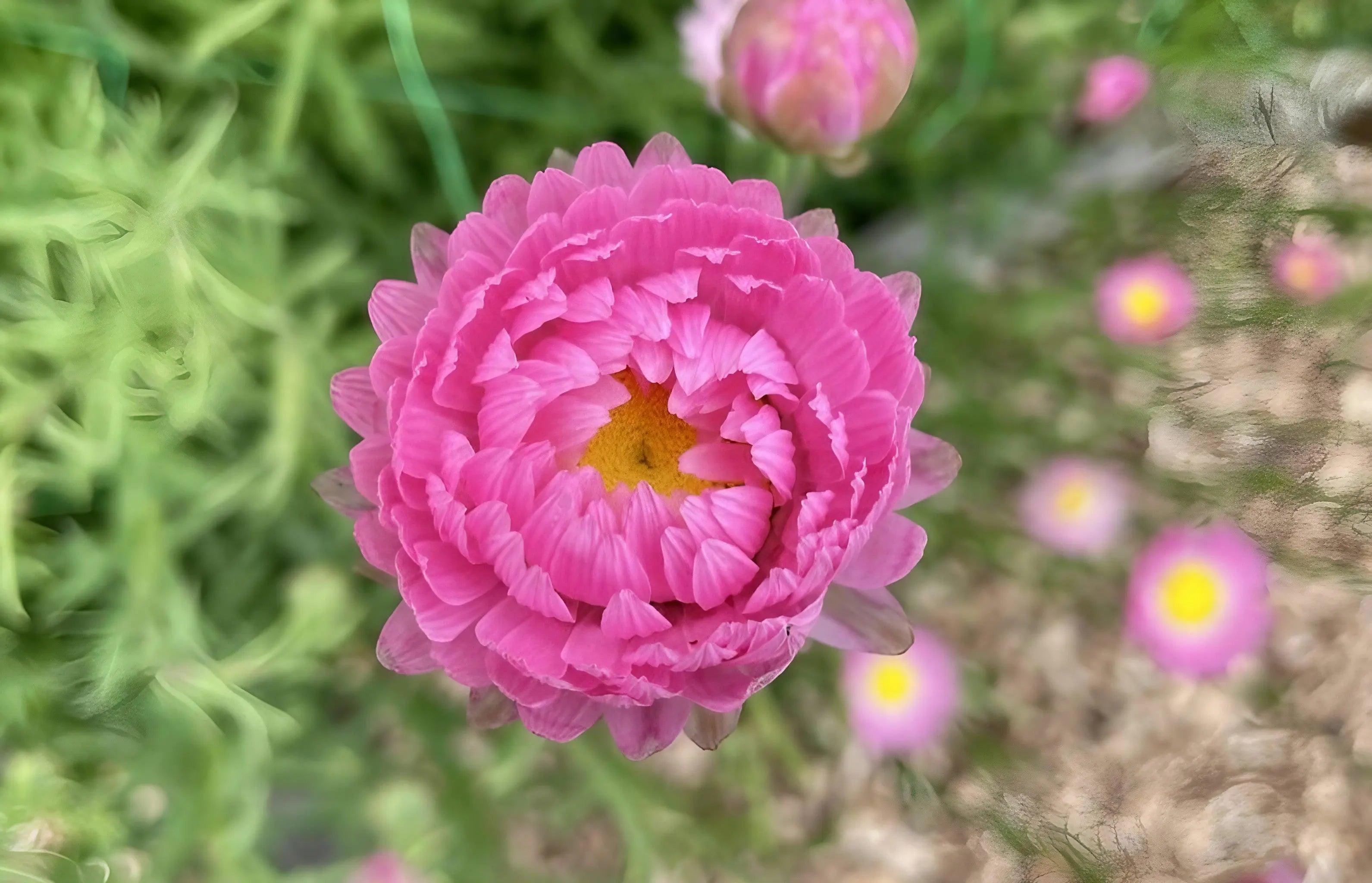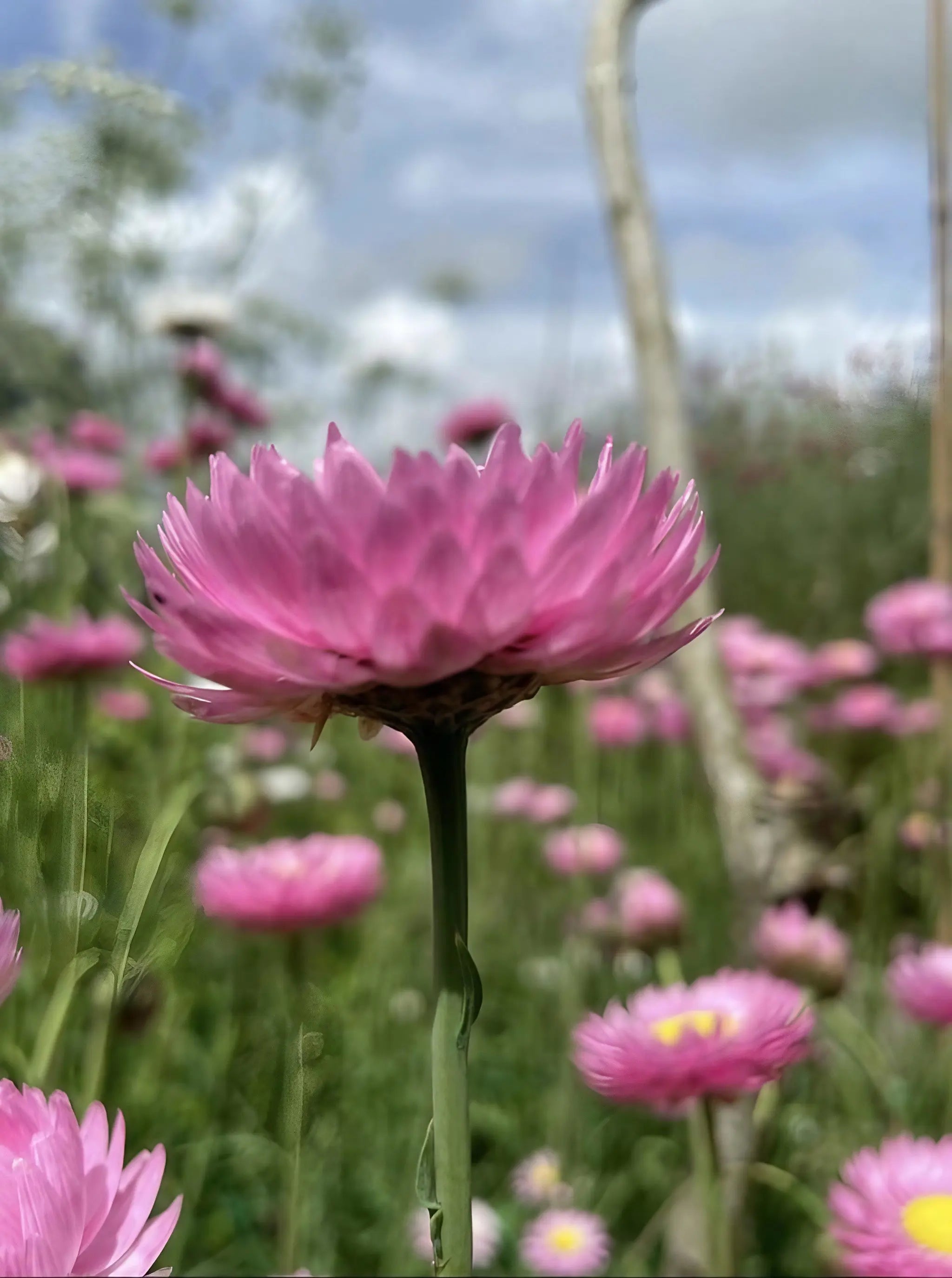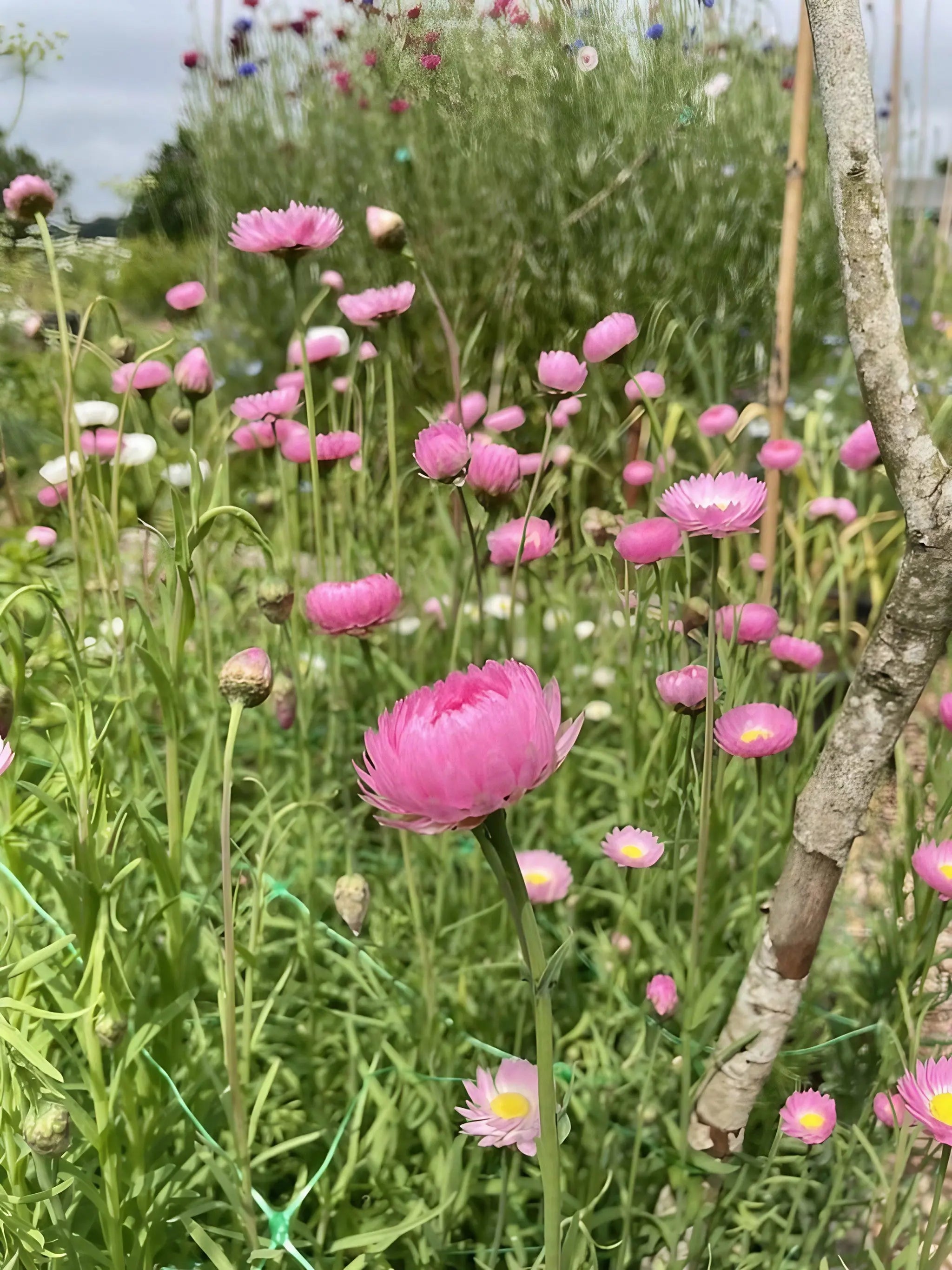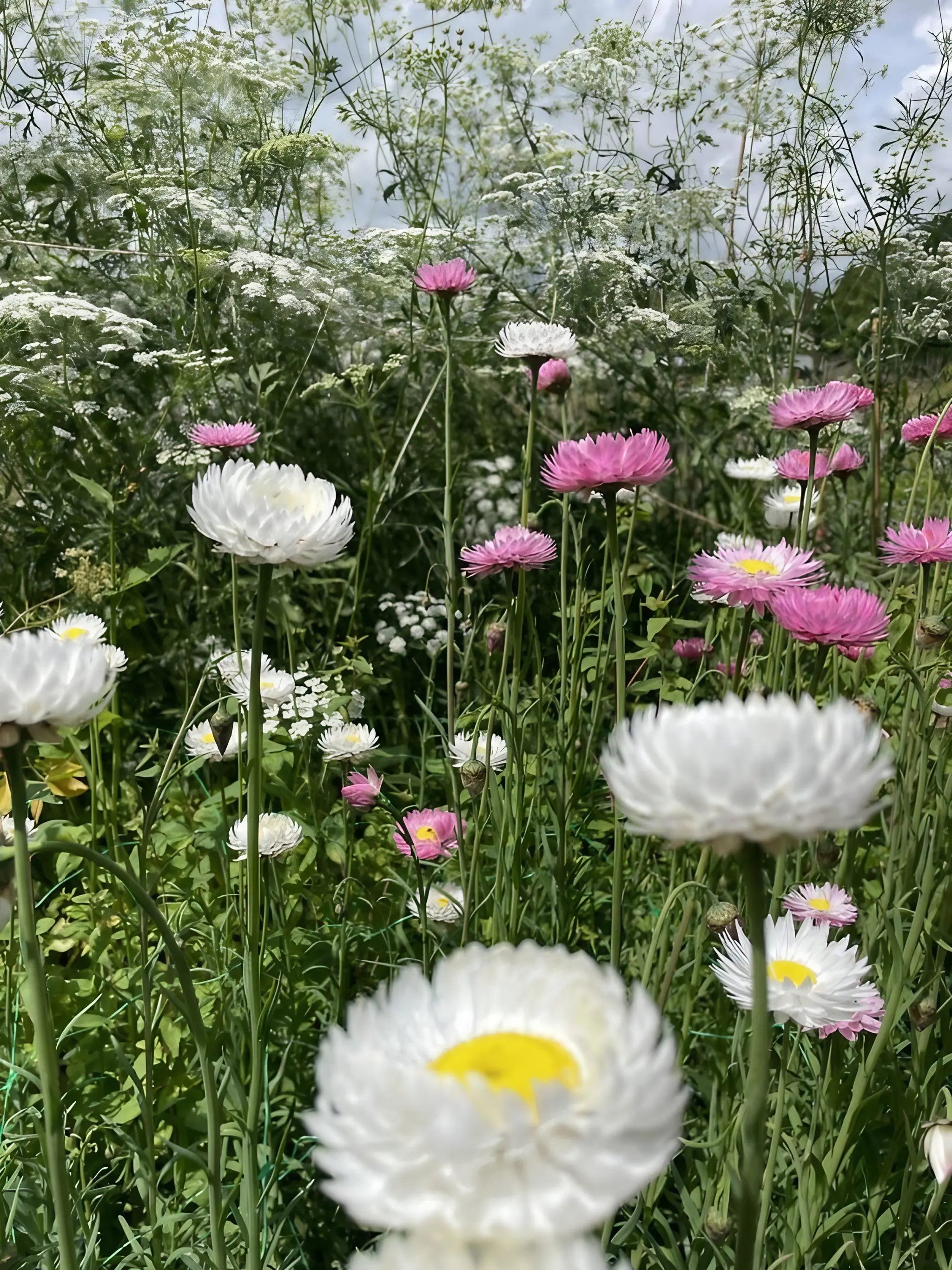



Acroclinium 'Mixed' Seeds (Helipterum roseum)
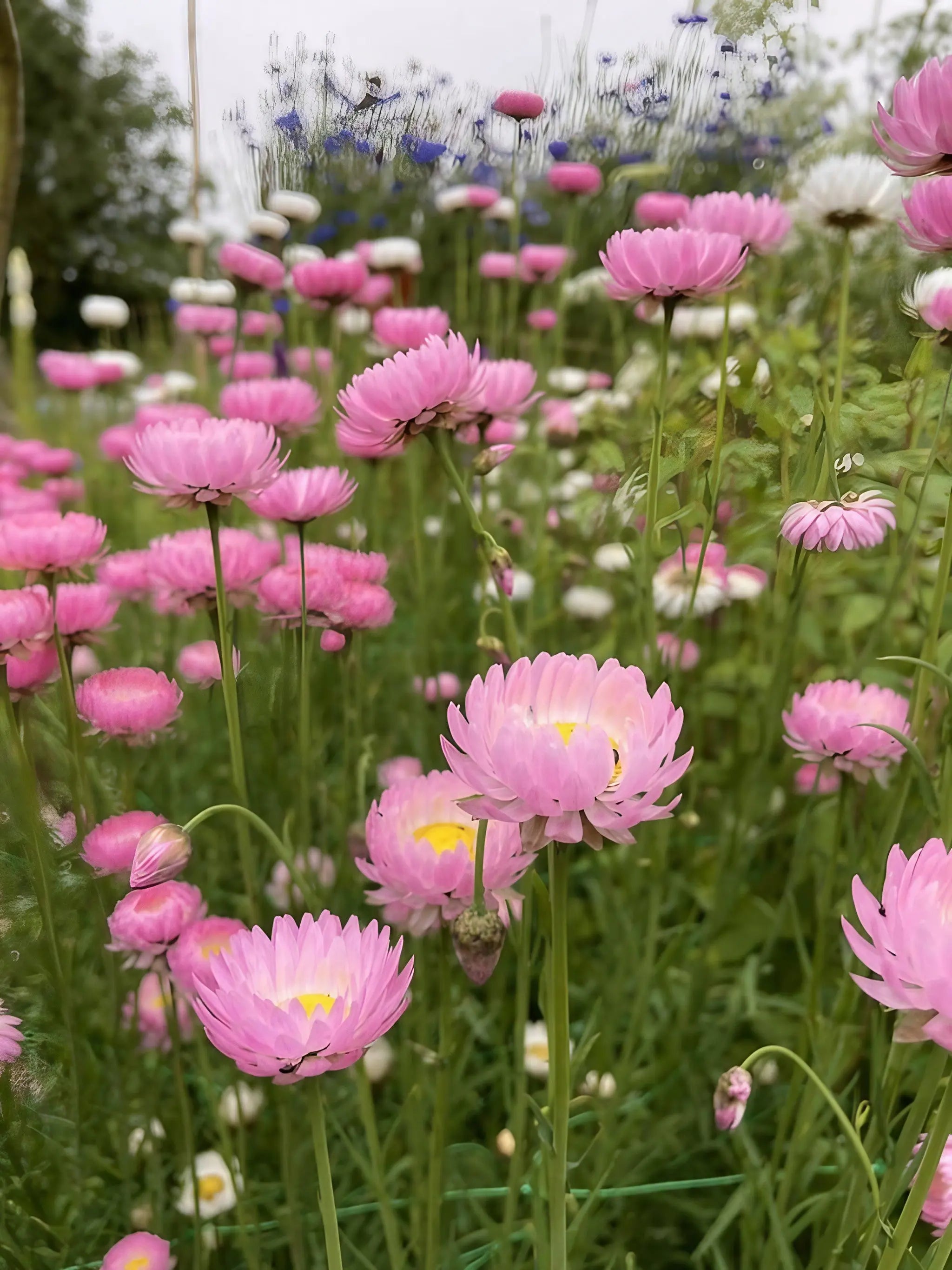
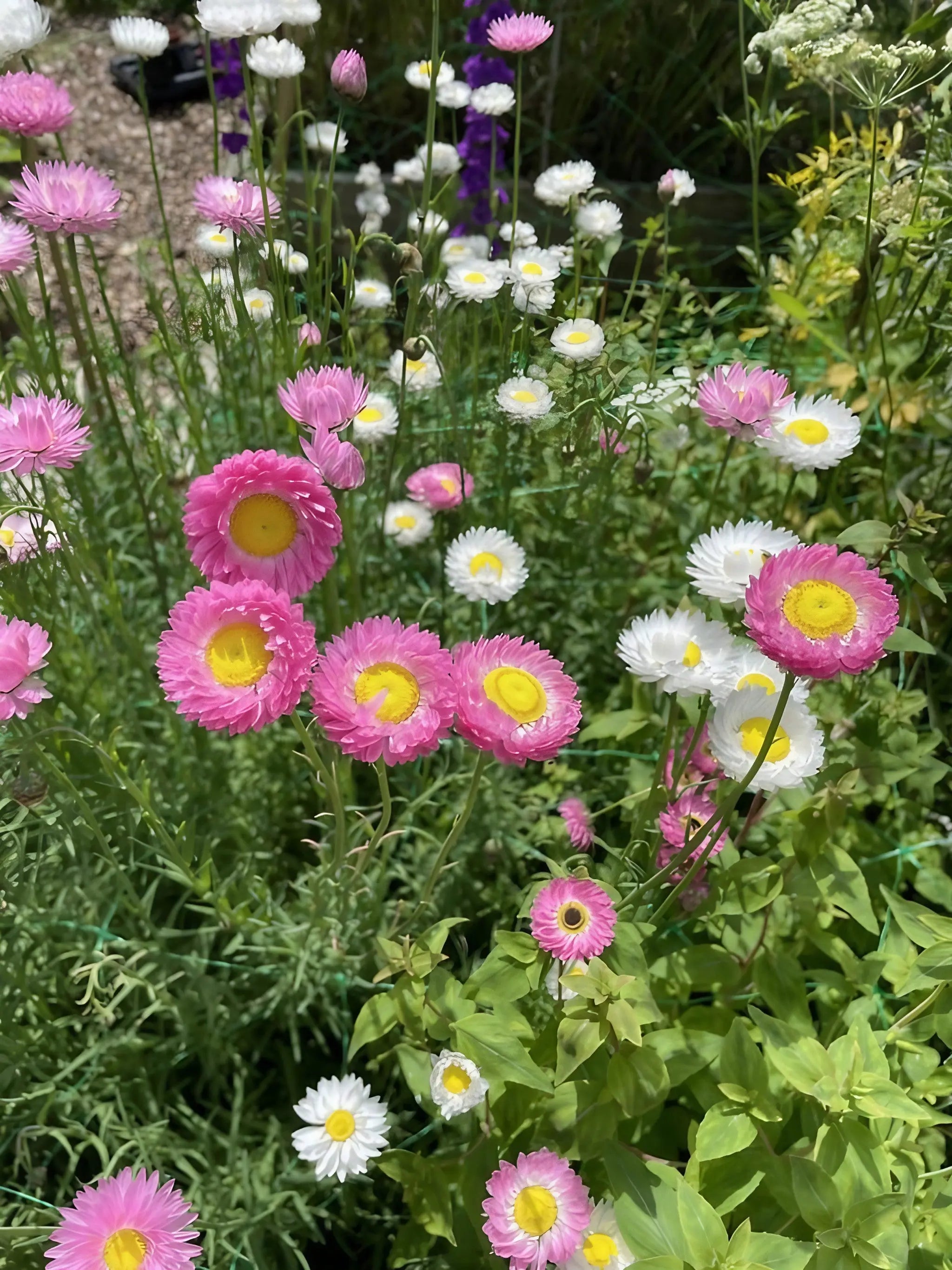
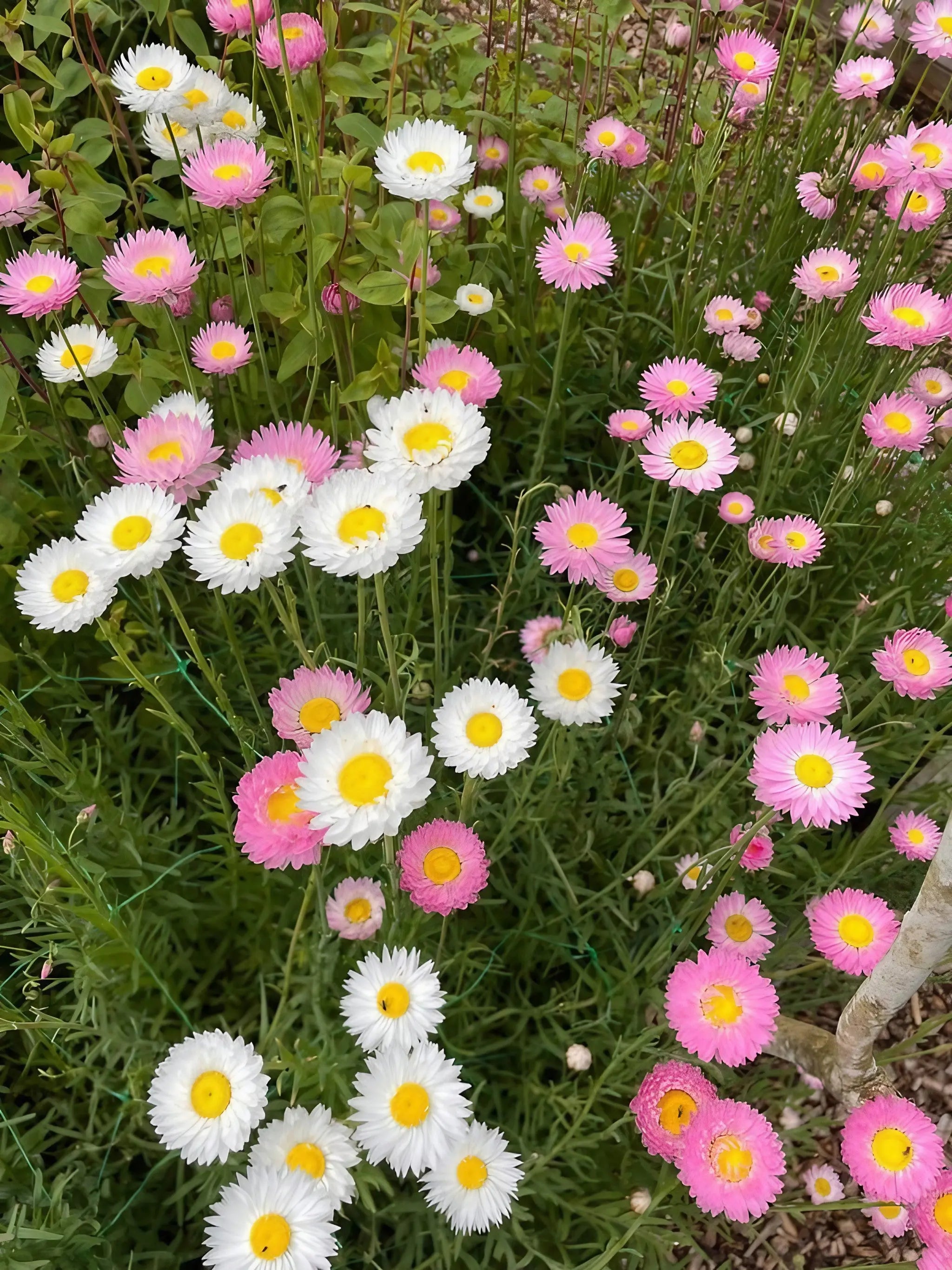
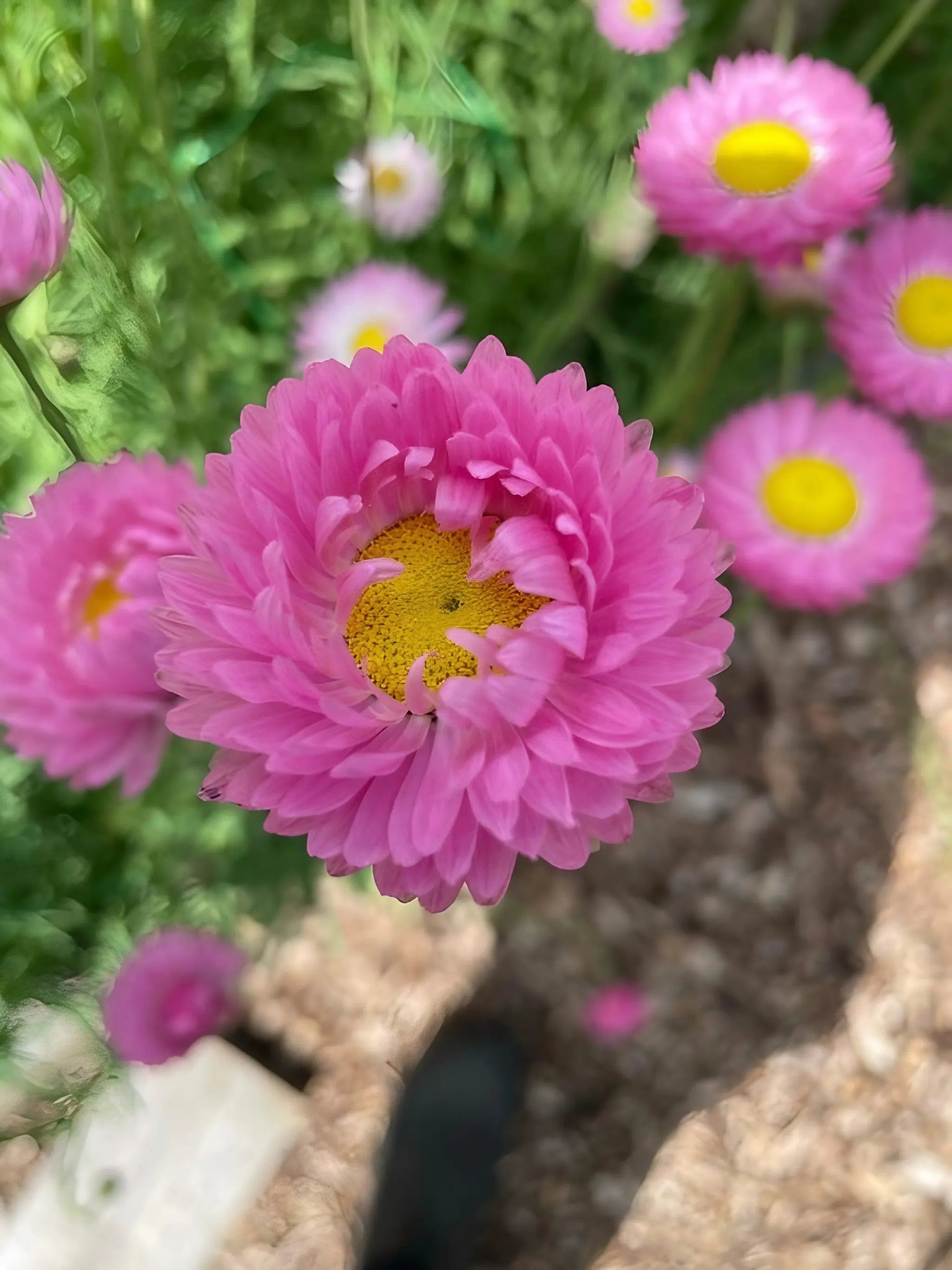
Unlike the heavy, chunky Strawflowers (Bracteantha), the Acroclinium is a delicate, refined, ethereal beauty with genuine Victorian cottage garden charm. It produces exquisite daisy-like blooms with crisp, papery, tissue-thin petals in enchanting shades of soft blush-pink, bright rose-pink, and pure white, each contrasting beautifully with a striking golden-yellow or dark near-black centre. The flowers are smaller (3-4cm across) but incredibly prolific, and plants reach a graceful 40-50cm in height.
The magic of this plant lies in the extraordinary texture. Even when growing fresh in the garden, the flowers feel dry, crinkly, and papery to the touch—like the finest quality tissue paper or delicate parchment. This isn't just superficial; it's structural. The petals are actually modified bracts (specialised leaves) that are naturally dry rather than moisture-filled, which is why they're called "everlasting" or "immortelles." They are the absolute darlings of the dried flower world, retaining their perfect shape, form, and vibrant colour for literally years after harvesting, allowing you to keep a piece of summer on your mantelpiece throughout the entire winter and beyond!
These flowers are also charmingly "solar-powered"—they open wide in brilliant sunshine to reveal their centres and attract pollinators, then close up tight protectively in the evening or during rain to safeguard their precious pollen. This daily opening and closing dance adds wonderful living character to the garden!
Read More
🌿 Understanding the Plant
Acroclinium (also sold botanically as Helipterum roseum, Rhodanthe manglesii, or sometimes simply Rhodanthe) is a Hardy Annual (H3). It completes its entire life cycle in a single growing season.
This charming plant is native to the warm, dry, sandy soils of Western Australia, where it has perfectly adapted to thrive in poor, free-draining soil with minimal water and maximum sunshine. Whilst it can withstand a little cold weather, it genuinely dislikes sitting in wet, waterlogged soil—wet roots are its nemesis! For this reason, it's best sown in spring once the soil has started to warm up for the most rapid, reliable display throughout summer.
The Victorian Nostalgia Factor: We absolutely love this plant for its nostalgic, old-fashioned appeal. It feels like something from a traditional Victorian flower pressing collection or vintage cottage craft book. The delicate, refined flowers have an understated elegance that modern hybrids often lack. The petals are extraordinarily fine and thin—so delicate they're almost translucent when backlit—yet they maintain their colour beautifully for years after drying. This combination of fragility and longevity is remarkably special!
The "Everlasting" Secret: The reason these flowers last so long is botanical genius. Unlike regular flowers with soft, moisture-filled petals that wilt when cut, Acroclinium's "petals" are actually modified leaves (bracts) with very little moisture content. They feel crisp and papery to the touch even whilst growing. When cut, they simply continue drying whilst maintaining their perfect shape and brilliant colour. The result? Flowers that can last literally for years without significant fading—they become treasured heirloom pieces passed down through generations!
Cut-and-Come-Again Champion: This plant is incredibly productive! The more flowers you cut for your vases, the more stems the plant will frantically send up to replace them. A single plant can produce dozens of stems over the season if you harvest regularly. This makes it perfect for cutting gardens and for gardeners who love bringing fresh flowers indoors!
🌱 Growing Guide
These are wonderfully fuss-free plants that genuinely thrive on benign neglect—perfect for busy gardeners!
How to Sow:
You have two excellent options:
Indoor Sowing (March-April): For earliest results and guaranteed plants, sow indoors in modules from March-April. Scatter the seeds onto the surface of the compost and cover very lightly with vermiculite or fine compost (just 2mm)—they need a little light to germinate properly. Keep at 18-20°C (warm room temperature or heated propagator). Germination takes 7-14 days. Transplant seedlings carefully when large enough to handle.
Direct Outdoor Sowing (April-May): Acroclinium also does brilliantly when sown directly where it's to flower. Wait until the soil has warmed up (typically mid-April onwards in most UK regions). Scatter seeds thinly onto prepared soil, rake in very lightly, and water gently. Thin seedlings to 20cm spacing once they emerge.
CRITICAL Growing Requirement - Full Sun Essential:
Acroclinium absolutely demands full sun (minimum 6 hours direct sunlight daily). This is not negotiable! The flowers are heliotropic (sun-following) and photonastic (light-responsive)—they literally won't open properly in shade or on dull days. Plant them in your sunniest spot for maximum flowering and the happiest plants.
Soil Requirements:
They prefer sandy, gritty, free-draining soil. If you have heavy clay that stays wet, either grow Acroclinium in raised beds with added grit/sand, or grow them in terracotta pots and containers with gritty compost. Good drainage is genuinely essential—waterlogged roots will cause plants to sulk, rot, or fail entirely.
Spacing:
Plant or thin seedlings to 20cm apart. In cutting gardens, plant in generous rows or blocks rather than scattered individuals for easier harvesting and maximum impact.
Ongoing Care:
Watering: Water regularly whilst seedlings are establishing, but once plants are flowering, reduce watering significantly. These are naturally adapted to dry Australian conditions and genuinely prefer to be on the dry side. Overwatering promotes leafy growth at the expense of flowers.
Feeding: Don't overfeed! Lean soil produces better, more prolific flowering. Rich soil or fertiliser creates lots of foliage but fewer flowers. A light feed at planting is sufficient.
Support: Tall stems may benefit from some support with twiggy sticks or light netting in very windy gardens, especially if you're growing them specifically for cutting and want perfectly straight stems.
CRITICAL - Harvest Timing for Dried Flowers:
This is the single most important technique for perfect dried Acroclinium! For the very best dried flowers that maintain perfect colour and form:
• Cut stems when the buds are only half-open (not fully open!)
• The flowers will continue opening as they dry
• If you wait until they're fully open before cutting, the centres may turn brown or the petals might reflex backwards during drying
• Choose a dry day and cut in mid-morning after dew has evaporated
• Strip off all foliage from stems immediately
• Hang upside down in small bunches (5-7 stems) in a dry, dark, well-ventilated place
• DARKNESS IS CRITICAL: Drying in darkness prevents the pink colours from fading to pale beige—they'll retain vibrant colour for years!
• Drying takes 2-3 weeks
• Once fully dried, they last literally for years without shedding or deteriorating!
📋 Plant Specifications
| Botanical Name | Helipterum roseum (syn. Rhodanthe manglesii, Acroclinium roseum) |
| Common Names | Paper Daisy, Pink Sunray, Everlasting Daisy, Strawflower Acroclinium |
| Plant Type | Hardy Annual Everlasting Flower |
| Hardiness | H3 (Hardy Annual - tolerates light frost) |
| Light Requirements | Full Sun ☀️ (essential - flowers won't open in shade) |
| Height | 40-50cm (16-20 inches) - graceful and elegant |
| Spread | 20cm (8 inches) |
| Spacing | Plant 20cm apart |
| Flower Colours | Soft blush-pink, bright rose-pink, pure white (mixed) |
| Flower Size | 3-4cm diameter (delicate daisy-like blooms) |
| Flowering Period | June to September |
| Perfect For | 🍂 Essential Dried Flower (lasts years!) ✂️ Cutting Garden & Fresh Bouquets 🐝 Valuable Pollinator Plant (rich pollen) 🏜️ Dry, Sandy, or Gravel Gardens 🌸 Victorian/Cottage Garden Style 🏺 Container Growing (terracotta pots) ☀️ Drought-Tolerant Planting 🎨 Craft Projects & Pressed Flowers |
| Seeds per Packet | Approximately 250 seeds |
🤝 Beautiful Garden Combinations
Create a dedicated "Dried Flower Patch" or "Everlasting Garden" by planting Acroclinium with other species that preserve perfectly for years:
- 🌈 Statice 'Mixed' (Limonium): The Perfect Everlasting Partner! This is genuinely one of the very best pairings in the entire dried flower world—they're made for each other! Whilst delicate Acroclinium offers soft, romantic pinks, blushes, and whites in daisy form, bold Statice provides vivid blues, deep purples, hot pinks, and golden yellows in dense, clustered, papery heads. One is refined and elegant, the other bright and structural—together they create perfect visual and textural balance. Both are Mediterranean sun-lovers that thrive in identical lean, well-drained soil conditions. Both flower prolifically throughout summer. Most importantly, both dry absolutely beautifully and last for years without fading or shedding. Grow them side-by-side in your cutting garden and you'll have ready-made dried bouquet ingredients that work together perfectly! The combination is so classic it's used by professional florists worldwide. Statice provides the bold colour focal points and filler, whilst Acroclinium adds delicate refinement and romantic softness. This partnership creates professional-quality everlasting arrangements that become treasured heirloom pieces!
- 🌕 Scabiosa stellata 'Drumstick': The Textural Contrast Masterpiece! For stunning visual and structural interest, plant Acroclinium alongside Scabiosa stellata. This pairing is all about gorgeous geometric contrast. The flat, open, daisy-like shape of delicate Acroclinium (2D circular form) looks absolutely stunning when combined with the spherical, three-dimensional, papery globe-like seed heads of Drumstick Scabious (perfect 3D orbs). One is soft and romantic, the other architectural and sculptural—the combination is mesmerising! Both are excellent dried flowers. Scabiosa starts with pretty pale blue flowers that attract pollinators, then transforms into those spectacular spherical seed heads that look like natural Christmas baubles. Together with Acroclinium's papery daisies, they create incredibly sophisticated, museum-quality dried arrangements with multiple dimensions and textures. The colour palette works beautifully too: soft pinks and whites from Acroclinium complement the warm bronze-beige tones of dried Scabiosa seed heads. This combination feels both contemporary and timeless—equally at home in modern Scandi-style interiors or traditional cottage settings!
📅 Sowing & Flowering Calendar
Sow indoors March-April or outdoors April-May. Flowers June-September. Harvest for drying in summer.
⚠️ Harvest When Half-Open!
For perfect dried flowers, cut stems when buds are only half-open—they'll continue opening as they dry. If you wait until fully open, centres may brown. Remove all foliage and hang upside down in a dry, dark place. Darkness prevents pink colours from fading to beige, keeping them vibrant for years!
🐝 Valuable Wildlife Plant
The flowers are rich in pollen and highly attractive to bees, hoverflies, and butterflies, making Acroclinium a valuable addition to any wildlife-friendly or pollinator garden. When grown fresh in the garden, they provide essential food for beneficial insects throughout the summer months!
📖 Want more detailed growing advice?
View our Complete Growing Guides →
- Regular price
-
£2.30 - Regular price
-
- Sale price
-
£2.30
Couldn't load pickup availability