- Play video
- Play video
Mesembryanthemum 'Harlequin' Seeds
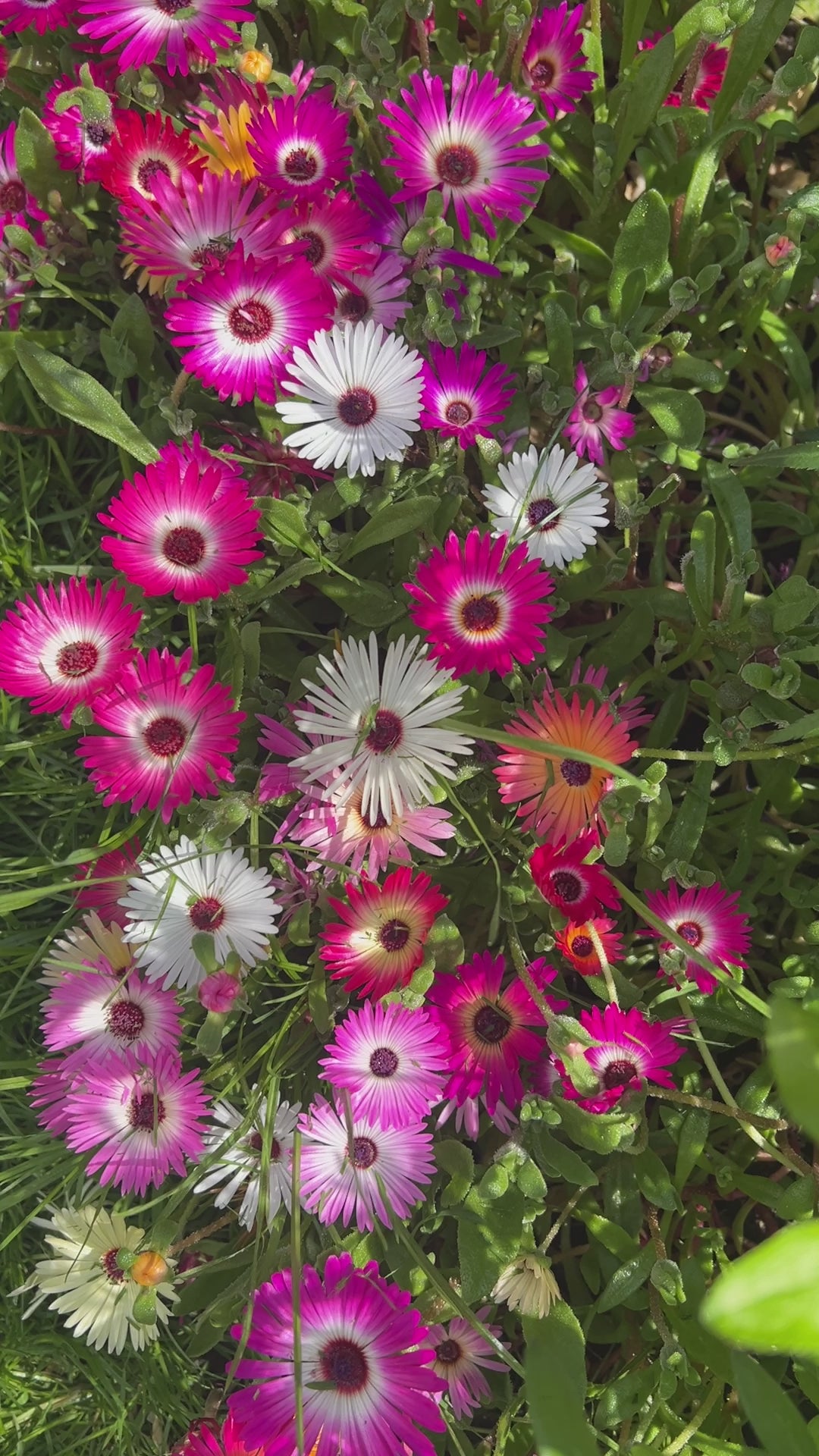
If you have a hot, dry spot where absolutely nothing else survives—that baking gravel driveway edge, the sizzling top of a stone wall, the neglected hanging basket that never gets watered—'Harlequin' is your salvation. This spectacular South African succulent (commonly known as Livingstone Daisy or Ice Plant) produces a low, ground-hugging carpet of fleshy, crystalline leaves that literally sparkle and glisten in bright sunlight like scattered jewels.
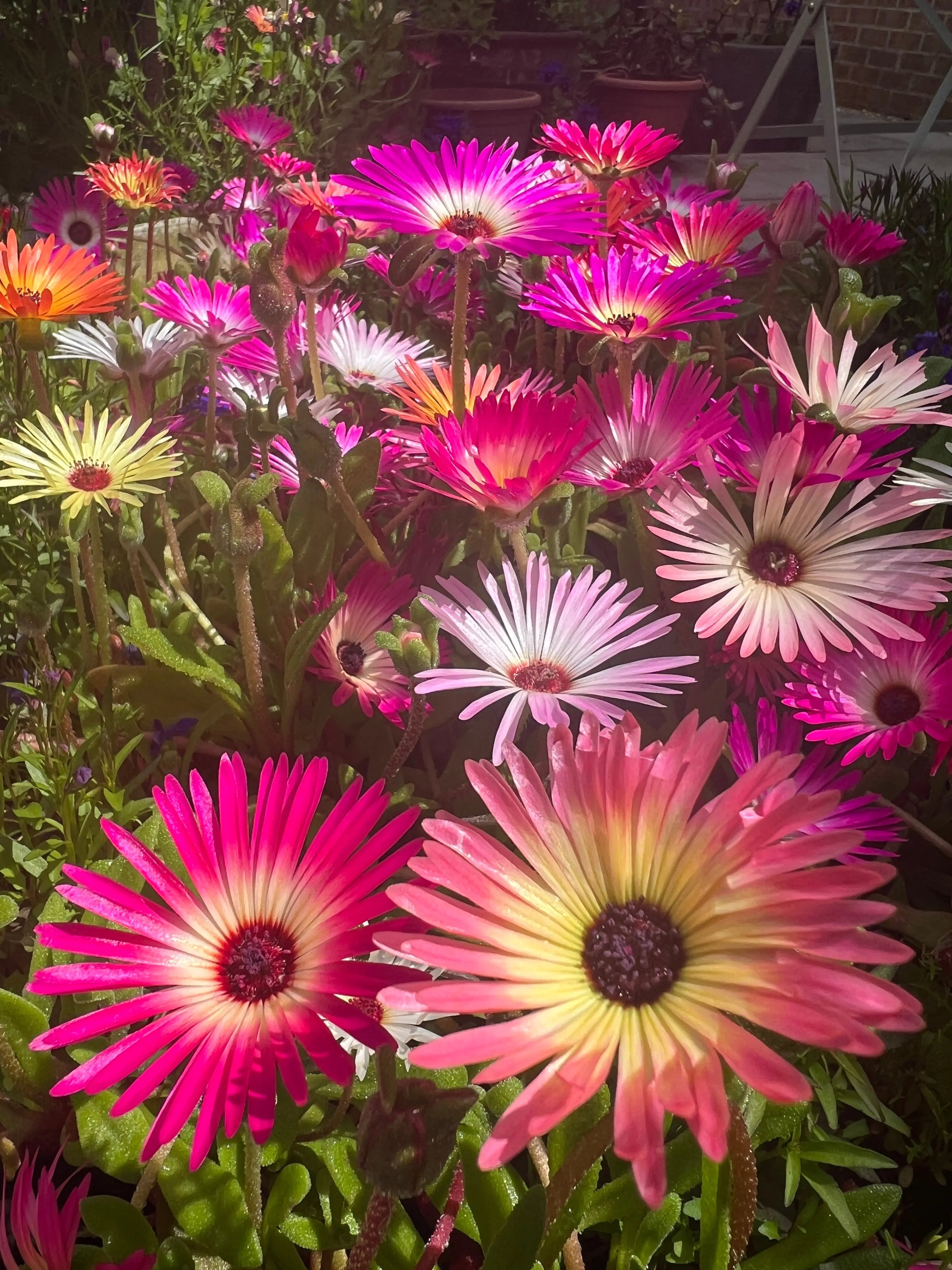
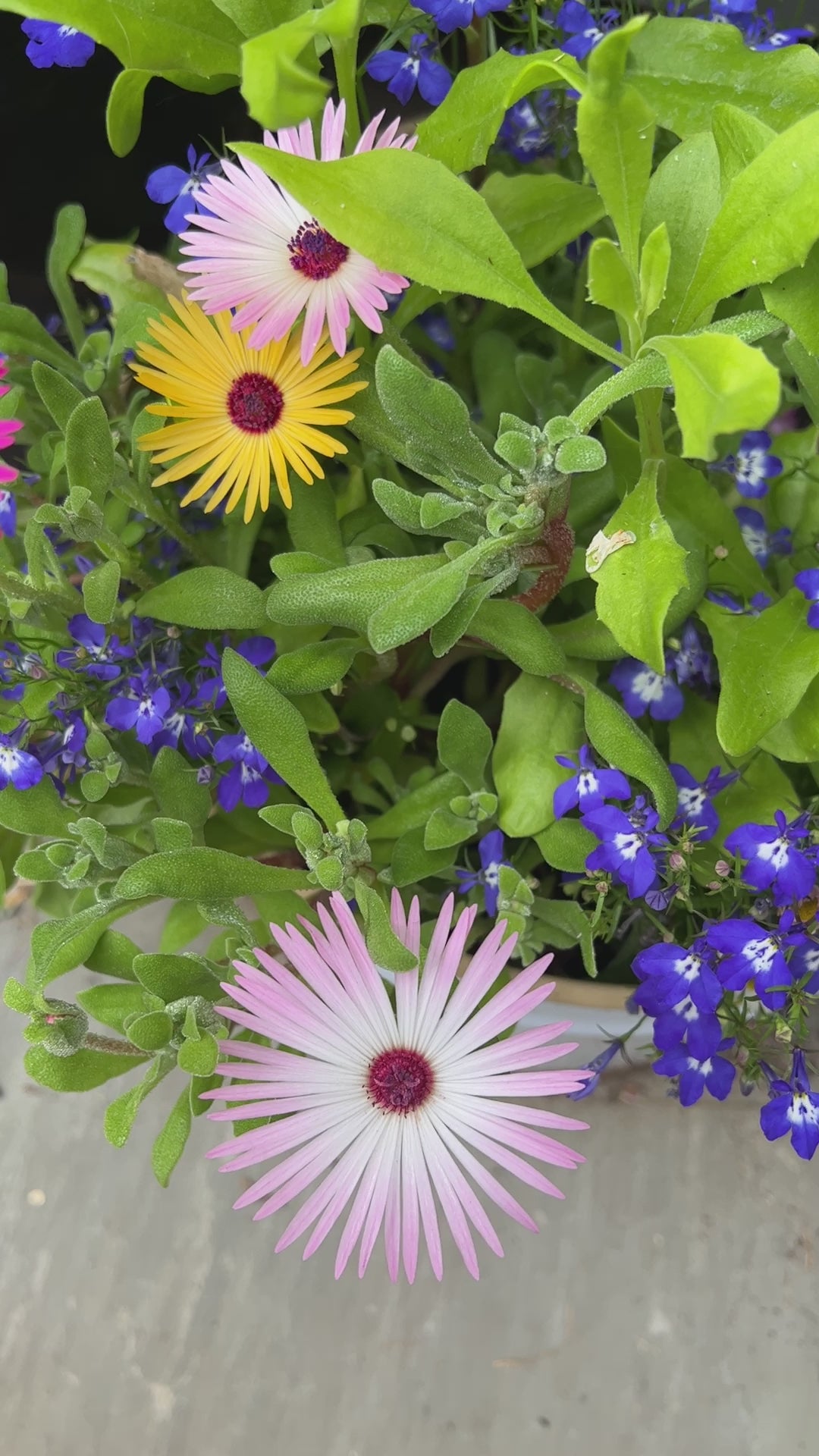
But the real magic happens when the sun comes out. The daisy-like flowers burst open in an absolutely dazzling neon explosion of colour—vibrant shocking pinks, electric oranges, peachy apricots, and sunny yellows—many with dramatic contrasting white or deep red inner rings that create the distinctive "Harlequin" pattern. These are nature's solar panels: they open wide to catch every ray, tracking the sun across the sky, then close up tight in the evening or on dull, cloudy days to protect their precious pollen. It's pure theatre!
Read More
🌿 Understanding the Plant
Mesembryanthemum 'Harlequin' (botanically Dorotheanthus bellidiformis) is a Half-Hardy Annual (H2), meaning it's frost-tender and completes its life cycle in one season.
This plant originates from the coastal deserts and rocky outcrops of South Africa, where it has evolved extraordinary adaptations for surviving extreme heat, intense sunshine, and long periods of drought. It's a true succulent with fleshy, water-storing tissues throughout its leaves and stems.
The "Ice Crystal" Effect: Look very closely at the leaves and stems—they're covered in thousands of tiny, transparent, bladder-like papillae (cellular water storage sacs) that catch and reflect light like miniature ice crystals or frozen water droplets. This gives the whole plant a distinctive glistening, frosted appearance that's utterly unique. These papillae aren't just decorative—they're functional water reservoirs that help the plant survive drought!
The Solar Tracking Behavior: Mesembryanthemum flowers exhibit strong nyctinasty (movement in response to light). The flowers open fully around mid-morning when temperatures rise and sunshine is strong, track the sun's movement across the sky throughout the day (heliotropism), then close up tightly as evening approaches or whenever clouds obscure the sun. This behavior protects the reproductive parts from damage and conserves pollen. It means the plant puts on its best display during the warmest, sunniest hours—exactly when you're most likely to be in the garden enjoying it!
The Harlequin Pattern: The common name refers to the distinctive concentric rings of contrasting colour found in many flowers—typically a brilliant outer colour (pink, orange, yellow) with a white or dark red inner ring surrounding the central disc. This "bull's-eye" pattern is thought to guide pollinating insects directly to the pollen and nectar.
The Ground-Hugger: This is a genuinely prostrate, mat-forming plant that stays extremely low (10-15cm maximum). It spreads sideways rather than upwards, with each plant eventually forming a dense carpet up to 30cm across. This makes it absolutely perfect for edging, ground cover in hot spots, tucking into wall crevices, cascading from containers, or carpeting rockeries.
🌱 Growing Guide
The seeds are absolutely tiny—almost dust-like—so they require careful handling, but germination is generally very reliable with warmth.
How to Sow:
Sow indoors from February to April. The seeds are extremely fine, so mix them with a pinch of dry silver sand to make them easier to see and distribute. Scatter the seed/sand mix very thinly across the surface of moist seed compost. Do not cover the seeds at all—they're photoblastic (requiring light to germinate). Just press them very gently into contact with the compost surface with your fingertips. Cover the tray with clear glass or a propagator lid to maintain high humidity. Keep warm at 18-21°C (a sunny windowsill or heated propagator is ideal). Germination usually occurs within 7-14 days. Remove the cover as soon as you see green.
Pricking Out:
The seedlings are tiny and delicate. When large enough to handle (usually when they've developed 2-3 pairs of true leaves), carefully prick them out into module trays or small pots. Handle by the leaves, not the stems. Use free-draining, sandy compost—standard seed compost with added horticultural grit (1 part grit to 3 parts compost) works perfectly. Grow on in bright, warm conditions.
Hardening Off and Planting Out:
Only plant out after all frost risk has passed—typically early to mid-June. Harden off gradually over 7-10 days. Choose the hottest, sunniest, most exposed spot you have—"too hot for other plants" is absolutely perfect for Mesembryanthemum! Plant at 15cm (6-inch) spacing. They must have extremely free-draining soil. If you have heavy clay, either grow them in containers or amend the soil heavily with horticultural grit and sharp sand. They're perfect for rockeries, gravel gardens, the tops of dry stone walls, shallow terracotta pots, hanging baskets, and anywhere else that bakes in full sun.
The Critical "Don't Overwater" Rule:
This is absolutely crucial! Do not overwater! Mesembryanthemum hates soggy roots and will quickly rot if kept too wet. Water sparingly when planting out, then thereafter only water during genuinely severe, prolonged drought. They're adapted to survive on morning dew and occasional rainfall—overwatering causes more deaths than drought ever could! In containers, let the compost dry out almost completely between waterings. This is a genuine "neglect-and-it-thrives" plant!
Feeding:
Not required. In fact, too much fertility produces lots of leaves but fewer flowers. Lean, poor soil actually gives better results! If growing in containers, a very weak liquid feed once a month is sufficient.
Deadheading:
Regular deadheading significantly extends the flowering season. Remove spent flowers by pinching them off at the base. This prevents seed setting and encourages the plant to keep producing more blooms right through to the first autumn frost.
Seasonal Performance:
Mesembryanthemum flowers most prolifically during the hottest part of summer (July-August) when conditions most closely resemble its native South African habitat. In cool, wet UK summers, flowering may be less spectacular—but in hot, dry years, they absolutely shine and often outperform everything else in the garden!
📋 Plant Specifications
| Botanical Name | Dorotheanthus bellidiformis (syn. Mesembryanthemum criniflorum) |
| Common Name | Livingstone Daisy / Ice Plant |
| Plant Type | Half-Hardy Annual (Succulent) |
| Hardiness | H2 (Half-hardy - needs frost protection) |
| Light Requirements | Full Sun ☀️ (absolutely essential - will not flower in shade) |
| Height | 10-15cm (4-6 inches) - ground-hugging prostrate habit |
| Spread | 30cm (12 inches) |
| Spacing | Plant 15cm apart |
| Flowering Period | June to September (peak July-August) |
| Perfect For | 🏜️ Rockeries & Gravel Gardens 🧱 Dry Stone Walls & Crevice Planting 🏺 Hanging Baskets & Containers 🏖️ Coastal & Seaside Gardens ☀️ Hot, Dry Problem Spots 🦋 Pollinator Gardens (bees love them!) 🌈 Neon Colour Schemes 💧 Drought-Tolerant Landscaping |
| Seeds per Packet | Approximately 1000 seeds |
🤝 Beautiful Garden Combinations
These low-growing, sun-worshipping succulents pair perfectly with other drought-tolerant, heat-loving annuals that share their preference for lean, free-draining conditions:
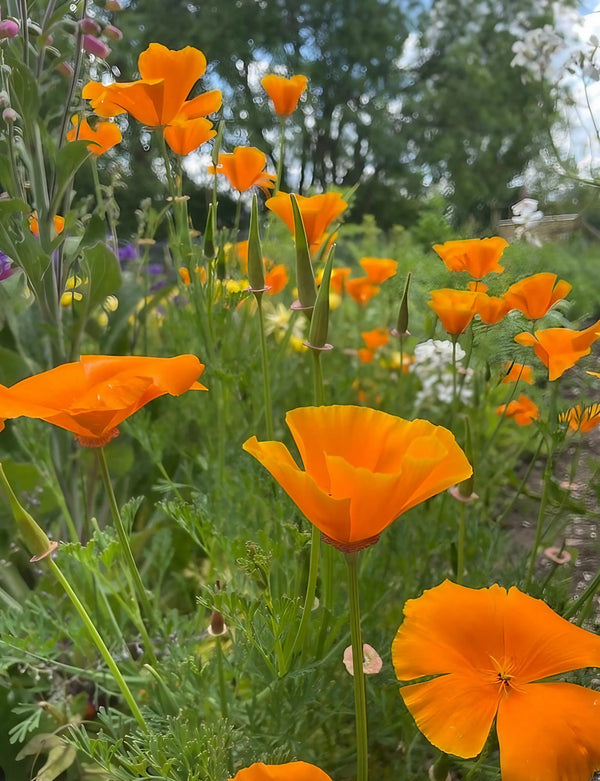
- ☀️ Californian Poppy 'Golden West': The California-Africa Alliance. This is a match made in desert heaven! Both plants are perfectly adapted to hot, dry, poor soil and thrive on neglect. The silky, golden-orange cups of Californian Poppy rising on wiry stems above the neon carpet of Livingstone Daisies creates a genuinely stunning, naturalistic display that looks like a Mediterranean hillside in full bloom. Both open and close in response to sunshine, creating synchronized daily performances. Plant them together in gravel gardens, rockeries, or any hot, dry bank where other plants struggle. They're both also prolific self-seeders, so once established they'll create ever-more-generous drifts year after year with zero effort from you!
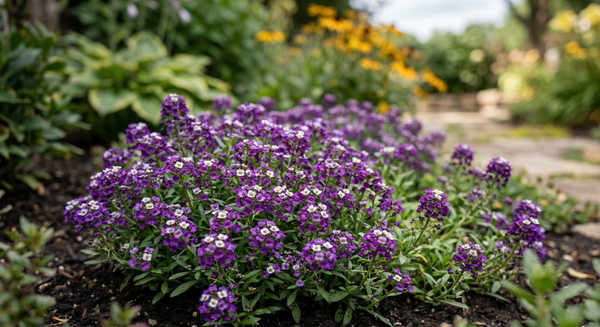
- 💜 Alyssum 'Royal Carpet': The Scented Purple Frame. Alyssum loves exactly the same conditions as Mesembryanthemum—rockery edges, gravel paths, containers, and poor soil. The dense, ground-hugging mounds of deep violet-purple flowers provide a continuous, honey-scented background that makes the shocking neon pinks, oranges, and yellows of the 'Harlequin' flowers absolutely pop with even more intensity. The colour combination is electric! Use Alyssum to edge pathways or define borders, then fill the interior with drifts of Mesembryanthemum for maximum impact. Both are incredibly low-maintenance and drought-tolerant once established.
📅 Sowing & Flowering Calendar
Sow indoors in early spring. Plant out in June (after frost). Flowers June to September.
| Month | J | F | M | A | M | J | J | A | S | O | N | D |
|---|---|---|---|---|---|---|---|---|---|---|---|---|
| Sow Indoors | ✓ | ✓ | ✓ | |||||||||
| Plant Out | ✓ | |||||||||||
| Flowering | ✓ | ✓ | ✓ | ✓ |
⚠️ Do NOT Overwater!
Mesembryanthemum is a true desert succulent. Soggy roots = instant death! Water sparingly when first planting out, then almost never. Let them get bone dry between waterings. In containers, drainage holes are absolutely essential. This is a genuine "thrive on neglect" plant—the more you ignore it, the better it performs!
🏆 Pollinator Lifesaver
Mesembryanthemum provides a vital nectar source for pollinators in hot, dry urban environments where many other plants struggle to produce flowers. In heat waves when traditional garden plants wilt and stop flowering, Livingstone Daisies absolutely thrive—making them a crucial backup food source for bees and butterflies during the toughest conditions. They're genuine climate-resilient pollinator plants!
📖 Want more detailed growing advice?
View our Complete Growing Guides →
- Regular price
-
£2.30 - Regular price
-
- Sale price
-
£2.30
Couldn't load pickup availability
5.0 / 5.0
(2) 2 total reviews


Mesembryanthemum Harlequin
- Regular price
-
£2.30 - Regular price
-
- Sale price
-
£2.30