
- Play video
Moluccella laevis 'Bells of Ireland' Seeds
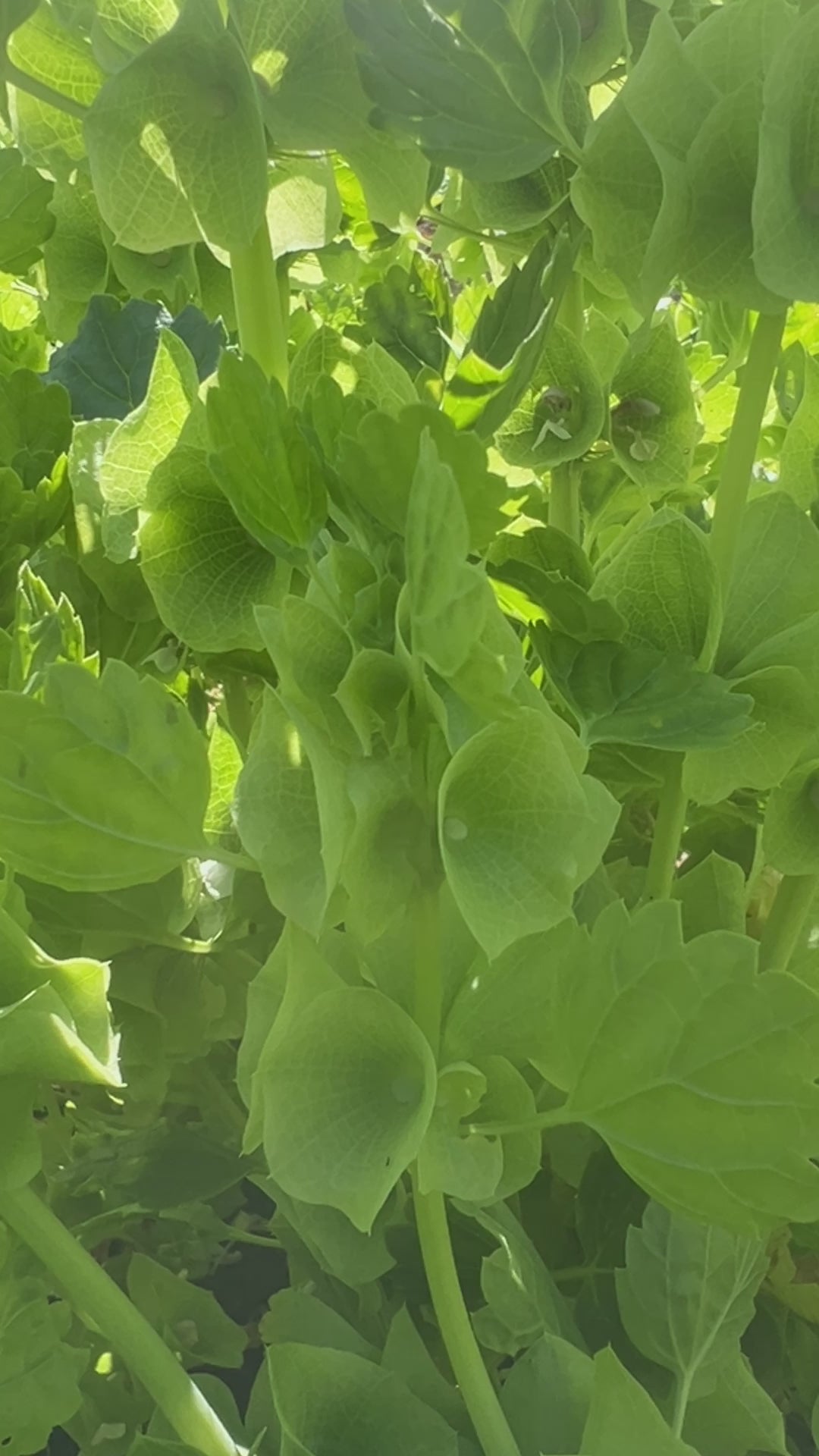
If you want to create professional-looking, florist-quality bouquets at home, you absolutely need 'Bells of Ireland' in your cutting garden. This unique and architectural annual produces tall, sturdy, vertical spires (60-75cm) absolutely stacked with vivid apple-green, shell-shaped bells or cups that spiral up the stem in perfect symmetry. Inside each green bell sits a tiny, intensely fragrant white flower, but it's the spectacular green structure—the enlarged calyx—that steals the show and provides the "wow" factor.
Bells of Ireland acts as a brilliant foil and mixer for virtually any other colour in arrangements—it makes hot pinks and oranges vibrate with intensity, causes cool blues and purples to appear deeper and richer, and provides fresh, zesty contrast to warm yellows and reds. It adds essential height, quirky architectural shape, and a lovely fresh, crisp, slightly minty scent to bouquets. Even better, the stems dry beautifully to a gorgeous pale straw-beige colour, making them an absolute staple for autumn and winter wreaths, dried displays, and everlasting arrangements that last for years!
Read More
🌿 Understanding the Plant
Moluccella laevis 'Bells of Ireland' is a Half-Hardy to Hardy Annual (H3), meaning it tolerates light frost but won't survive hard winter freezes.
The Name Confusion: Despite the wonderfully Irish name, Moluccella doesn't actually originate from Ireland at all! It's native to the Mediterranean region, particularly Turkey and Syria, and thrives in cool-summer climates rather than baking heat. The "Ireland" connection is purely a romantic Victorian naming convention, possibly referencing the vivid green colour.
What You're Actually Growing: The spectacular "bells" aren't petals—they're enlarged calyxes (the leaf-like structure that normally sits behind flowers). The actual flowers are tiny, white, and tubular, sitting inside each green bell and providing intense fragrance. It's the green bells that create the architectural beauty and make this plant so valuable to florists and arrangers.
The Hidden Thorns Warning: Here's something crucial to know before you grow it: underneath the leaves, the stems have small, sharp spines. These aren't immediately obvious when plants are growing, but when you harvest stems for arrangements, you'll discover them! Always wear gloves when stripping foliage. The good news is that once leaves are removed, the smooth stems reveal those gorgeous spiralling bells in all their glory.
Fragrance: The tiny white flowers inside each bell are genuinely fragrant—a fresh, slightly minty, green scent that's lovely in bouquets without being overpowering.
🌱 Growing Guide
Bells of Ireland has a reputation for being slightly tricky to germinate, but with the right techniques, success rates are excellent!
The Critical "Cold Trick":
Moluccella seeds have a hard coating and require a period of cold stratification to break dormancy and germinate reliably. For best results, place the sealed seed packet in your fridge (not freezer) for 7-14 days before sowing. This mimics winter conditions and significantly boosts germination rates. Don't skip this step!
How to Sow:
Sow indoors from February to April for earliest flowering. Surface sow seeds onto moist seed compost and do not cover them—Moluccella seeds are photoblastic (need light to germinate). Press seeds down gently onto the surface to ensure good contact with compost. Keep at 15-18°C (cool room temperature—avoid excessive heat). Germination can be slow and erratic, typically taking 21-28 days, so patience is essential!
The Transplanting Challenge:
Moluccella hates root disturbance and can sulk badly or even die if roots are damaged during transplanting. Always sow into individual modules or small pots (never seed trays) to minimise shock when planting out. Handle seedlings very gently, transplanting with the entire root ball intact.
Planting Out:
Plant out in late April to May once risk of hard frost has passed. Moluccella tolerates light frost but not severe freezes. Space plants 30cm apart. Harden off gradually over 7-10 days before planting.
Site Requirements:
Moluccella needs full sun and well-drained soil. Unlike many Mediterranean plants, it doesn't love baking heat—it actually performs best in cooler summer climates (perfect for the UK!). Soil should be moderately fertile and well-drained but moisture-retentive. Dig in some compost before planting.
Support Requirements:
This is crucial! The tall flower spikes (60-75cm) can become top-heavy and topple in wind, especially once laden with bells. Either:
• Grow plants through horizontal netting at 30-45cm height (best for cutting gardens—creates poker-straight stems)
• Stake individual plants with bamboo canes and soft ties
Support is essential for straight, professional-quality stems!
Harvesting for Fresh Arrangements:
Cut stems when most bells are fully formed and green but before they start fading. Cut in early morning when stems are fully hydrated. IMPORTANT: Wear gloves and strip off all foliage to reveal the smooth stems and spectacular bells. The spines are hidden under leaves! Condition stems in deep water for several hours before arranging. Fresh stems last 7-10 days in water.
Drying for Everlasting Arrangements:
Moluccella dries beautifully! For best results:
• Harvest stems when bells are fully formed and still bright green
• Strip all foliage (wear gloves!)
• Hang stems upside down in small bunches (3-5 stems) in a cool, dark, well-ventilated place
• CRITICAL: Dry in darkness! If dried in sunlight or bright conditions, the green bleaches to beige immediately. Darkness preserves the green colour initially, though it will gradually fade to attractive pale straw-beige over weeks to months
• Drying takes 2-3 weeks
• Dried stems last for years!
📋 Plant Specifications
| Botanical Name | Moluccella laevis |
| Common Names | Bells of Ireland, Shell Flower, Molucca Balm |
| Plant Type | Half-Hardy to Hardy Annual |
| Hardiness | H3 (Half-hardy - tolerates light frost) |
| Light Requirements | Full Sun ☀️ |
| Height | 60-75cm (24-30 inches) - tall architectural spires |
| Spread | 30cm (12 inches) |
| Spacing | Plant 30cm apart |
| Bell Colour | Vivid apple-green (fresh) to pale straw-beige (dried) |
| Flowering Period | July to September |
| Perfect For | ✂️ Professional Cut Flowers (florist essential) 🍂 Excellent for Drying (everlasting arrangements) 🍏 Fresh Green Foliage & Texture 💐 Bouquet Filler & Mixer 🌿 Architectural Interest 🎨 Colour Enhancer (makes other colours pop) |
| Seeds per Packet | Approximately 200 seeds |
🤝 Beautiful Garden Combinations
Bells of Ireland are the ultimate "mixer"—florists call them the perfect foil because the fresh green makes virtually any bright colour look more vibrant and sophisticated:
- 🌸 Zinnia 'Giants of California': The Hot Mix Partnership. This is a classic florist combination that creates high-impact, professional bouquets! The lime-green vertical spikes of Moluccella provide cooling, architectural contrast to the round, hot-coloured giant blooms of Zinnias in cherry red, orange, hot pink, purple, and yellow. The green acts as a sophisticated buffer that prevents the intense Zinnia colours from clashing or overwhelming—instead, it makes each colour appear more saturated and jewel-like. Both plants flower July-September, both need full sun, and both are exceptional cutting flowers with excellent vase life. In the garden, plant the taller Moluccella (60-75cm) at the back or middle with slightly shorter Zinnias (90-100cm can work together) for a vibrant, tropical-feeling display. In arrangements, the combination is unbeatable!
- 💜 Larkspur 'Giant Imperial Mix': The Cottage Spire Duo. For a more romantic, cottage-garden aesthetic, plant Bells of Ireland alongside Larkspur. Both plants produce tall, vertical, architectural spikes—Larkspur in violet, deep blue, rose pink, carmine, and white; Moluccella in vivid green. Planting these together creates a stunning rhythm and repetition of vertical form whilst providing contrasting colour. The purple and blue tones of Larkspur look richer and deeper against the fresh green of Moluccella. This pairing is particularly effective in cutting gardens where you want ready-made bouquet ingredients growing together. Both flower in early-to-mid summer, both benefit from support netting, and both have similar cultural requirements. The combination creates elegant, sophisticated arrangements with perfect balance of form and colour!
📅 Sowing & Flowering Calendar
Refrigerate seeds 7-14 days before sowing. Sow indoors spring. Flowers July-September.
| Month | J | F | M | A | M | J | J | A | S | O | N | D |
|---|---|---|---|---|---|---|---|---|---|---|---|---|
| Sow Indoors | ✓ | ✓ | ✓ | |||||||||
| Plant Out | ✓ | ✓ | ||||||||||
| Flowering | ✓ | ✓ | ✓ |
⚠️ Refrigerate Seeds First!
For best germination, refrigerate (not freeze) the sealed seed packet for 7-14 days before sowing. This cold stratification breaks dormancy. Then surface sow (don't cover—seeds need light) and be patient—germination takes 21-28 days!
🏆 RHS Award of Garden Merit
Moluccella laevis holds the prestigious RHS Award of Garden Merit, certifying it as a reliable, high-performing plant that excels in British gardens. This recognition confirms its value as an exceptional cut flower and garden plant!
📖 Want more detailed growing advice?
View our Complete Growing Guides →
- Regular price
-
£2.20 - Regular price
-
- Sale price
-
£2.20
Couldn't load pickup availability
5.0 / 5.0
(1) 1 total reviews


Bells of Ireland
- Regular price
-
£2.20 - Regular price
-
- Sale price
-
£2.20