Skip to product information
1 of 8

Basil 'Thai Large Leaf' Seeds (Sweet Thai)

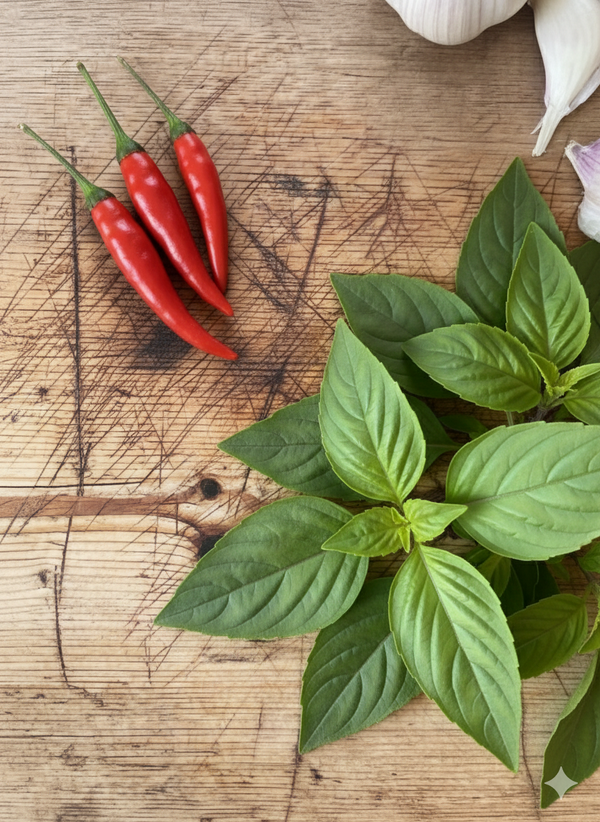
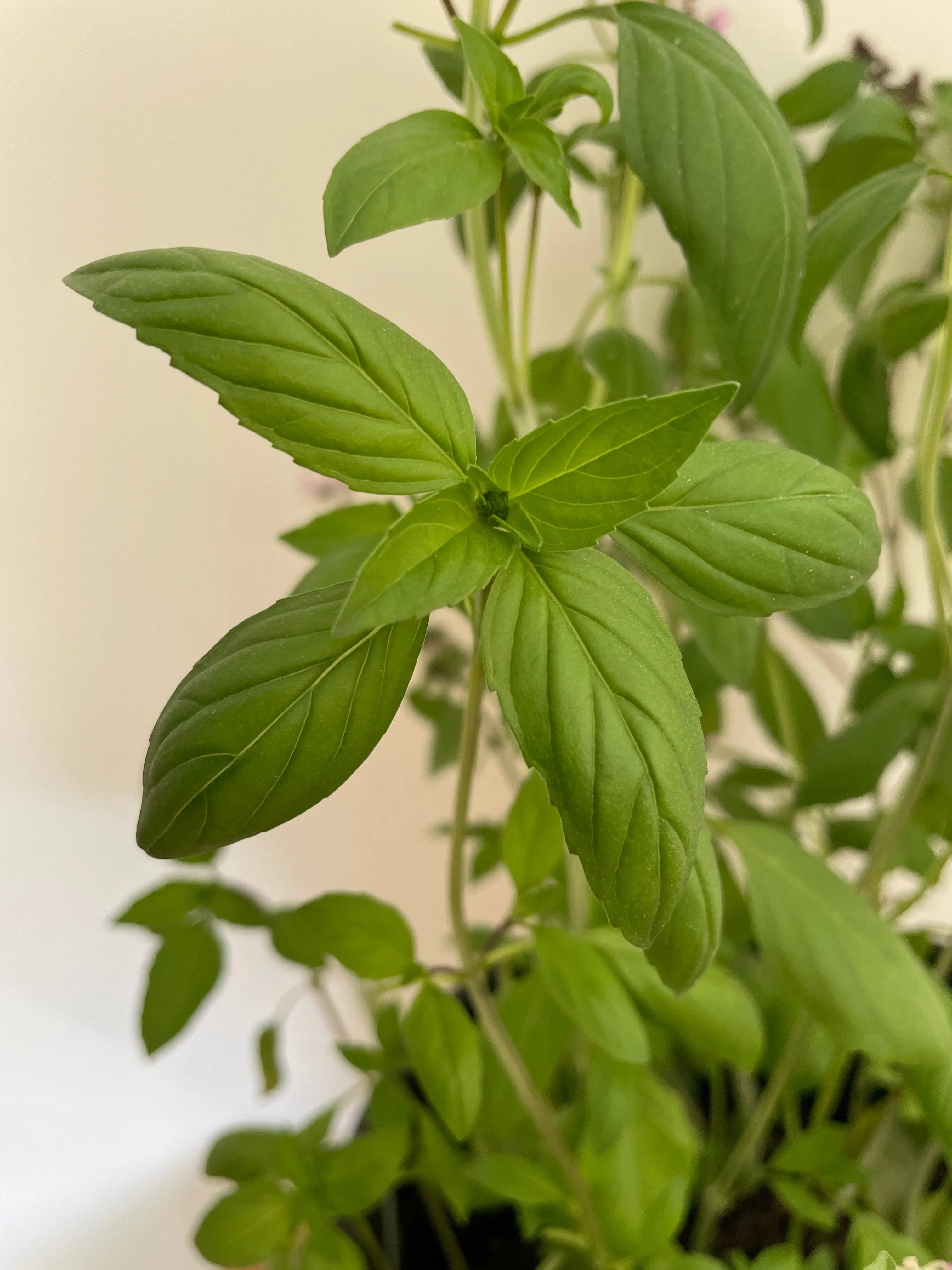
Ocimum basilicum var. thyrsiflora, or Sweet Thai Basil, is quite distinct from its Italian cousin. It has sturdy, purple-tinted stems and pointed leaves that release a heavy, heady scent of aniseed, liquorice, and clove.

This is the authentic variety used in Thai Green and Red curries (known as Horapa in Thailand). It holds its shape better than Italian basil when cooked and infuses sauces with that unmistakable sweet-savoury aromatic note that defines Southeast Asian cuisine.

Why Your Garden Needs 'Thai Large Leaf'

Aside from being a kitchen essential for curry lovers, this is a strikingly beautiful plant. The contrast between the emerald green leaves and the deep purple stems is lovely in a potager or a sunny window box.

It is also incredibly vigorous. 'Thai Large Leaf' tends to be slightly more robust and woody than soft Italian basil, making it stand up a little better to the heat of a greenhouse or a sunny patio. If you let it flower, it produces gorgeous purple-tinged spikes that bees absolutely adore.

Understanding the Plant: What is a Tender Annual?

Thai Basil is a Tender Annual.

Like all basils, it is a sun-worshipper that originates from the tropics. It cannot tolerate frost or cold, wet feet. You sow it in the warmth of spring, harvest it throughout the hot summer months, and let it go when the cold weather returns. It thrives best when treated to the warmest spot you can offer it.

Growing Guide: How to Sow and Grow

Thai Basil loves heat. Give it warmth, and it will reward you with rapid growth.

🌱 Germination:
Sow indoors from March to May. The seeds need warmth (20-25°C) to wake up. Sow them on the surface of moist compost and cover with a fine dusting of vermiculite (light helps germination). A heated propagator is ideal, but a sunny south-facing windowsill works too.

Where to Sow:
Always start in pots or modules. Do not plant outside until June when the nights are warm. It loves a greenhouse, a polytunnel, or a sunny patio pot where the roots can stay warm.

Care While Growing:
The Pinch: This is crucial for Thai Basil. When the plant is about 15cm tall, pinch out the central growing tip. This forces the plant to bush out and creates a sturdy, productive shrub rather than a tall, spindly stem. Keep picking the leaves to prevent it from flowering too early.

Plant Specifications

Here is a quick reference guide to the key features, helping you decide if this aromatic herb is the right fit for your garden.

Latin Name Ocimum basilicum var. thyrsiflora
Common Name Thai Basil, Sweet Thai, Horapa
Hardiness H1c (Tender - needs min 10°C)
Light Required Full Sun (Sheltered)
Height ↕️ 45cm – 50cm
Spread ↔️ 30cm – 40cm
Spacing 🌱 30cm apart
Great for 🍛 Thai Green Curry
🍜 Noodle soups (Pho)
💜 Ornamental veg gardens
🏺 Pot culture
Seed Count Approx. 300 seeds per packet

My Recommended Garden Companions

Thai Basil loves company in the vegetable patch, particularly plants that love the sun and help keep pests away. Here are my top pairings from the shop:

  • 🏵️ French Marigolds (Tagetes): The pungent scent of Marigolds helps mask the sweet smell of basil from pests like whitefly. Plus, the orange flowers look stunning against the purple stems of the Thai Basil.
  • 🟠 Calendula (Pot Marigold): A must-have for any kitchen garden. Calendula draws in hoverflies which eat aphids, acting as a natural security team for your precious herbs.

📅 Sowing & Harvesting Calendar

Sow little and often. Harvest leaves continuously to prevent flowering and keep the flavour sweet.

(↔️ Swipe chart to see all months)

Month J F M A M J J A S O N D
Sow Indoors 🟢 🟢 🟢 🟢
Harvest ✂️ ✂️ ✂️ ✂️ ✂️

⚠️ A Flavour Note
Be aware that Thai Basil has a distinct aniseed/liquorice flavour. While it is perfect for Asian dishes, it tastes very different to Italian basil, so it might not be the best choice for a traditional tomato pasta sauce!

🏆 Officially Recognised Excellence

Ocimum basilicum (Sweet Basil varieties) are listed on the RHS Plants for Pollinators list. If you allow your Thai Basil to flower late in the season, it becomes a wonderful nectar source for garden bees.

Regular price
£2.00
Regular price
Sale price
£2.00
Tax included. Shipping calculated at checkout.
    A &
    Fresh Thai Basil leaves used as a garnish on a curry.
    Basil leaves on a textured surface with gold spoons
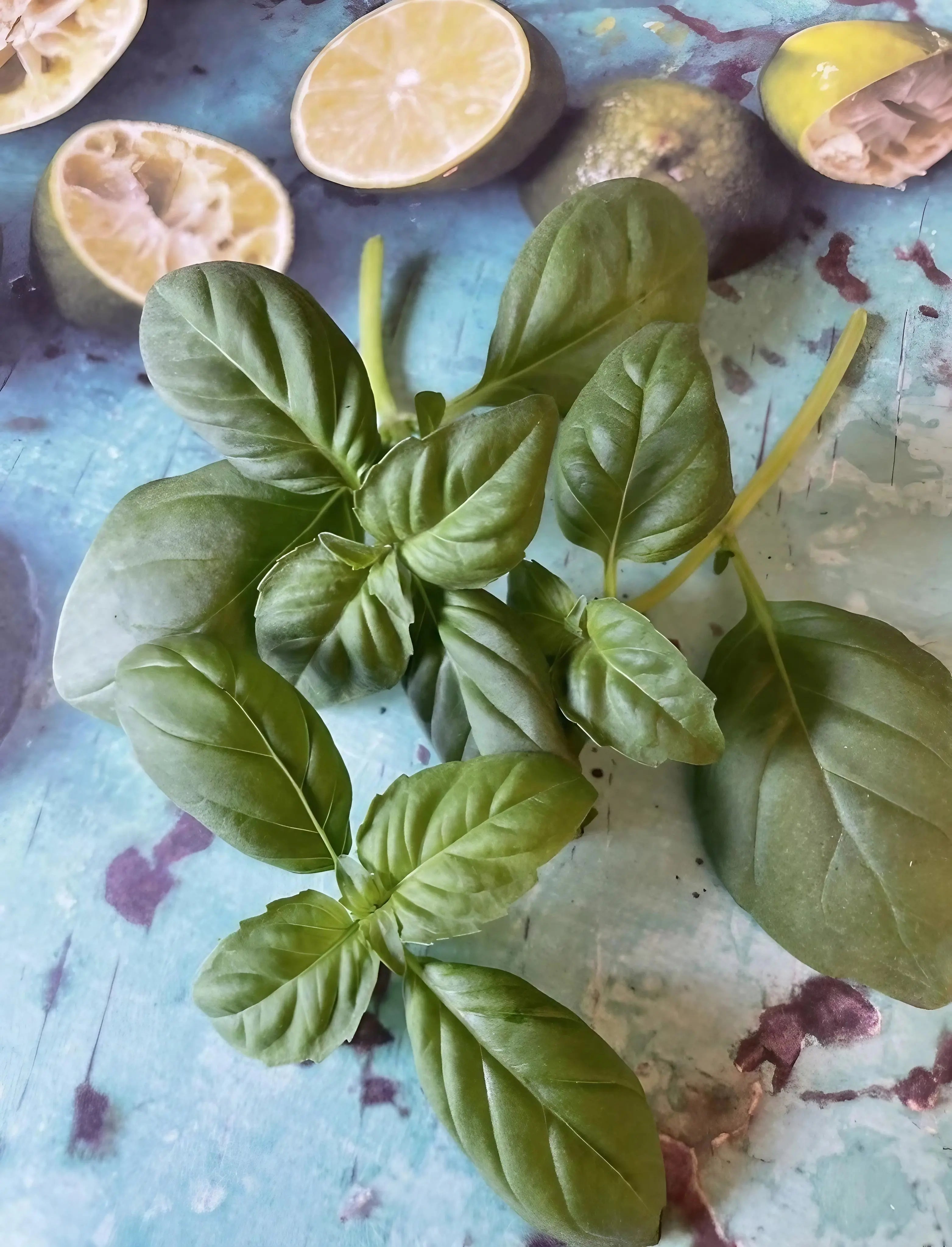
    Basil leaves and limes on a textured blue surface
    Close-up of a basil plant with green leaves and purple flowers.
    Close-up of green basil leaves with a blurred background
    Purple flowers with green leaves on a light gray background
    Basil Thai Large Leaf