Skip to product information
1 of 3

Holy Basil Seeds (Tulsi / Kaprao)

Many gardeners buy "Thai Basil" expecting this plant, only to receive the aniseed-flavoured variety used in green curries. This is the real deal: Holy Basil—known as Kaprao in Thailand and Tulsi in India—a herb steeped in thousands of years of culinary, medicinal, and spiritual tradition. Unlike the glossy-leaved, liquorice-scented sweet Thai basil, Holy Basil has slightly hairy, serrated leaves with purple-tinged stems and an intensely complex flavour profile: peppery, spicy, with strong notes of clove, camphor, and a hint of mint. This isn't the basil you tear over Margherita pizza—this is the only herb for Thailand's most iconic street food, Pad Kra Pao (Holy Basil Stir-Fry), where the leaves are thrown into a searingly hot wok at the last second, releasing their extraordinary aromatic oils.

In India, Tulsi holds sacred status. It's grown in virtually every Hindu household, often in a special pedestal planter (called a tulsi vrindavan) positioned in the centre of the home or courtyard. It's worshipped as a living embodiment of the goddess Lakshmi, and its leaves are brewed into a medicinal tea believed to reduce stress, boost immunity, and promote longevity—science is now catching up to what Ayurvedic practitioners have known for millennia! The plant itself is striking: bushy and compact (30-45cm tall), with deeply veined, slightly fuzzy leaves on purple stems, topped with delicate spires of pink-purple flowers that bees adore. Growing Holy Basil connects you to ancient traditions spanning continents—from Thai street markets to Indian temple gardens—all from a sunny windowsill in your UK home!


Read More

🌿 Understanding the Plant

Holy Basil (Ocimum tenuiflorum, syn. O. sanctum) is a Tropical Perennial grown as a tender annual in the UK.

The Great Basil Confusion – Kaprao vs. Horapa:
There are THREE main basils used in Asian cooking, and they're often confused or mislabelled in Western seed catalogues:

1. Sweet Thai Basil (Horapa) - Ocimum basilicum var. thyrsiflora:
- Glossy, smooth, bright green leaves
- Sweet anise/liquorice flavour
- Used in green curries, pho, Vietnamese spring rolls
- Purple stems and flowers
- This is what most "Thai Basil" seeds actually are!

2. Holy Basil (Kaprao/Tulsi) - Ocimum tenuiflorum - THIS SEED:
- Hairy, serrated, dull green leaves (often with purple edges)
- Peppery, clove-like, slightly camphor flavour
- Used in Pad Kra Pao (stir-fries), Indian medicinal teas
- Purple stems and pink-purple flowers
- Grows slower and needs more heat than other basils

3. Lemon Basil (Maenglak) - Ocimum × citriodorum:
- Narrow, matte green leaves
- Lemony-basil flavour
- Used in soups, seafood dishes

If you want authentic Pad Kra Pao Gai (the famous Thai minced chicken stir-fry with crispy fried egg), you MUST use Holy Basil—no substitutions! The unique peppery-clove flavour is essential to the dish.

The Sacred "Queen of Herbs":
In Hindu tradition, Tulsi isn't just a herb—it's a living goddess. According to ancient Vedic texts, Tulsi represents Lakshmi (goddess of wealth and prosperity) after the mythical churning of the cosmic ocean. The plant is grown in every devout Hindu home, often on a raised pedestal, and worshipped daily with offerings of water and prayers. Plucking leaves requires a respectful approach—traditionally done in the morning after offering prayers. The plant is considered so sacred that it's placed with the deceased as a blessing for their journey. This isn't superstition—it's a 5,000-year-old cultural tradition that recognizes the plant's genuine medicinal power.

The Adaptogen Powerhouse:
Modern science has validated what Ayurvedic medicine has taught for millennia: Tulsi is an "adaptogen"—a rare class of herbs that help the body adapt to stress and restore balance. Scientific studies have shown Holy Basil contains compounds (eugenol, rosmarinic acid, apigenin) with:
- Anti-inflammatory properties
- Immune-boosting effects
- Stress-reducing capabilities (cortisol regulation)
- Antioxidant activity
- Antimicrobial action
Fresh or dried Tulsi leaves steeped in hot water create a healing tea that's been used for centuries to treat coughs, colds, digestive issues, and anxiety. In India, children are given Tulsi tea at the first sign of a cold!

The Botanical Differences from Sweet Basil:
Holy Basil belongs to the same genus as sweet Italian basil (Ocimum) but is a different species with distinct characteristics:
- Leaf texture: Hairy and slightly rough (vs. smooth and glossy in Genovese basil)
- Leaf shape: Serrated/toothed edges (vs. smooth edges in sweet basil)
- Growth rate: Slower and bushier (vs. fast and upright in sweet basil)
- Heat requirements: Needs higher temperatures—thrives at 25-30°C (vs. 20-25°C for sweet basil)
- Flavour intensity: Much more pungent and spicy (vs. sweet and mild in Genovese)
- Flowering habit: Wants to flower quickly (pinch constantly to keep leafy!)
- Lifespan: Perennial in tropical climates (vs. strictly annual for Genovese)

The Varieties of Tulsi:
There are several varieties of Holy Basil, each with slightly different characteristics:
- Rama Tulsi (Green/Bright Tulsi): Green leaves, milder flavour, most common variety (likely what these seeds are)
- Krishna Tulsi (Purple Tulsi): Purple-tinged leaves, more intense flavour, slower growing
- Vana Tulsi (Wild/Forest Tulsi): Larger plant, can become a woody shrub in warm climates
All varieties have similar medicinal properties and can be used interchangeably in cooking and tea.

The Challenge for UK Growers:
Holy Basil is genuinely more challenging than sweet Italian basil because it evolved in hot, humid tropical climates (think monsoon-season India or steamy Bangkok markets). It needs:
- Higher germination temperatures (22-25°C vs. 18-20°C for Genovese)
- Longer germination time (14-21 days vs. 5-10 days)
- More consistent warmth throughout growth
- Higher humidity levels
For UK growers, this means Holy Basil is best grown as an indoor/greenhouse herb rather than an outdoor summer crop. Windowsill growing year-round is actually ideal!

🌱 Growing Guide

Holy Basil is more challenging than sweet Italian basil—it's slower to germinate, slower to grow, and much fussier about temperature and humidity. But for authentic Thai cooking or Ayurvedic tea, there's no substitute! Here's how to succeed:

When to Sow:
Indoor Sowing (April to June): Sow later than other basils—from mid-April through May. Holy Basil needs genuinely warm conditions to germinate and won't perform well if sown too early when temperatures are still cool.
Year-Round Windowsill Growing: The best approach for UK gardeners! Sow anytime for continuous indoor growing. Holy Basil actually thrives on sunny windowsills where you can control temperature and humidity.
Outdoor Growing: Only attempt outdoors in the very warmest UK regions during heatwave summers. Generally not recommended—greenhouse or conservatory growing is much more successful.

How to Sow:
CRITICAL: Holy Basil needs warmth AND light to germinate!

1. Use sterile seed-starting compost in small pots or modules (Holy Basil is prone to damping-off)
2. Water compost thoroughly and let drain
3. Scatter seeds thinly on the surface (4-5 seeds per module maximum)
4. Cover with the thinnest possible layer of vermiculite (1mm maximum—seeds need light!)
5. Place in a heated propagator or very warm location (22-25°C is optimal; won't germinate reliably below 20°C)
6. Keep compost consistently moist but not waterlogged (use a spray bottle)
7. Be patient! Germination takes 14-21 days (sometimes up to 3 weeks), much slower than Genovese basil
8. Once seedlings emerge, provide excellent ventilation and very bright light

The Delicate Seedling Stage:
Holy Basil seedlings are more delicate and slow-growing than other basils. They're particularly vulnerable in the first few weeks:
- Damping-off disease: The #1 killer of Holy Basil seedlings. Prevent it with excellent air circulation, sterile compost, morning-only watering, and avoiding overcrowding
- Slow growth: Don't panic if seedlings seem to sit still for 2-3 weeks—this is normal! They're developing roots
- Thin carefully: Once seedlings have 2 true leaves, thin to one strong plant per module
- Keep warm: Don't let temperatures drop below 15°C at night

The Essential "Pinching" Routine:
Holy Basil has a strong urge to flower—much stronger than sweet basil. It wants to rush to seed because it evolved as a short-lived perennial in seasonal tropical climates. To keep it producing leaves rather than flowers:
- First pinch: When plants have 3-4 sets of true leaves, pinch out the growing tip. This forces branching
- Ongoing pinching: Every 1-2 weeks, pinch out any flower buds the INSTANT they appear (they look like tiny spikes forming at stem tips)
- Be ruthless! If you let even one flower spike develop, the whole plant switches to reproduction mode and leaf production plummets
- Each pinch creates two new growing points, leading to a bushier plant with more harvestable leaves

Container Growing (Strongly Recommended for UK!):
Holy Basil is genuinely better in containers than in the ground for UK conditions:
Why containers work better:
- You can move pots indoors when temperatures drop
- You can provide consistent warmth and humidity
- Containers warm up faster than garden soil
- You can create a "mini-greenhouse" effect with a clear plastic bag over pots
Pot specifications:
- Minimum 20cm (8-inch) diameter for one plant; 30cm (12-inch) for 2-3 plants
- Use rich, well-draining compost (loam-based like John Innes No. 2 is ideal)
- Excellent drainage essential (add 3cm gravel layer at bottom)
- Terracotta pots work well (they breathe, preventing root rot)

Ideal Growing Conditions:
Light: Bright, direct sunlight minimum 6 hours daily (south-facing windowsill ideal)
Temperature:
- Optimal: 25-30°C (the hotter, the happier!)
- Minimum: 15°C (below this, growth stops)
- Fatal: 5°C or frost (instant death)
Humidity: Holy Basil loves humidity (50-70% ideal). Increase humidity by:
- Grouping plants together (they create their own microclimate)
- Placing pots on pebble trays filled with water
- Misting gently in mornings
- Growing in bathrooms or kitchens (naturally more humid)

Watering:
Holy Basil has very specific watering needs—it's fussier than sweet basil:
- Soil should be "just moist" but NEVER waterlogged (roots rot easily)
- Water when top 2-3cm of soil feels dry to touch
- ALWAYS water at the base, never overhead! Wet leaves = fungal diseases
- Water in morning only (never at night)
- In hot weather, may need daily watering
- Underwatering symptoms: wilting, leaf drop
- Overwatering symptoms: yellow leaves, mushy stems, mildew

Feeding:
Holy Basil appreciates feeding but doesn't need as much as Genovese basil:
- Feed every 3-4 weeks during active growth (May-September)
- Use balanced liquid fertilizer (seaweed extract or diluted fish emulsion)
- Don't over-feed (causes lush growth susceptible to pests)
- Indoor plants benefit from occasional foliar feeding (spray diluted fertilizer on leaves)

Harvesting:
When to start: Begin harvesting when plants are 15-20cm tall (usually 8-10 weeks from sowing—slower than Genovese!)
How to harvest:
- Always harvest from the top, cutting just above a leaf pair (encourages branching)
- Never remove more than 1/3 of the plant at once
- Harvest regularly—the more you pick, the bushier it grows
- For tea, harvest in morning after dew dries but before heat of day (highest essential oil content)
- For cooking, harvest just before using (flavour degrades quickly after cutting)
What to harvest:
- Young leaves (most tender for cooking)
- Flower buds (pinch these off anyway—may as well use them! Intensely flavoured)
- Flowers themselves are edible (pretty pink-purple garnish with concentrated flavour)

Outdoor Planting (Advanced/Warm Regions Only):
Only attempt outdoor planting if:
- You're in a very warm, sheltered UK microclimate
- You have a greenhouse or polytunnel
- Nighttime temperatures stay consistently above 15°C
Method:
- Harden off gradually over 2 weeks
- Plant out only after soil has genuinely warmed (late June earliest)
- Choose warmest, most sheltered spot (south-facing wall ideal)
- Space 25-30cm apart
- Mulch with black plastic or fabric to keep soil warm
- Be prepared to cover with fleece if temperatures drop
- Bring plants indoors at first sign of autumn (late September)

Overwintering (Indoor Plants):
In warm climates, Holy Basil is a perennial. In the UK, you can keep plants alive indoors over winter:
- Move plants to warmest, brightest spot (south-facing window)
- Reduce watering (keep barely moist)
- Stop feeding
- Growth will slow or stop—this is normal
- Pinch out any weak, leggy growth
- Plants often become woody and less productive, so many growers prefer sowing fresh each spring

📏 Plant Specifications
Common Name: Holy Basil, Tulsi, Kaprao, Sacred Basil
Botanical Name: Ocimum tenuiflorum (syn. O. sanctum)
Plant Type: Tropical Perennial (grown as tender annual in UK)
Height: 30-45cm (12-18 inches); can reach 60cm in ideal conditions
Spread: 30-40cm when pinched regularly
Leaf Size: 3-5cm long, serrated/toothed edges, slightly hairy texture
Leaf Colour: Dull green with purple-tinged edges and veins (Rama variety); purple-green (Krishna variety)
Stem Colour: Purple to purple-green, often hairy
Flavour Profile: Peppery, spicy with strong notes of clove, camphor, and subtle mint undertones
Flowers: Small pink-purple to white flowers in tall spikes (edible, loved by pollinators)
Sunlight: Full sun (minimum 6-8 hours daily); tolerates partial shade in very hot climates
Soil: Rich, well-drained, moderately fertile; pH 6.0-7.5
Hardiness: H1c (Very Tender - killed by frost; needs minimum 15°C to thrive)
Germination Time: 14-21 days at 22-25°C (slower than sweet basil!)
Germination Temperature: Optimal 22-25°C (25-30°C for fastest germination); won't germinate reliably below 20°C
Time to First Harvest: 8-12 weeks from sowing (slower than Genovese basil)
Sowing Depth: Surface sowing (barely cover with 1mm vermiculite - needs light to germinate!)
Spacing: 25-30cm (10-12 inches) apart
Pests & Diseases: Damping-off (seedlings), aphids, whitefly, Japanese beetles, downy mildew
Attracts: Bees, butterflies, beneficial insects (when flowering)
Best Uses: Pad Kra Pao (Thai stir-fries), medicinal tea, Ayurvedic remedies, stress relief, immune support, sacred/spiritual use
Seeds per Packet: Approximately 100 seeds
🎨 Perfect Garden Companions

Holy Basil thrives alongside other heat-loving plants that share its cultural requirements. Here are the best growing companions:

  • 🌶️ Chillies (Bird's Eye, Thai Chilli) - The Pad Kra Pao Bed
    This is THE ultimate companion planting combination for authentic Thai cooking! Holy Basil and Thai chillies are the two essential ingredients in Pad Kra Pao (Thailand's most popular street food stir-fry). Growing them together creates a complete "meal in a pot"—you'll have both key ingredients fresh at hand whenever you want to cook! Culturally, they're perfectly matched: both are tropical heat-lovers that thrive in the same conditions (25-30°C, full sun, moderate moisture). Both need frequent pinching to stay bushy and productive. Plant chillies and Holy Basil together in large containers (minimum 40cm diameter for one chilli plant with 2-3 Holy Basil plants around the edges). The chilli plant provides some light shade during the hottest part of the day, while Holy Basil's aromatic oils may help confuse aphids and other chilli pests. Indoor windowsill growers: put your chilli and Holy Basil pots side-by-side on a south-facing windowsill for a year-round "Thai kitchen garden"!
  • 🥒 Cucumbers - The Humidity Partners
    Holy Basil and cucumbers are "jungle friends"—both evolved in warm, humid tropical environments and thrive in similar conditions. Cucumbers love humidity (50-70%) and warmth (20-30°C), exactly what Holy Basil needs! In a greenhouse or polytunnel, growing Holy Basil beneath or alongside cucumber plants creates a beneficial microclimate: the cucumber's large leaves provide light dappled shade during scorching midday heat (preventing Holy Basil from heat stress), while the cucumber benefits from the increased air circulation around its base (reducing powdery mildew risk). Holy Basil flowers attract pollinators (bees and hoverflies) which are essential for pollinating cucumber flowers. Both plants appreciate consistent moisture but hate waterlogged soil. Cultural tip: in greenhouses, plant Holy Basil in pots placed between cucumber plants rather than planting directly in soil (easier to manage watering needs).
  • 🍅 Tomatoes - The Warmth-Loving Trio
    The classic Mediterranean trio (tomatoes, sweet basil, peppers) has an Asian equivalent: tomatoes, Holy Basil, and chillies! All three are heat-loving members of the Solanaceae and Lamiaceae families that thrive in warm, sunny conditions. Growing Holy Basil near tomatoes offers several benefits: (1) Holy Basil's strong clove-camphor scent confuses whitefly, aphids, and other tomato pests. (2) Holy Basil flowers attract beneficial insects including parasitic wasps and hoverflies whose larvae eat tomato pests. (3) Tomato plants provide some wind protection for the more delicate Holy Basil. (4) In greenhouses, they create a mutually beneficial warm, humid microclimate. Plant Holy Basil in between tomato plants at 30cm spacing, or grow in pots placed amongst tomato grow bags. Cultural note: Holy Basil needs more warmth than tomatoes, so this works best in greenhouses or very warm summers.
  • 🌿 Lemongrass - The Southeast Asian Kitchen Garden
    For a complete Southeast Asian herb garden, pair Holy Basil with lemongrass! Both are tropical perennials (grown as annuals in the UK), both love heat and humidity, and both are essential to Thai and Vietnamese cooking. Lemongrass and Holy Basil have different growth habits (lemongrass is tall and grass-like; Holy Basil is short and bushy) so they complement each other visually and don't compete for space. Plant lemongrass at the back/center of a large container with Holy Basil around the front edges. Both appreciate being brought indoors for winter. Both can be harvested regularly without harming the plant. Cultural requirements are identical: full sun, warm temperatures (20-30°C), rich well-drained soil, consistent moisture. Add Thai chillies to complete the trio!
  • 🌺 Marigolds (Tagetes) - The Pest Protection Squad
    Compact French Marigolds make excellent companions for Holy Basil, especially in containers. Marigolds serve multiple purposes: (1) Their bright orange/yellow flowers attract hoverflies and ladybirds whose larvae devour aphids (Holy Basil's primary pest). (2) Marigolds emit compounds from their roots that repel nematodes and other soil pests. (3) The combination of purple-green Holy Basil foliage with bright marigold flowers is visually stunning. (4) Both plants love full sun and warm conditions. (5) Marigolds can tolerate slightly drier soil, so if you accidentally underwater your container, the marigolds act as an early warning system (they'll wilt first, alerting you before Holy Basil is stressed). Plant 2-3 compact marigolds around the edge of large pots containing Holy Basil—they create a protective "living mulch" while adding color and pest protection!

💡 Companion Planting Tip: Because Holy Basil is so heat-loving and fussy about temperature, your best companion planting success comes from grouping it with other tropical heat-lovers in containers that can be moved indoors/outdoors as needed. Create a "Southeast Asian Kitchen Garden" container collection: one large pot with chillies and Holy Basil, another with lemongrass and coriander, all positioned together on a warm, sheltered patio or in a greenhouse. The grouped pots create their own warm, humid microclimate!

📅 Sowing & Harvesting Calendar
Activity Jan Feb Mar Apr May Jun Jul Aug Sep Oct Nov Dec
Sow Indoors
Greenhouse/Indoor Growing
Harvest

⚠️ How to Use Holy Basil
In Cooking: Unlike sweet Italian basil (which turns bitter when cooked), Holy Basil is ROBUST! Throw a generous handful of leaves into a searingly hot wok at the very last second of stir-frying—the intense heat releases the incredible peppery-clove oils. This is essential for authentic Pad Kra Pao!
For Wellness Tea: Steep 8-10 fresh leaves (or 1-2 teaspoons dried) in hot water for 5-10 minutes. Drink daily for traditional stress relief and immune support. The flowers are even more potent!

🕉️ The Sacred Herb

As Tulsi, this herb has been revered for over 5,000 years in Hindu tradition. It's grown in virtually every devout household in India, often on a raised pedestal called a tulsi vrindavan, and worshipped daily as a living embodiment of the goddess Lakshmi. Ayurvedic medicine recognizes Tulsi as an "adaptogen"—a rare class of herbs that help the body adapt to stress and restore balance. Modern science has validated its genuine medicinal properties: compounds like eugenol (also in cloves) provide anti-inflammatory, antioxidant, and immune-boosting effects. Whether you grow it for spiritual practice, medicinal tea, or authentic Thai cooking, Holy Basil connects you to ancient wisdom!

📖 Want more detailed growing advice?
View our Complete Growing Guides →

Regular price
£2.00
Regular price
Sale price
£2.00
Tax included. Shipping calculated at checkout.

    1 total reviews

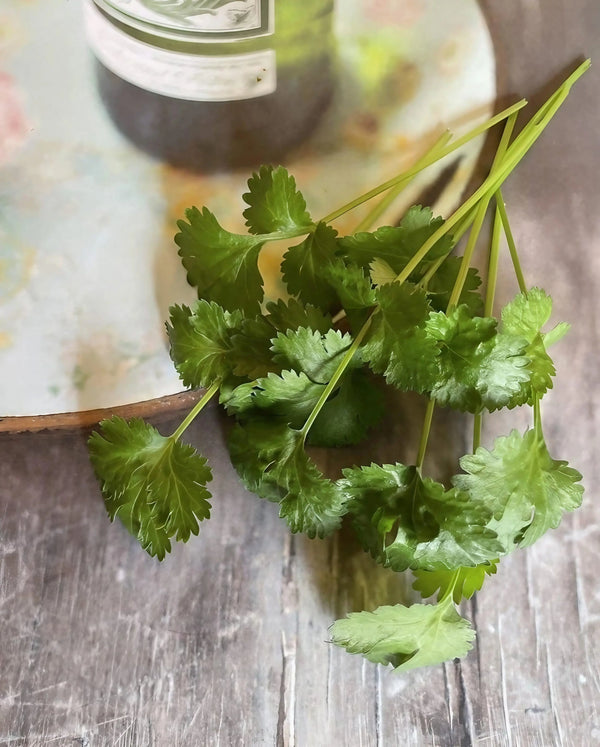
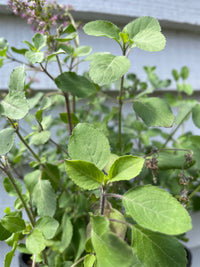
    A Holy Basil (Tulsi) plant showing its leaves and purple flowers.
    Holy Basil leaves on a white background
    Fresh Holy Basil leaves harvested for tea or cooking.