

Anchusa 'Blue Angel' Seeds
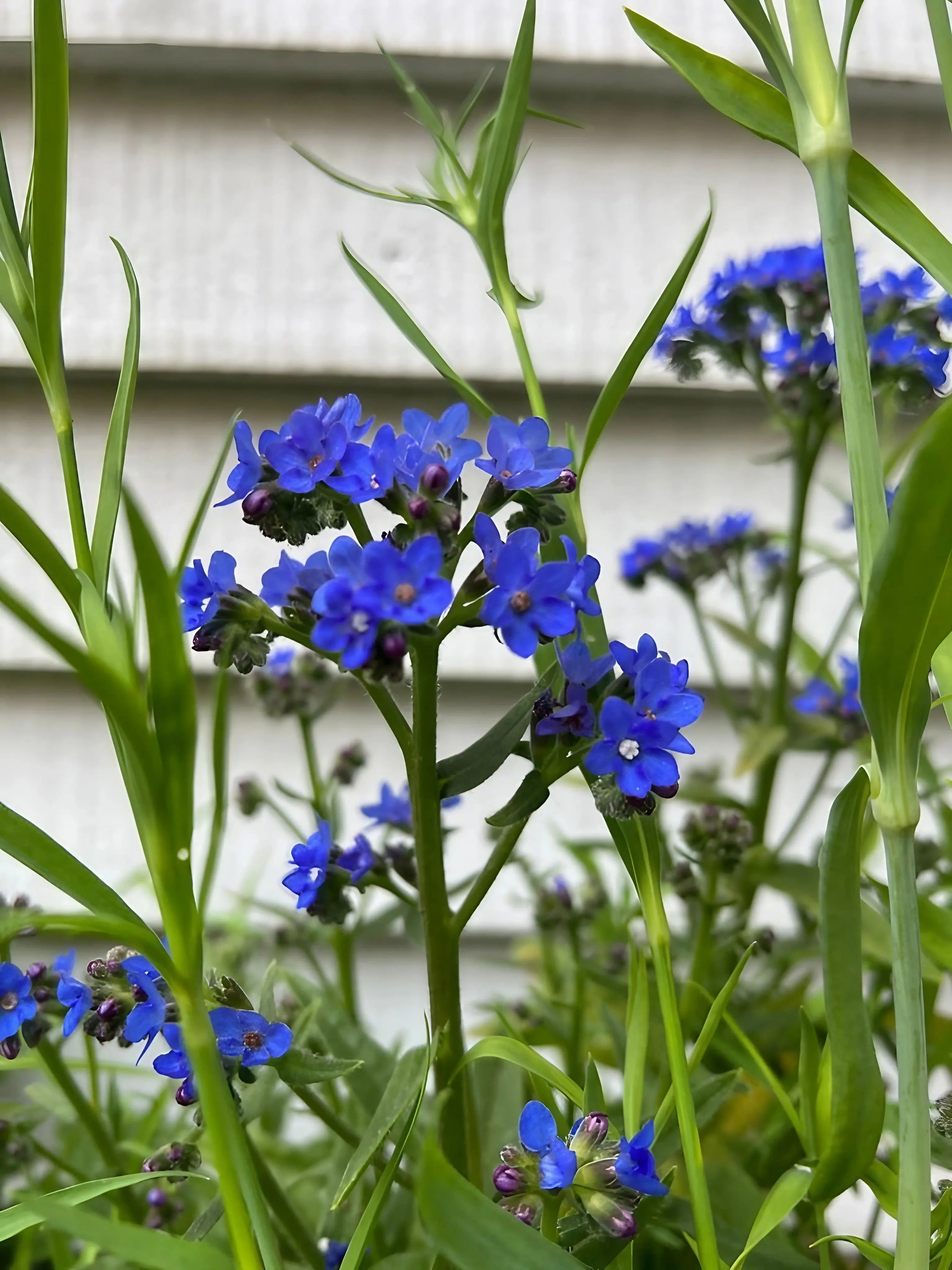
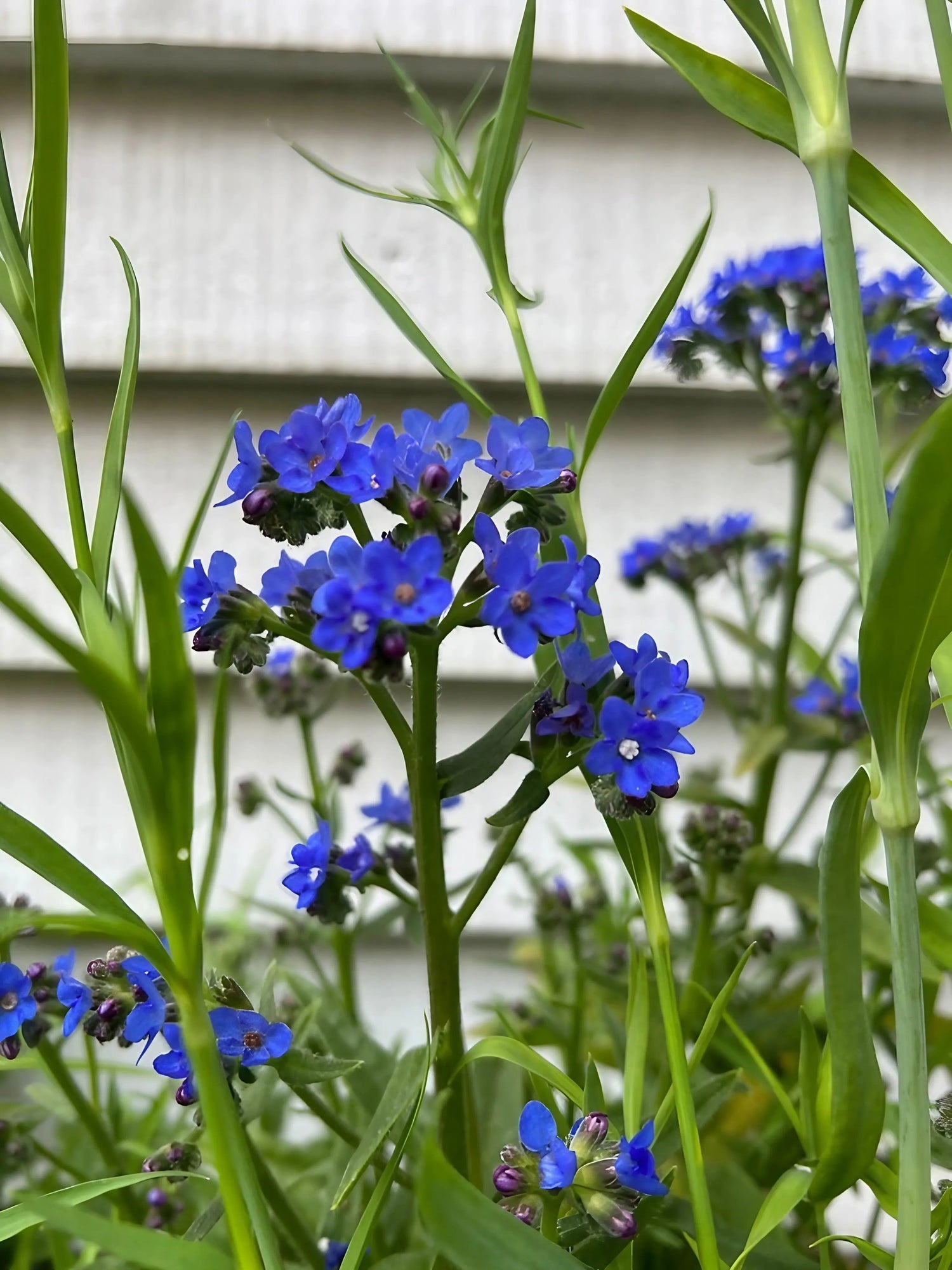
A genuinely true blue — not purple-blue, not violet-blue, but an intense, saturated, ultramarine blue of extraordinary clarity that stops visitors in the garden and draws bees from a distance, produced on a compact, drought-tolerant, low-maintenance plant that thrives precisely where most others struggle.
True blue is rarer in the flower world than it sounds. The pigment chemistry of plants means that most so-called blue flowers are actually producing violet, lilac, or blue-purple — beautiful colours, but not the saturated, unequivocal blue that photographs show and the eye searches for. Anchusa 'Blue Angel' is one of the genuine exceptions. Its small, star-shaped flowers produce a delphinidin-based pigment of exceptional concentration and purity — a vivid, almost paint-box ultramarine that is as saturated as cornflower blue but more compact and more continuously produced, and that remains intense and clear even in the strongest summer sun rather than fading to the pale lavender that weaker blue pigments become under UV exposure.
It is also, practically, one of the most accommodating plants in the range for difficult positions. As a South African Cape native adapted to arid, thin-soiled environments, 'Blue Angel' performs best in precisely the conditions that challenge most ornamental plants — full sun, poor drainage, dry periods, gritty or sandy soil. It will grow in a gravel garden with near-zero maintenance, in a hot dry border where other annuals wilt by August, in a container on a south-facing wall that other plants find too punishing. At 30–45cm it is compact enough for border fronts and container planting, and the mid-summer shearing that refreshes its display requires no more than five minutes with a pair of scissors and is repaid within two weeks with a fresh flush of intense blue stars.
🌿 Understanding the Plant
Anchusa capensis 'Blue Angel' is a Hardy Annual (H3) — the Cape forget-me-not, a South African native belonging to the Boraginaceae (borage) family, and a holder of the RHS Plants for Pollinators designation. It produces compact, mounded plants of 30–45cm bearing masses of tiny, five-petalled, ultramarine-blue star flowers from June through August, with a second flush to October following mid-summer shearing.
The Blue Pigment Chemistry: The exceptional blue of 'Blue Angel' comes from delphinidin — an anthocyanin-class pigment that produces purer blue tones than the cyanidin or malvidin compounds responsible for the purple-leaning colours of most 'blue' flowers. What distinguishes this variety specifically is the concentration and pH-stability of its delphinidin expression — many plants produce delphinidin but at concentrations too low to produce a truly saturated blue, or in cellular environments where the pigment shifts toward purple. 'Blue Angel' maintains both the concentration and the cellular conditions for the most vivid expression of the pigment across the full range of British summer light and temperature conditions.
The Borage Family Connection: As a member of the Boraginaceae, anchusa shares the borage family's characteristic of exceptionally high and rapidly replenishing nectar production. The individual flowers refill their nectar reservoirs significantly faster than most other summer annuals, making them a particularly concentrated and reliable food source for bees — which is why bees visiting a flowering 'Blue Angel' plant often appear reluctant to leave, returning repeatedly to the same flowers as nectar is replenished. This characteristic makes anchusa one of the most ecologically effective bee-support plants available from seed.
The Taproot and Root Disturbance: Like other members of the borage family and many other South African natives, anchusa develops a substantial taproot from an early stage. This taproot is the source of the plant's drought tolerance — it reaches deep into the soil profile to access moisture unavailable to shallower-rooted plants — but it also makes root disturbance during transplanting significantly damaging. Seedlings transplanted from shallow trays with disturbed roots frequently fail to thrive or produce a much-reduced display. Deep modules, root trainers, or direct sowing are the three reliable approaches; standard shallow seed tray growing is not.
The Bristly Foliage: The leaves and stems of anchusa are covered in stiff, bristly hairs — a characteristic of many Boraginaceae members (borage itself has the same quality) that reduces water loss through transpiration and deters some pest insects. The hairs are non-toxic but can cause mild irritation to sensitive skin on prolonged contact. Gloves are recommended when planting out or shearing, which is a simple and entirely sufficient precaution.
🌱 Growing Guide
'Blue Angel' is straightforward to grow once its two critical needs — deep modules for indoor sowing and full sun in lean soil — are understood.
How to Sow:
Sow indoors from March to May using deep modules or root trainers — not standard shallow seed trays. The taproot begins developing almost immediately after germination, and seedlings grown in shallow containers become root-bound and distressed before they can be safely planted out. Cover seeds with approximately 3mm of compost — unlike many annuals, anchusa does not require surface sowing. Maintain a temperature of 18–20°C. Germination typically occurs within 14–21 days. Transplant into final positions before the roots reach the base of the modules.
Direct Sowing:
Direct sowing outdoors in May once the soil has warmed is the simplest and most reliable method for avoiding root disturbance entirely. Sow thinly in the final position, cover lightly with 3mm of soil, and thin to 25cm apart once seedlings are established.
Planting Out:
Plant out from May to June once the risk of frost has passed. Space plants 25cm apart in full sun and well-drained, lean soil. Poor or gritty soil is actively beneficial — anchusa in rich, well-fertilised ground produces abundant leafy growth at the direct expense of flower production. Do not add compost or manure to the planting hole. This is one of the plants that genuinely performs better the less it is enriched.
The Mid-Summer Shearing:
Once the first flush of flowers begins to fade in late July or August, shear the plant back by approximately half. Water well afterwards. Within two weeks a fresh mound of new growth will emerge, followed by a second flush of intense blue flowers that continues through September and into October in a mild autumn. This is a five-minute job per plant that doubles the effective flowering season.
📋 Plant Specifications
| Botanical Name | Anchusa capensis 'Blue Angel' |
| Common Names | Cape Forget-Me-Not / Summer Forget-Me-Not |
| Plant Type | Hardy Annual |
| Hardiness | H3 — tolerates light frost; sow from March |
| Light Requirements | Full Sun ☀️ — essential for deepest colour and maximum flowers |
| Plant Height | 30–45cm — compact, mounded habit |
| Plant Spread | 25cm |
| Plant Spacing | 25cm apart |
| Flower Colour | Intense ultramarine-blue — true blue, not purple-leaning |
| Flower Form | Small five-petalled stars in dense clusters |
| Flowering Period | June to August; to October with mid-summer shearing |
| Soil Preference | Poor, sandy, gritty, free-draining — lean soil essential |
| Drought Tolerance | Excellent once established — deep taproot |
| Foliage Note | Bristly — wear gloves when handling |
| RHS Pollinator Friendly | Yes ✓ — high nectar replenishment rate, outstanding for bees |
| Seeds per Packet | Approximately 100 seeds |
| Perfect For |
True Blue Borders & Gravel Gardens
High-Volume Bee Forage
Dry, Hot, Sunny Rockeries
Container & Patio Planting
Drought-Tolerant Low-Maintenance Borders
|
🤝 Beautiful Garden Combinations
The intense, saturated ultramarine of 'Blue Angel' is one of the most versatile and most powerful colours in the annual border — these companions from the range create the most striking and most beautiful combinations with its electric blue:
- 🧡 Californian Poppy 'Golden West': The Complementary Clash. Blue and orange are the most powerful complementary colour pairing in the spectrum — each makes the other appear more vivid and more saturated by direct contrast, and no two plants from the annual range illustrate this relationship more dramatically than Anchusa 'Blue Angel' and Californian Poppy 'Golden West'. The electric ultramarine of the anchusa stars alongside the vivid, silky gold and orange of the California poppy creates a combination of maximum chromatic energy in a hot, dry, sunny position where both plants are in their element. Both are drought-tolerant, both prefer lean, sandy soil, both thrive in full sun, and both share a remarkable ability to produce continuous flowers through the driest weeks of the summer. This is one of the finest gravel garden pairings in the entire annual range.
- 🌼 Calendula 'Touch of Red': The Jewel-Toned Pairing. The mahogany-backed, amber-and-orange flowers of Calendula 'Touch of Red' alongside the intense ultramarine of 'Blue Angel' creates a sophisticated, jewel-toned combination of considerable visual richness — deep warm amber against cool pure blue, the double-toned calendula petals providing the warmth and complexity that the single-toned anchusa flowers benefit from alongside them. Both are compact, both prefer lean and well-drained conditions, and both provide outstanding support for beneficial insects throughout the season. This is the combination for the sunny border front or container that wants depth and warmth alongside the pure blue intensity of the anchusa.
- 🌿 Alyssum 'Carpet of Snow': The Blue and White Edge. The pure white, honey-scented carpet of Alyssum 'Carpet of Snow' alongside the intense blue mounds of 'Blue Angel' creates the simplest, clearest, and most naturally beautiful low-level combination in the range — white and blue at border front height, both compact, both flowering from June onwards, both thriving in exactly the same dry, lean, sunny conditions. The white alyssum at ground level and the slightly taller blue anchusa immediately above it creates a natural layering effect that mimics the way spring forget-me-nots and white flowers combine in a cottage garden, translated into a summer-long, drought-tolerant border front of great charm.
- 🌸 Achillea 'Cerise Queen': The Bold Warm-Cool Contrast. The vivid cerise-pink flat plates of Achillea 'Cerise Queen' alongside the compact, intense blue mounds of Anchusa 'Blue Angel' creates a warm-cool contrast of considerable boldness — two entirely different flower forms, two entirely different heights (achillea at 60–75cm above the 30–45cm anchusa), and two entirely different but mutually intensifying colours. Both are outstanding for pollinators, both prefer lean and well-drained sunny conditions, and both are at their most vivid in the same June-to-August window. In a gravel or dry garden border this combination of cerise plates above and blue stars below creates a layered planting of remarkable visual energy that requires almost no maintenance and improves with every week of warm weather.
📅 Sowing & Flowering Calendar
Sow indoors from March in deep modules to protect the taproot, plant out in May or June in full sun and lean soil — 'Blue Angel' begins producing its intense ultramarine stars from June and, with a mid-summer shearing, continues through to October.
| Jan | Feb | Mar | Apr | May | Jun | Jul | Aug | Sep | Oct | Nov | Dec | |
|---|---|---|---|---|---|---|---|---|---|---|---|---|
| 🌱 Sow Indoors | ||||||||||||
| 🪴 Plant Out | ||||||||||||
| 💙 Flowering |
Three things define success with 'Blue Angel'. First, always sow in deep modules or root trainers rather than standard seed trays — the taproot begins developing within days of germination, and seedlings grown in shallow containers become distressed before they can be planted out, often resulting in stunted plants that never fully recover. This is the single most important technical point for this specific variety. Second, never feed — anchusa, like many Cape natives, produces its finest flowering in lean, unfed, poor soil. Adding compost to the planting hole, feeding with a balanced fertiliser, or growing in rich border soil will produce a lush, green, leafy, barely flowering plant; exactly the opposite of what the RHS-recognised species is capable of in the right conditions. Third, shear in midsummer without hesitation — the first flush fades and the plant looks finished, but it is not. Cut it back by half, water well, and within two weeks the blue is back, fresher and often more abundant than before, and it will continue until October.
💙 The Rarest Colour in the Garden, Reliably Delivered
Anchusa capensis 'Blue Angel' is the annual for anyone who has searched for a true, saturated, unequivocal blue and been disappointed by the violet-leaning alternatives that usually fill that role. Compact, drought-tolerant, bee-magnetic, and at its most vivid in exactly the hot, dry, lean conditions where most other summer annuals struggle — this is the blue the garden has been waiting for. Sow in deep modules, plant in poor soil in full sun, shear in midsummer, and stand back while the bees do the rest.
📖 Want more detailed growing advice?
View our Complete Growing Guide →
- Regular price
-
£2.25 - Regular price
-
- Sale price
-
£2.25
Couldn't load pickup availability