Birds Eye Baby Chilli
A tiny ornamental bird's eye - a charming bonsai-friendly chilli with a big kick
A tiny, very pretty ornamental bird's eye chilli - a miniature, dense, small-leaved plant perfect for little pots, windowsills, indoors and chilli bonsai, studded with small upright cone-shaped pods. Ornamental first, and a properly hot kitchen chilli too.
About this variety
Capsicum annuum 'Bird's Eye Baby' The compact, container-perfect bird's eye — a little plant with a big kick
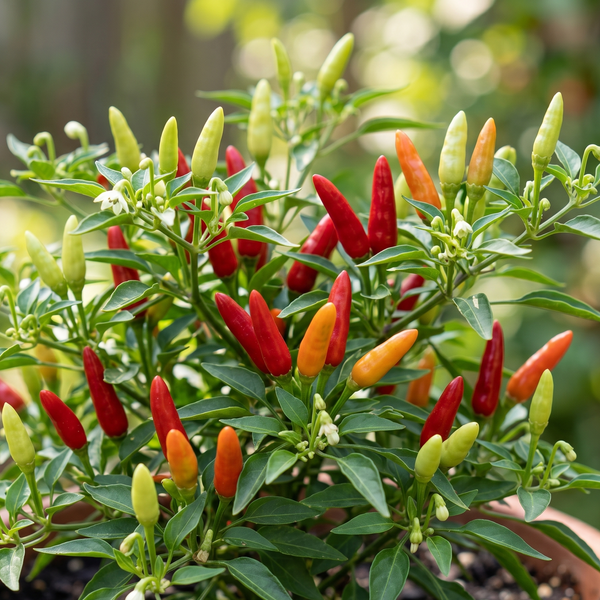
A tiny powerhouse of a chilli, and one of the most charming little plants you can grow. Bird's Eye Baby is a true miniature — a small, dense, neatly bushy plant clothed in masses of tiny leaves, the "Baby" in its name all about that diminutive, compact habit. It's so small and well-proportioned that it's a favourite for growing as a chilli bonsai, and it's perfectly at home in a little pot on a sunny windowsill or a bright shelf indoors. Yet for all its modest size, it crops with real abandon, studding itself with dozens of small, upright, fiery pods through the season — an ornamental first and foremost, but a surprisingly useful kitchen chilli too.
The pods are small, plump little upright cones — fat at the base and tapering to a neat point, only a couple of centimetres long — standing proudly erect above the foliage rather than dangling, and ripening from glossy green through deep purplish-brown to a vivid, glossy red. A well-grown plant carries all those colours at once, the bright pods scattered like little flames over the dense green leaves, and the effect is genuinely beautiful — this is a chilli you'd happily grow for looks alone. The heat, though, is the proper bird's eye business: a clean, sharp, properly hot kick at around 50,000 to 100,000 Scoville units, with a fresh, bright flavour.
It belongs to Capsicum annuum — the easygoing species of jalapeños and cayennes — which makes it more straightforward and quicker to grow than the slow, warmth-hungry superhots. It's genuinely easy and forgiving, and one of the best chillies of all for a beginner or a child's first windowsill pot: tiny, tidy, undemanding, and endlessly productive of those cheerful little pods.
(A quick note for the curious: this is the small-plant annuum Thai-style bird's eye, distinct from our African Bird's Eye, which is a taller frutescens piri piri type. Both are wonderful — this one is the compact, container-friendly one for smaller spaces.)
A note on growing
Sow indoors from February to April, about six to eight weeks before the last expected frost. As an annuum it germinates more readily than the superhots — a heated propagator or warm windowsill at 22–28°C will usually see seedlings up within one to three weeks. Sow on the surface or barely covered, and keep the compost moist but not wet.
Prick out into 9cm pots once the seedlings have two true leaves, and grow on in good light at a minimum of 18–20°C to keep them sturdy. Pot on into a final pot — and here the Bird's Eye Baby really shines, because its compact habit means it's perfectly happy in a relatively modest container on a sunny windowsill, balcony, or patio. It can be grown outdoors in the warmest, most sheltered, sunniest spot once all danger of frost has passed in late May or June, or kept under glass or indoors for an earlier, more reliable crop.
Water consistently and feed weekly with a high-potash tomato food once the first flowers set. Pinch out the growing tip early to encourage a bushy, branching, even-heavier-cropping plant. Harvest from midsummer into autumn: pick the pods green for a sharper, fresher heat, or leave them to ripen fully red for a rounder, slightly hotter flavour. Regular picking keeps the plant producing right through to the first frosts — and a single plant produces a great many little chillies. As with any hot chilli, it's sensible to wash your hands after handling the cut fruit and to keep it away from your eyes.
Where it shines
First and foremost, this is an ornamental — a plant grown for the sheer charm of a tiny, leafy bush hung with upright, multi-coloured little pods. It makes a lovely windowsill or table plant, a bright spot on an indoor shelf, and an excellent candidate for chilli bonsai, where its naturally small leaves and dense habit really come into their own. But don't overlook the kitchen: those little pods carry a proper hot bird's eye kick and are genuinely useful. Use them fresh and finely sliced in stir-fries, curries, noodle dishes, and dipping sauces, or dry them — they're so small they dry in no time — and crush them into chilli flakes or a fiery powder. A few pods are enough to bring real heat to a dish, so even this little plant keeps a keen cook well supplied.
However you use it, it's a charmer — a neat, tidy little jewel of a plant, equally at home on a kitchen windowsill, a bright indoor shelf, a bonsai bench, or among the pots on a sunny patio.
At a glance
- Heat: hot, 50,000–100,000 SHU — a clean, sharp bird's eye kick
- Looks: highly ornamental — multi-coloured upright pods over tiny leaves; a favourite chilli bonsai
- Plant: a true miniature — tiny, dense and bushy with small leaves; ideal for little pots, windowsills, indoors and chilli bonsai
- Fruit: small, plump, upright cone-shaped pods, ripening green through dark purple-brown to red
- Sow: February to April, 22–28°C
- Harvest: midsummer to autumn, green or red
- Easier to grow than the superhots — quick annuum, no greenhouse essential
- Best for: Thai, Vietnamese and Indonesian cooking; drying for flakes and powder
Plant alongside
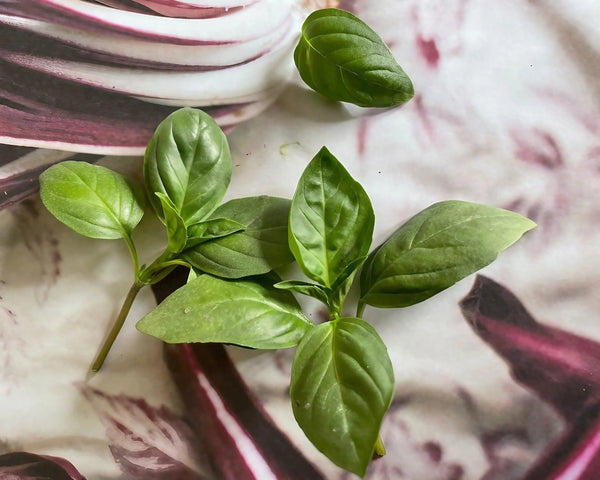
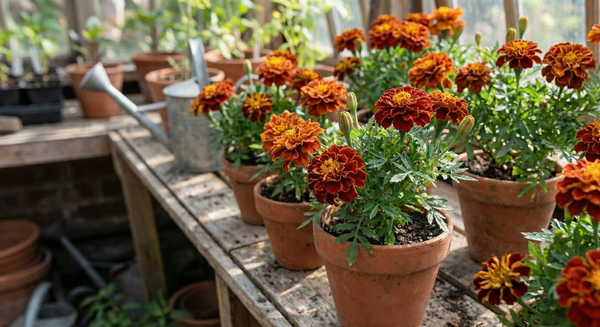
Chillies do well with companions that draw in pollinators and help keep pests down. Plant alongside French Marigold 'Spanish Brocade' to deter aphids and whitefly, and Calendula 'Neon' to attract beneficial predators. Basil — especially Thai basil — is a classic companion that enjoys the same warmth and sun, and makes a natural culinary partner for Southeast Asian cooking.
Plant alongside
Birds Eye Baby Chilli pairs beautifully with these kitchen garden companions