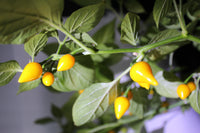
Biquinho Yellow Chilli
The charming Brazilian "little beak" - habanero flavour with barely any heat
A charming Brazilian "little beak" chilli - tiny golden teardrop pods with all the fruity, smoky flavour of the habanero family but barely any heat. Hugely prolific, ornamental, and famous for pickling as "Sweety Drops".
About this variety
Capsicum chinense 'Biquinho Yellow' The charming Brazilian "little beak" — habanero flavour with barely any heat
One of the most charming and surprising little chillies you can grow. Biquinho (say "bee-KEE-nyo") means "little beak" in Portuguese, and one look explains the name: tiny, glossy, golden-yellow teardrop pods, each tapering to a sweet little point like a bird's beak. They dangle in abundance from a tidy, upright plant, and they are as pretty as anything in the greenhouse — but the real surprise is in the tasting.
Here's the lovely trick of the Biquinho: it's a Capsicum chinense, the very same species as the habanero, the Scotch bonnet, and the world's fiercest superhots — and it carries all the gorgeous fruity, smoky, tropical flavour that makes that family so prized — yet it has almost no heat at all. At just 500 to 1,000 Scoville units it barely tickles the scale; there's the merest whisper of warmth, a tiny kiss of spice, and then pure sweet, tangy, fruity flavour. For anyone who has ever wished they could taste the wonderful flavour of a habanero without the searing burn, the Biquinho is the answer.
It's a Brazilian treasure, where it's adored as a snack — the little pods are famously pickled in a lightly sweetened vinegar brine (you may have met them on an antipasti board as "Sweety Drops") and served by the bowlful in bars and restaurants. They're crunchy, juicy, and utterly moreish, and they make one of the finest garnishes there is.
Happily, it's a generous and rewarding plant to grow, too. The sturdy, upright, well-branched bushes reach around 60–90cm and are astonishingly prolific — a single healthy plant can produce a hundred or more of those little golden pods over a long season — and the tidy, ornamental habit makes it a lovely choice for a large container or greenhouse bench. Like all chinense chillies it does take a long season to ripen, so an early start is the key to success.
A note on growing
Sow early — this matters with any chinense. Sow indoors from January to March in a heated propagator at 25–28°C; chinense seeds need genuine warmth and can be slow to germinate, taking two to four weeks (sometimes more), so be patient and don't give up on a tray too soon.
Prick out into 9cm pots once the seedlings have two true leaves, and grow on at a minimum of 18–20°C with bright light. Pot on progressively to a generous final pot — the plant's tidy, upright habit makes it particularly happy in a container. The Biquinho grows best under cover in the UK, in a greenhouse, polytunnel, or conservatory, which gives the long, warm season it needs to ripen a full crop; it can also be grown on a warm, sunny windowsill, or moved to the sunniest sheltered spot outdoors in high summer once all danger of frost has passed.
Water consistently and feed weekly with a high-potash tomato food once the first flowers set. Pick the first pods promptly once they reach full size and colour — this encourages the plant to keep setting more, and with a Biquinho that means a very long, very generous harvest indeed, often right up to the first frosts. Pinch out the growing tip early to build a bushy, branching, even-heavier-cropping plant.
Where it shines
The Biquinho is a joy in the kitchen precisely because you can use it freely, without fear of the heat. Its great calling is pickling: pack the little pods into a jar with a lightly sweetened vinegar brine and, after a week or two, you have the famous crunchy, sweet-sour "Sweety Drops" that are wonderful scattered over salads, pizzas, cheese boards, charcuterie, and canapés. Fresh, they're lovely chopped into salsas and salads, where their fruity flavour shines, or simply eaten as a bite-sized snack straight from the plant. They sauté and roast beautifully too, and bring a fruity, smoky note to dishes without overwhelming anyone at the table — making them perfect for cooking for a crowd, or for children and the heat-shy.
In the garden, it's simply delightful — a neat, handsome, ornamental plant hung with dozens of little golden beaks, as good to look at as it is to eat.
At a glance
- Heat: very mild, just 500–1,000 SHU — barely any heat, a tiny kiss of warmth
- Flavour: sweet, tangy, fruity and smoky — habanero flavour without the fire
- Look: tiny golden teardrop "little beak" pods — highly ornamental
- Plant: tidy, upright, 60–90cm, hugely prolific (100+ fruits) — great in containers
- Sow: January to March, heated propagator at 25–28°C — sow early
- Harvest: late summer to autumn, fully golden yellow
- Family-friendly: mild enough for everyone, including children
- Famous for: pickling — the "Sweety Drops" of antipasti boards
Plant alongside
Chillies do well with companions that draw in pollinators and help keep pests down. Plant alongside French Marigold 'Spanish Brocade' to deter aphids and whitefly, and Calendula 'Neon' to attract beneficial predators. Basil is a classic greenhouse companion that enjoys the same warmth and sun, and makes a natural culinary partner too.

